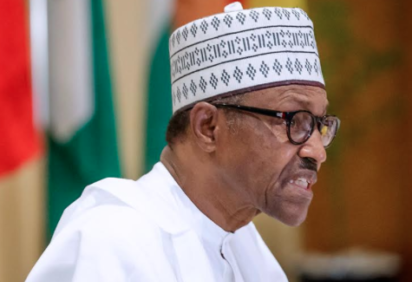
President Buhari attends Extra Ordinary Meeting of Lake Chad Basin in Abuja on 15th Dec 2018
LAST week, the Federal Government gave what appeared as conflicting signals on the state of the economy. On Friday, December 14, 2018, President Muhammadu Buhari met with the 36 governors and confirmed what experts had feared since last year when we edged out of recession: the economy is in bad shape.

President Buhari
But, earlier on Thursday December 13, 2018, Secretary to the Government of the Federation, Mr Boss Mustapha, informed the 25th anniversary of the National Salaries, Incomes and Wages Commission, NSIWC, that the Federal Government was making arrangements to ensure the “early” commencement of payment of the new national minimum wage, which will impose severe additional burdens on the incomes of all tiers of government.
EFCC appointments: Ibibio youths flay Buhari for excluding S-South, S-East
Surely, the economy was already heading downward from 6.3 per cent GDP in 2014 to 3.96 in 2015 when Buhari assumed power. The price of crude oil fell to 28 dollars per barrel in the fourth quarter of 2016 before it resumed upward swing. The economy grew to 1.95 per in Q4 of 2017 before going down to the current 1.50 per cent GDP, according to the National Bureau of Statistics.
Much as officials of the Buhari government continue to blame past governments for our economic woes, this regime has also contributed immensely to the current situation of things through its acts of commission and omission.
The President spent almost five months in office before inaugurating his cabinet, preferring to work with bureaucrats rather than “politicians” (ministers) whom he described as “noise-makers”.
FG has spent N2.7trn on infrastructure in 2 budgets — Osinbajo
The regime also spent almost two years in power before unfolding its economic agenda, the Economic Recovery and Growth Plan, ERGP, on April 5, 2017.
Apart from the uncertainties of the President’s health which dragged for over two years, Buhari and his officials spent more time emphasising on the depth of corruption in Nigeria than marketing the economy itself.
The security situation did not help matters. The Boko Haram insurgency in the North East, banditry in the North West and armed Fulani herdsmen’s attacks in the North Central and some Southern states disrupted the activities and livelihoods of farming communities, many of whom were displaced into refugee camps.
These incapacitated the regime’s strenuous efforts to grow the economy through agriculture.
To its credit, the regime strove to raise the contribution of taxes to the national till. But it seems its policy of borrowing heavily to fix critical infrastructure and jolt the economy back to the path of growth has only recorded limited results.
Greed, the major cause of artiste/record label feud – Label CEO, Ozioma Anajeku
Irrespective of who wins the impending elections, there is a great need to change the direction and pace of our economic reforms. The deep divisions in the system must be healed and all hands brought on board to salvage the economy and secure the country.
Disclaimer
Comments expressed here do not reflect the opinions of Vanguard newspapers or any employee thereof.