By Ekanpou Enewaridideke
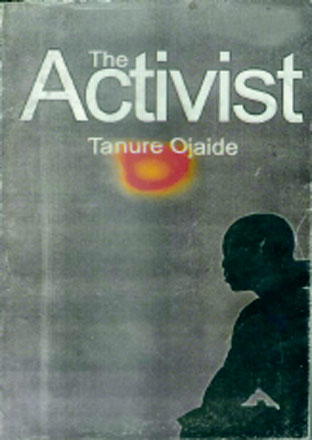
PROFESSOR Tanure Ojaide is a writer known and celebrated for his numerous poetry collections, his works of fictions – Sovereign bode, God’s medicine men & other stories; his works of non-fiction – Great boys: an African Childhood; his works of criticism, Poetry, performance, and Art: Udje Dance songs of the Urhobo people; Culture, Society, and Politics in modern African Literature (with Joseph Obi), Poetic imagination in Black Africa, and The poetry of Wole Soyinka. Ojaide cuts off his ties and obsession with poetry in 2006 when he hit the Literary World with his novel, The Activist which gives a portrait of Nigeria under the dictatorial government of the dark-goggled General Mustapha Ali Dongo (who dies two weeks after an aborted nude protest staged by women of the Niger- Delta) and the interim head of state, Chief Jacob Oleitan (an Ife Chief) where the Niger- Delta people – Ijaw, Urhobo and Itsekiri – are daily suffocated through mindless exploitation and environmental degradation signposted by the Roko and the Ekakpamre blowouts and their attendant consequences, deliberate underdevelopment through unemployment of Niger- Deltans in the top echelon of the oil companies, the dearth of infrastructural development and his artistically anchored redemptive visionary solution to the Niger-Delta problem of underdevelopment implicated in the rather questionable transformation of the Activist within the fictional world created.

In The Activist which tangentially echoes racial discrimination and degradation of Nigerians in the hands of Americans abroad, sexual harassment of university female students by university lecturers exemplified by the sexual escapade of Professor Don Odili with a married female student at Moonshine Hotel, the marginalised and enslaved Niger-Delta people is a product of the criminal collaborative, nay collusive, efforts of the Nigerian Military Government and Bell Oil Company. In this artistically anchored world sculpted by the author through two broad categorisations – characters beyond redemption exemplified by HRM APO I, Chief Tebele, Chief Fatakpa, Chief Oke, Chief Odede, Professor Kokoba, Professor Tobore Ede, Retired Colonel Samson Dudu,Brigadier Austin Yeri, Chief Okiti, Van Hoort and Klaus Bilts, and characters of redemption poised for redemption and reversal exemplified by the Activist, Dr. Ebi, Pere Ighogboja, Chief Ishaka, Mrs. Timi Taylor and Omagbemi Umukoro, Ojaide journeys within and across three worlds in his fictional sculpture – the world of the exploiters constituted by the Anglo-Dutch Bell Oil International, the military government, the collusive traditional monarch, the collusive Chiefs and the collusive university professors engaged by Bell Oil Company as either community development officers or as resource persons to give public lectures envisioned to further their exploitative gimmicks, the world opposed to the world of the exploiters constituted by the activist, Dr. Ebi. Pere Ighogboja, Chief Ishaka, Omagbemi Umukoro, women, youths, students and the fearless newspaper, The Patriot with the motto: ‘Justice and Humanity for the people’, and the world of love constituted by the Activist and Dr. Ebi Ematseyi, Udoma and Jessica, and Dennis and Erika.
Journeying through the three worlds fictionally, Ojaide sails into spikes, nothingness and artistic failure in the novel. The Activist undergoes a transformation that is clearly a contradiction of the artistic vision the author sets out to pursue and achieve fictionally. Ojaide’s artistic journey to solve a Niger- Delta problem eventuates in artistic nothingness where the problems of the Niger-Delta people still remain the way they are as he meets them – which points to artistic sophistry of Ojaide’s creation as his created spikes could only kill any burgeoning seed within his fictional world where he is burdened by the developmental marginalisation of the Niger- Delta people.
The Activist accidentally finds himself in US via the help of an American ambassador over a protest his Niger Delta people put up against Bell Oil Company and the military government for exploitation and environmental pollution of his village. The village people engage the services of a foreign journalist to give global publicity to the environmental pollution. Bell Oil International is embarrassingly compelled by the global publicity of the environmental pollution to compensate the people heavily. Through the collusion of Bell Oil Company and the military government, soldiers and mobile police are deployed to massacre the village.
The activist has two bullets lodged in his right knee during the massacre while he is on vacation as a young man in secondary school. Few days later an America ambassador visits the site to see the degree of atrocities and devastation unleashed by the soldiers and mobile police vindictively deployed to the village. The ambassador randomly selects two young men to be sent to US for education as part of his expressed sympathy for the people.
The Activist who limps to the site with his wounded right knee luckily becomes one of the two young men selected to be sent to US for education. On this ambassadorial magnanimity and solidarity the Activist studies in US to have a Bachelor’s degree, Master’s degree, and becomes a PH.D holder after two and a half years. To survive economically, he lectures at Barber College in US and drives a cab at night commercially in the city. In the hands of the Americans the Activist routinely suffers discrimination and degradation. After 25 years of sojourn in US the Activist decides to come back home to contribute to the betterment of his country Nigeria. He decides to come home ‘One Moody autumn morning, windy, cold, sunless’… (page 31). Aboard the KLM flight ‘in one late Friday evening in mid-July’ the Activist arrives in the Murtala Mohammed International Airport without telling his people he is coming because he is disgusted with the ritual of a hyped hysterical welcome for an American returnee after years of privileged sojourn abroad accompanied by wild expectations of kinsmen.
Home in Nigeria he is engaged as a lecturer at the Niger Delta University where he hopes to nourish his own people with his academic knowledge and experience. The activist whose mother dies within three years of his sojourn in America, and his father dead ten years ago, is engaged in Nigeria as a Lecturer at the Niger Delta University. At the Niger Delta University the Activist becomes gradually acquainted with Dr. Ebi Emasheyi, a fellow Art lecturer at the same university, who proves a dependable friend when a five-man delegation of Dafe, the cloth merchant, Tebu the Fisherman, Sodje the farmer and Macaulay the hunter led by Poko visits him from his village. Dr. Ebi proves a great friend to the Activist by preparing a ‘palm oil soup with starch and yam’ for the five-man delegation to enjoy as a traditional form of entertainment for people from his village – a five-man delegation full of pride, honour and praises for their son who has spent some years abroad and is now back home.
Now here at the Niger Delta University teaching like Ebi Emasheyi from Okwagbe who also lectures at the University, the Activist is confronted with the burdensome spectacle of exploitation, underdevelopment, degradation, oppression and marginalisation the Niger Delta people are subjected to in the hands of Bell Oil Company and the Federal Military Government of Nigeria. The Niger Delta people who produce the bulk of crude oil which sustains the economy of Nigeria are mindlessly underdeveloped. They are denied infrastructural development and employment opportunities in the oil company besides the constant pollution of their environment by blowouts wrongly attributed to a systematic sabotage caused by the Niger people themselves.
To reinforce and sustain their plot to underdevelope the Niger Delta, people from the different strata of the society are engaged to offer different services. Through offer of financial inducement to HRM APO I and some of his collusive chiefs, they are blinded and silenced, only routinely singing the praises of Bell Oil Company. With the engagement of University Professors as either community Development officers or resource persons to deliver public lectures designed to perfect the ongoing underdevelopment plot, the likes of Professor Koboka and Professor Tobore Ede become ready tools used to exploit the Niger Delta people. On the military front the likes of Retired Colonel Samson Dudu and Brigadier Austin Yeri respectively engaged as community Development Officers, the military stratum becomes pitilessly part of the exploitation agenda of Bell Oil Company led respectively by Messrs Van Hoort and Klaus Bilt as General Managers.
In the fictional world of Ojaide, Nigeria at the time of this fictional creation is ruled by a military head of state General Mustapha Ali Dongo whose death in the wake of the nude protest of women brings Chief Jacob Oleitan as interim head of state. Similarly, Bell Oil Company has Mr. Van Hoort as General Manager and later Mr. Klaus Bilt when Mr. Van Hoort dies. While the Niger Delta people groan everyday under the exploitative policies that destroy their environment through blowouts without remediation, compensation and employment of Niger Deltans, the military government reinforces the marginalization by supporting and backing all the exploitative policies of Bell Oil Company through deployment of soldiers and mobile police to silence any force of dissent/agitation. It is against this backdrop of deliberate exploitation the Roko blowout and the Ekakpamre blowout the Niger Delta people are disdainfully treated by Bell Oil Company when the Roko blowout and the Ekakpamre blowout are experienced though the women stage a nude protest over the Ekakpamre blowout but they are humiliated and raped by a detachment of mask-wearing Navy personnel who teargas them into a daze.
The Roko blowout experienced, the Activist, Pere and his area boys and the Student Union Government of Niger Delta University organise a protest billed for Friday but the Oil Company gets wind of the planned demonstration and promptly sends Professor Tobore Ede, the community Development officer, to engage the students casuistically and orientate them away from thoughts of staging a protest. Towards this targeted orientation, Professor Ede terms the village arsonists and the blowout a product of sabotage led by the people themselves. Incensed by this callous accusation the students throw a tyre on him and burn him down.
Over this damning action by the student of the Niger Delta University, the school is closed for six months, the Activist and others are arrested but later let free for lack of evidence linking them to the murder of the professor, and the school later opened for academic activities after each student has been asked to pay twelve thousand naira though the family of the deceased professor is not given any compensation by Bell Oil Company. Retired Colonel Samson Dudu is appointed community Development officer upon the death of Professor Tobore Ede. Within a month of colonel Dudu’s appointment as Community Development Officer the forgotten refugees of Roko visit him and make a case for the rebuilding of the village by Bell Oil company but they are contemptuously treated by him. Two days after the forgotten refugees leave his office denigrated, embarrassed and unhappy, Colonel Dudu dies from stroke. At death Brigadier Austin Yeri replaces Colonel Samson Dudu as a Community Development Officer in Bell Oil Company.
Another blowout is experienced at Ekakpamre. The fire rages for twelve days in the Uto River and burns itself out. Following BBC and CNN coverage of the blowout Bell Oil Company feels embarrassed, stung, and sends firefighters to the place after the fire has already burnt itself out. The women mobilized themselves and get ready for a nude protest. Mrs. Timi Taylor the President of Women of the Delta Forum and Dr. Ebi Emasheye the manager/publisher of The Patriot newspaper as the Secretary of Women of the Delta Forum devotedly co-ordinate the women to stage the nude protest against Bell Oil Company and the military government for environmental pollution and callousness over the blowout.
While the vibrations are all over the place about the women poised for nude protest, the expatriates in Bell Oil Company – Mr. John Pritchard, Mr. Beesley and Van Geon – dismiss any belief in the mystical potency of the nude protest as a superstition. Voodoo. Backwardness. Despite the explanation of Mr. Peter Okadike and Mr. Dele Oyenuga on what the nude protest portends traditionally and mystically, the expatriates see them as a ridiculous bunch of superstitious fools.
To ward off the nude protest, masked Navy personnel are sent to teargas and brutalise the women. Van Hoort the General Manager of Bell Oil International has a cardiac attack a week after the aborted nude protest. Two weeks later the ‘dark-goggled’ General Mustapha Ali, the head of the military government who orders the deployment of Navy personnel dies under mysterious circumstances. However, these developments – death of Van Hoort and General Mustapha Ali – are viewed as the mystical potency of the aborted nude protest of women. Promptly, Klaus Bilt takes over as the new General Manager of Bell Oil company, and Chief Jacob Oleitan as the interim head of the Nigerian Military Government.
Seeing that the marginalization of the Niger Delta would not abate except there is a conscious move, the Activist begins to radicalise people within and outside the university environment towards a counter-potent force. His radicalisation drive brings him close to Pere Ighogboja the head of the area boys who has been imprisoned seven years for assault on behalf of his son Tonye beaten up at school – that Pere whose interest in Oil bunkering is derived inspirationally from Chief Young Kpeke and Chief Goodluck Ede who are bunkering magnates, is a repentant armed robber and kidnapper who is once a pools agent assisting Yeri Daibo in his gambling business; a school drop-out expelled from school during his second year in grammar school by the headmaster Mr. Joshua Temile for fighting a classmate whose teeth are consequently broken; that Pere whose supposed father Omishola denies him fatherhood after the death of Titi (Pere’s promiscuous mother hitherto married to an ex-soldier who suddenly disappears) from snakebite while weeding her cassava farm not too long after his (Pere’s) expulsion from school.
Pere teams up commercially with the Activist towards the actualisation of the Oil bunkering venture. With Delta Cartel’s petrol station located between two villages on the Warri-Agbor Road in a remote part on the highway, a broken-down tanker bought and refurbished and Five area boys engaged for the bunkering business, the oil bunkering business proposal has come full circle as the Activist now conceptually sees illegal oil bunkering as a potent counter-force against the exploitative gimmicks of the Anglo-Dutch Bell Oil company and the Nigerian Military Government. The narrative voice in the novel unambiguously echoes thus:
‘All of a sudden, the Activist saw bunkering as a weapon against the two principal outsiders that were robbing and destroying the people of the Niger Delta’ (154).
They build Delta Cartel into a multi-million naira business from which they tap to fight the oppressors until the Activist becomes the Governor of Niger Delta State out of twelve governorship aspirants – though it is a laughable wishful thinking that the Activist’s transformation would address the problems of the Niger Delta because he is only a governor, not a president. The vision behind the democratic transformation of the Activist is a ridiculous one.
Dr. Ebi Emasheyi the Okwagbe-born female lecturer at the Niger Delta University, the SUG President Omagbemi Umukoro and others are also radicalised and recruited by the Activist to pursue his redemption vision of his society. Machiavellian in philosophy towards dismantlement of marginalization, the Activist and Pere agree to embrace illegal bunkering by bursting Oil pipes and stealing oil for onward sale to buyers. To mask their illegal bunkering, they decide to form Delta Cartel and run a petrol station from where the stolen products will be sold. By this approach no one would suspect and identify their illegal bunkering activities. With devotedness they are able to turn their business venture into a multi-million naira project. Having built a formidable financial base from illegal oil bunkering, the Activist decides to key into the democratisation plan of the interim head of state Chief Jacob Oleitan. The Activist contests for the governorship of Niger Delta State and wins the election. As the Governor of Niger Delta State, he appoints Dennis a Commissioner for Environmental and Mineral matters. Dennis, the son of Chief Ishaka always opposed to the exploitative gimmicks of Bell Oil Company, has been in the employ of Bell Oil Company as ESQ. CORPORATE HOSPITALITY MANAGER in Amsterdam but who is denied engagement in the drilling field in the company as part of a grand strategy to deny Niger Deltans technical knowledge of the oil industry, particularly in the oil-prospecting and drilling sections of their operations. As a commissioner, Dennis creates Niger Delta Oil Corporation and makes his wife Erika as the Public Relations Officer of the corporation.
The commissionership of Dennis brings back memories of his own father, Chief Tobi Ishaka (The Adjudju of Agbon). Chief Tobi Ishaka, a highly respected Chief diametrically opposed to the manipulative gimmicks of Bell Oil company and the collusive gimmicks of HRM APO I and his tainted chiefs is a trader in palm kernels and palm oil and later engages in buying and selling of rubber-sheets whose son Engineer Dennis works in Bell Oil Company through his (Chief Ishaka’s) influence and desire to see him involved in oil-prospecting and drilling activities in the company having graduated as a Petroleum Engineer, though, alas, Chief Ishaka dies in a road accident involving his car, luxurious passenger bus and a tanker before his son Dennis is appointed a commissioner for Environmental and Mineral Matters, and his son’s wife Erika made the Public Relation Officer of Niger Delta Oil Corporation created by Dennis – which are steps towards the fulfillment of Chief Ishaka’s vision of seeing his son take part in the prospecting and drilling of crude oil.
The move of the Activist to dismantle the exploitative gimmicks of the oppressors is strategically engaged. He establishes The Patriot as his national newspaper and makes Dr. Ebi the manager/publisher while he engages Omagbemi Umukoro as Editor-in-chief. As the head of the The Patriot, Dr. Ebi has to resign her job as a lecturer at the Niger Delta University just like the Activist who has to leave his teaching appointment when he seeks the governorship of the state. By becoming the Governor of Niger Delta State the Activist is fired by his conviction that he can reform the society in line with his vision for a developed society. But can Ojaide’s The Activist address the problems of the Niger Delta people caused by the federal government and the Oil companies? Are the oil companies and the Nigerian Federal Government controlled by a state government? Can the national problems of a country be solved by an activist who is now a Governor of Niger Delta state rather than a president?
The portrait of the Activist as a Governor
The transformation of the Activist from a university lecturer to the Governor of Niger Delta state carries echoes of articificiality, meaninglessness and nothingness. The novel shows how the Niger Delta people are oppressed and exploited by Bell Oil Company and the Federal Military Government of Nigeria. It is a reformer as president who can solve the Niger Delta problems, not as state governor. The Activist as governor in the fictional world of Ojaide is too incapacitated to address the Niger Delta problems caused by Bell Oil International and the military government. It is a wrong portrait. A questionable anti-climax. A failure of artistic vision.
Historical inaccucies in the Activist
Is Tanure Ojaide writing a history book or a novel? The Activist does not succeed as a history book, neither does it succeed as a novel because of wrong historical associations. When a novel throws up historical events, their historical authenticity must be preserved though fictionally anchored. In the novel the Minister of Agricultural and Water Resources donates imported fishing nets to riverine communities inhabited by Ijaw Urhobo and Itsekiri. The formula used in sharing the nets does not go down well with the Ijaws because it is not equitable enough. To the Ijaws, the sharing favours the Itsekiris just as the Itsekiris hold that the Urhobos have got more than them. The Ijaws and the Itsekiris clash on one hand, and on the other hand, the Urhobos and the Itsekiris clash, leading to killing and destruction. Here historical authenticity is murdered. Net-sharing was not the cause of the Warri crisis. The causes are safely stored in history. An author cannot be historical and at the same murder the historicity of the novel – which is what Ojaide glories in here. Here Ojaide has killed the power of literature to preserve history for generations born and unborn. In JP Clark’s ALL FOR OIL (a play), he maintains both the historicity of the events and the fictional authenticity, not Ojaide who kills historically.
Another questionable portrait by Ojaide is what happens after his fictional creation of crisis among the Ijaws, Itsekiris and the Urhobos. In the heat of the crisis the narrative voice maintains that the Ijaws run to Oginibo and Okwagbe, the Itsekiris to Ughelli, and the Urhobos to Otumara.
‘The situation in Warri became very confused like the people themselves. Many Itsekiri fled to Ughelli as Urhobo fled to Otumara, and Izoh hunkered in Oginibo and Okwagbe’ (233).
This portrait of the tribes running helter skelter to places where their security is not guaranteed is not a realistic portrayal even in the fictional world in the novel, let alone in the actual world of Warri in the heat of crisis. This is a meaningless portrait in the novel.
Again, Ojaide’s mention and portrait of Enekorogha village (101) lacks historicity. It is his own Enekorogha that is portrayed, not the historical Enekorogha in Burutu Local Government Area of Delta State. However, Ojaide becomes historically striking when he mentions GANAGANA (164) as the Izon Island and maintains the historicity of the Island – and this is what he dismally fails to do in the above questionable portraits.
Ojaide’s pretentious attempt at Universa portrait of the Activist
The Activist portrayed in the novel without a name and a named village is unconvincing and does not sound like the Man in Ayi Kwei Armah’s The Beautiful Ones Are Not Yet Born. The namelessness serves no artistic purpose – whether it is derived from taking part in protests beyond the shores of Nigeria or not. From the beginning to the end the author throws him as the activist without justification when the activism should be based on the developing events. Even when the developing events do not throw up any character as an activist, the author maintains that the man is an activist – even to the extent that the activist as a professor is dwarfed and overshadowed. Ojaide’s attempt at universal portrait of the Activist caves in ridiculously when the Activist becomes the Governor of Niger Delta State to solve Niger Delta problems created by the Nigerian Military Government and Bell Oil International. This is rather a laughable anti-climax about the author’s attempt to universalise the Activist like Ayi Kwei Armah’s the Man. The author ends up solving no problem; the novel is not a solution to the Niger Delta problems created in the fictional world of the novel. Only an activist as the president of a country can realistically tackle the Niger Delta problems, not Ojaide’s the Activist as Governor of Niger Delta State.
Besides the artistic meaninglessness in the namelessness of the activist, the novel is not fresh and striking in the deployment of linguistic resources. Strikingly quotable philosophical statements could be hardly found in the book. The language lacks seepage of poetry as readers would have expected of a celebrated poet. As a great poet I thought the narrative would enjoy a cascade or a baptism of effortless poetry as one often sees even in the prose works of JP Clark. The language of the Activist has the imprint of a toddler toiling towards mastery of his steps on the floor. The language moves weakly like the wounded warship in Ekanpou Enewaridideke’s The Wanted Man in Camp Four. The Sentences are not fresh and striking; the language has nothing new and fresh to offer readers, but very lucid and comprehensible in terms of accessibility to readers.
Ojaide’s Imagistic anomalies in the Activist
There are instances of wrong imagistic portraits in the novel. Handling a paddle when on the canoe in the river, exerting maximum effort will make the boat move speedily but Ojaide maintains that the boat moves fast with minimum effort on the river. The boat moves when a paddle is dipped in the water and moved backward or powered backward with masterly measured strokes without swaying the paddle. Ojaide’s portrait of the paddle, how it is used on water for the boat to move echoes that of a person who does not know how to paddle in the river and so his deployment of that aquatic image is wrong, as a paddle does not even form a semi-circle when masterly dipped in the river. But to Ojaide who speaks through the character Ebi:
‘If you handle the paddle this way, sway it in a semi-circle from the front to the back of the boat with minimum effort, the boat just moves fast and glides on the water effortlessly’ (100).
Rat is a rodent whose disgusting behavioural eccentricity is that of gnawing at the sole of people asleep at night. While a rat fitfully fans the sole with its mouth, it masterly gnaws at the feet. The person whose feet is gnawed at by rat feels no pain until the next morning when he or she wakes up without the fitful mouth-fan of the rat. Rats are always found at home though they can equally be found in the forest. Mouse is another rodent that looks like rat which lives in the forest and does not gnaw at the sole of people asleep. The Ijaws call it AGBUNO. Mouse usually gets caught in piassava-made bush traps baited with very ripe palm nut set for squirrels in the forest. Mice are constant forest inhabitants. Again, Ojaide goofs imagistically when he clothes mouse with the behavioural eccentricity of biting the sole of human beings. There is, taxonomically, a difference between mouse and rat though they are all rodents. Here is Ojaide’s wrong imagistic attribution in his novel The Activist when the narrative voice says thus:
‘The mouse blows a soothing draught onto the sole even as it bites it! it is after it has done its mischief that the victim of the rabid bite will discover the dangerous infection that can turn into a fatal disease (188).’
Ojaide’s portrait of Niger Delta people as sellers of human parts
Within the fictional world created by Ojaide in the novel, Niger Delta people are portrayed as sellers of human parts to ritual customers who come from Aba, Abeokuta, kano and Yola to buy them in Warri during the crisis among the Ijaws, Itsekiris and Urhobos. By implication, the Ijaws, Itsekiris and Urhobos kill human beings and butcher them for sale during the crisis. Though this portrait is fictionally anchored, it is supposed to be an interpretation, documentation and projection of an existing reality or phenomenon because literature is a mirror of society. This portrait of Niger Deltans as ritualists during the Warri crisis is a negation of historical authenticity or truth as regards the intermittent Warri crisis because Niger Deltans are not involved in ritual activities during the Warri crisis but Professor Tanure Ojaide would not accept this historical truth, as his narrative voice unapologetically echoes the disparaging portrayal thus:
‘In the midst of the crisis people came from as far away as Aba, Abeokuta, Kano and Yola to buy body parts to prepare money doubling and other strong medicines; they thanked their God for meeting their difficult needs. The secret market of body parts under Otokutu Bridge outside town flourished as never before’ (The Activist, 235).
Narratively making a sweeping categorisation of Niger Delta people in Warri as ritual traders, even if fictionally, without identifying a character with it is a disparaging, denigratory narrative anomaly at variance with the existing realities in Warri. So Ojaide blunders irredeemably in this denigratory portrait in The Activist. Who are indeed the ritual traders portrayed by Ojaide? The Ijaws? The Urhobos? The Itsekiris? Can Ojaide deny this disparaging portrait in the name of fiction when the characters that inhabit his fictional world in The Activist are clearly identified as Ijaws, Urhobos and Itsekiris?
Narratologically speaking, Ojaide is not the first writer to use historical materials in the sculpture of his fictional world in The Activist. JP Clark equally draws on historical materials in Warri in the creation of his fictional dramatic world in his play ALL FOR OIL but dexterously, without the negation of their historicity in the Portrait of Chief Bekederemo, Chief Dore Numa and other characters. This denigratory denial of historicity in the portrait of the Warri crisis ranging from net-sharing to trading in human parts in his The Activist must be an art peculiar to Ojaide’s creative world because it deprives literature of its power to preserve history as a guide for generations born and unborn – as can be seen in Chinua Achebe’s Things Fall Apart, A Man of the People and Chimamanda Adichie Ngozi’s Half of a Yellow Sun. Is Professor Tanure Ojaide on a literary race to beat Joseph Conrad – that Polish-English novelist who authored Heart of Darkness where a derogatory racist portrait of Africans flourishes in a degree that provokes Chinua Achebe’s critical response in a lecture published at the university of Massachusetts entitled: ‘An Image of Africa: Racism in Conrad’s Heart of Darkness.’?
In the novel The Activist, the author showcases the encumbrances of the Niger Delta people deliberately created by the Nigerian Military Federal Government and Bell Oil International coupled with his vision to address these problems through the transformations of the Activist from a university lecturer to activist and from activist to illegal bunkering mogul, from a multi-million naira illegal bunkerer to the Governor of Niger Delta State. The problem-solving mechanism and vision fictionally created by Ojaide as exemplified by the Activist is a futile effort because a state governor does not have the required range of power to solve the problems of the Niger Delta people created by Bell Oil Company and the military government. It is therefore against this background that Tanure Ojaide’s The Activist is viewed as a celebration of spikes, nothingness and artistic failure because nothing can give rise to something. Ojaide has turned the pollutant of his own fictional world inhabited by pollutants like General Mustapha Ali Dongo, Chief Jacob Oleitan, Van Hoort, Klaus Bilt, HRM APO I, professor Don Odili and Chief Tebele.
Disclaimer
Comments expressed here do not reflect the opinions of Vanguard newspapers or any employee thereof.