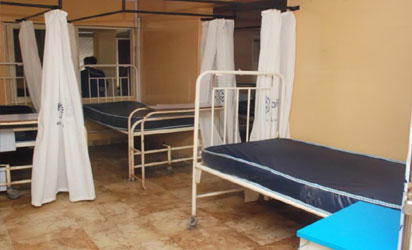
A ward in the hospital
By Chioma Obinna
Worried by the decay in the nation’s health care system, the Civil Society Legislative Advocacy Centre, CISLAC, has stressed that revitalization of primary health facilities, if prioritized by governments at all levels, will put the country health system on a better paedestrian.
According to the organisation, a functional primary health care, particularly, will guarantee attainment of a Universal Health Coverage, UHC.
Lamenting the acute shortage of infrastructure, the dearth of personnel and equipment in PHCs, across the federation, the Executive Director of CISLAC, MallamAuwal Ibrahim Musa, notes said the situation of primary health care in Nigeria has worsened due to poor financial and political commitment on the part of the government is lacking.
“In cases where there have been financial pronouncements, they have been partially or entirely not implemented. Inadequate funding and non-commitment of state governors and local government authorities to provide skilled manpower at the primary health care centres impede adequate health intervention.
“Thankfully, Health is on the concurrent list of the government. This signifies that if indeed the government wants to pay attention to the prevalent health condition, it can easily be achieved through serious implementation of health policies and redeeming of pledges at all levels.”
Represented by the programme officer, Mr. Murtala Muhammad, during a media workshop in Lagos, he recalled that in an attempt to stem the tide, the federal government kicked off a scheme to revitalise over 10,000 PHCs across the country and also in collaboration with national and interventional partners prioritising rural and vulnerable populations, especially pregnant women, children under five and the elderly through the Saving One Million Lives.
In his lecture: “Financing for Primary Health Care: Harnessing Domestic Funding Enabling Policies And Legislation,” Dr. Jibril Bashar from health policy and systems development unit, department of community medicine, Ahmadu Bello University Teaching Hospital, Zaria, said to achieve positive impact in the health sector, Nigerian government must invest a benchmark of 15 percent of its national budget to health as recommended by the World Health Organisation.
Bashar who hinted that the Lagos state government top the list in health investment with N6, 617 per person annually, said the funding gap of N64.2 billion, especially in its 2018 budget was not adequate to take care of the needs of Lagosians.
https://newlive.vanguardngr.com/2018/10/tackling-the-unpaid-salaries-morass/
According to him, there should be an appropriate financing mechanism that will provide sufficient financial protection so that no individual household is impoverished because of the need to use health care services.
”World Health Organisation (WHO) reports shows that Nigeria’s out of pocket spending for health is 95.7 percent instead of the recommended benchmark of 20 percent that means Nigeria is 75.7 percent away from the acceptable benchmark.
“Nigeria has to prioritise public spending in health according to its own morbidity, mortality, and availability of funds as a great degree of impact can be made in making accessible health intervention at a low cost through sustainable domestic funding,” he stated.
Disclaimer
Comments expressed here do not reflect the opinions of Vanguard newspapers or any employee thereof.