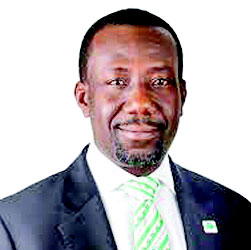
Segun-Omosehin
The National Insurance Commission, NAICOM, recently gave a directive to insurance operators that local capacity must be exhausted before any oil and gas risk can be ceded abroad. Managing Director of Mutual Benefits Assurance Plc, Mr. Segun Omosehin, in this interview stated that the directive is long overdue in coming.
By Rosemary Onuoha
WHY have insurers consistently failed to adhere to the local content law?
The local content law was not made today. The problem with our sector has not been lack of regulation; it is lack of enforcement of those regulations. Issuing a new directive is reiterating and putting on the front burner those regulations that already exist. Hence, the regulator has just stepped up on the things that they should be doing. Some measure of enforcement coupled with sanctions when there are breaches will help bring back operators onto the line.
How will this new directive benefit the sector?

Segun-Omosehin
The directive is the best thing that can happen to this market. It is in the best interest of the market. I will continuously commend the regulator for taking some of these initiatives. My take on it is that it is good for the industry and I am hoping the operators in the system will see the beauty of this and adhere to the regulation. Ideally, why would you cede a risk outside when the capacity within the market has not been exhausted? It doesn’t make sense. In the UK, Lloyds would have been exhausted before you think of going to the US market. The problem has always been that sanctions are not enforced. If you just sanction one person and go to sleep others will continue.
So consistency on the part of the regulator to sanction defaulters no matter whose ox is gored will benefit the industry. If anyone violates the guidelines and is sanctioned, people will fall in line. Look at what we are enjoying today about ‘no premium, no cover’. Now if I write ten billion naira premium, it is in my kitty. In the past when you say you write five billion naira premium, half of that is receivable and you are at the mercy of the brokers. But today the situation has been reversed. So underwriters are better off as they can easily pay claims now.
With the recession that characterized the economy for most of 2016, what will you say about your performance?
For the business it was very good. However, because we don’t operate in isolation but within the larger economy, the devaluation in the value of the naira affected our net worth. So in absolute terms if we convert what we have done in relation to the dollar, you will realize that we did much worse than the previous year because of the exchange rate to the dollar.
That in a way also affected our balance sheet because we have one of our particular portfolio denominated in dollar. So we had to accrue for some foreign exchange loss because of that particular instance. So it was a performance I would say we were proud of but the vagaries in the macro economy affected ultimately the net value of what we have been able to achieve.
What is the expectation for the industry in 2017?
The picture painted from the budget gives hope that activities will pick up and insurance will do well. However there are few areas to be cautious of.
Direct impact on the budget
The basic premise on which experts projections on economic rebound are based are on the ability of Nigeria to generate consistently some amount of revenue from the oil sector. Any major disruption in the flow of income from the oil sector is likely to have direct impact on the budget. So we need some ingenious guys within the system that understand the local dynamics and be able to address some of the issues. So, on those premise we are confident as an industry that insurance has a brighter prospect this year given those parameters.
Disclaimer
Comments expressed here do not reflect the opinions of Vanguard newspapers or any employee thereof.