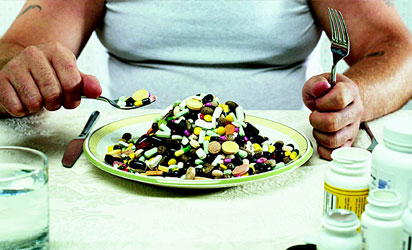
Supplements
Implementation of the mandatory 20 per cent Import Adjustment Tax (IAT) on medicaments by the Nigeria Customs Service, as provided in the 2016 Fiscal Policy Measures (FPM), made up of Supplementary Protection Measures (SPM), is an ill wind that is blowing Nigerians no good.
The policy shift, as directed by the Ministry of Finance, in a recent circular titled “Import Adjustment Tax”, which imposed the extra payment on medicaments, runs contrary to expectations for the provision of better medicare for the poor and needy.
With the deleterious effects of the devalued Naira, high exchange rate and forex scarcity , this policy reversal is double jeopardy for the masses. It highlights the magnitude of the burden of health challenges that government vowed to drastically reduce.
The effects of this new duty on imported medicaments will make important drugs such as anti-hypertensives, anti-arthritics, anti-ulcers anti-diabetics, anti-rabies as well as common infectious antibiotics, alkaloids, anti-malarial, unavailable and unaffordable to most Nigerians who need them.
The measure has already precipitated unprecedented increases in the cost of medical services and prices of drugs used in the treatment and/ or management of common health challenges and them unaffordable.
This development negates the Federal Government’s promise to deliver affordable and available healthcare to Nigerians, especially the vulnerable. It is also contrary to the 1988 World Trade Organization (WTO) recommendation of a maximum five per cent duty on medicaments.
It equally defeats the essence of the waiver granted by the ECOWAS Committee on Health and recommendation of zero per cent duty in cognizance of paucity of drug manufacturing firms in the sub-region.
For a nation hoping to achieve the vision of affordable universal healthcare, the policy shift is unacceptable. Out-of-pocket payments for healthcare already constitute over 70 per cent of the total healthcare expenditure of Nigerians, which exceeds the globally recommended 30-40 per cent.
Worse still, less than five per cent of the total population is covered by any kind of health insurance or risk protection mechanism, contrary to the 90 per cent coverage recommended by the World Health Organization(WHO).
With less than 300 local drug manufacturing companies, less than five per cent of which are certified by the WHO, this policy reversal is like a death wish because most of them are already crippled by the stifling economic environmeni. Even at full capacity, the 300 companies can only produce 20 per cent of the nation’s drugs needs.
We call on the Federal Government to take another look at this policy and adopt more realistic and people-friendly methods to address public health financing challenges.
More government investments in the sector would abolish out of pocket payments, ensure better health insurance cover and increased donor funding.
Disclaimer
Comments expressed here do not reflect the opinions of Vanguard newspapers or any employee thereof.