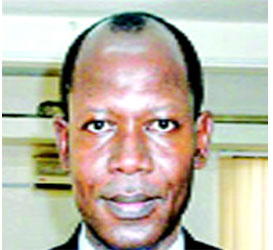
*David Adonri, Managing Director, Highcap Securities Limited
Mr. David Adonri, the Managing Director,CEO, Highcap Securities Limited, in this interview with Financial Vanguard talks about the need for fiscal authority to create programmes in various sectors of the economy that will increase production in those sectors, thereby lifting the state of the nation’s capital market and the economy in general.
By Nkiruka Nnorom
AT the last MPC meeting, the CBN decided to keep the interest rate at 14 per cent, while the cash reserve ratio and liquidity ratio were retained at 22.5 per cent and 30 per cent respectively, what do you think is the implication of these on the capital market?
Those indicators were retained indicating that the monetary authority has exhausted all the tools they have with which they have to bring the economy out of stagflation.
So, having exhausted all the monetary policy tools and the situation has not changed materially, though there are some positive indications, for instance, inflation rate is no longer galloping the way it was in the past, it is now well moderated but is not enough to bring the economy out of stagflation, the onus now lies on the fiscal authorities to deploy more of their tools to move the economy out of stagflation.

*David Adonri, Managing Director, Highcap Securities Limited
And a lot of those tools have even been touched at all; the federal government is yet to come up with appropriate programme for each sector of the economy to boost production so that the supply gap in the economy can be covered.
You know, it was only during Gen Olusegun Obasanjo’s administration that government came up with a programme for cement and we have been able to close up the supply gap in that way and we now have over-supply of cement. So, the government has to come up with a programme for every sector of the economy in order to cover the supply gap.
It is only through supply management that this economy can move out of stagflation. The major duty of the monetary tools is demand management, to moderate demand, which they have already done. So, it is now the duty of government or the fiscal authority to come up with policies and programmes to enhance supply.
The crisis we have now is supply management crisis. There are shortages in every sector of the economy and that is why crises are increasing because of short supply. So, government must now come up with a programme for each product line; they are in thousands, even in the educational sector. Other than rice, the government has not been able to come up with programme on any other product line.
So, how will closing the supply gap that you talked about benefit the capital market?
If production increases in the economy, more wealth will be created, more income will flow in the economy and there will be more disposable income, which will trickle down to the capital market.
Financial illiterate
While the economy is revived, the capital market is also revived simultaneously.
There is argument in some quarters that the flexible exchange rate is not good for the economy and in extension, the capital market. How do you react to this?
Anybody that says that market determined exchange rate, otherwise called flexible exchange rate is not good for the economy is a financial illiterate.
That is why it is called market determined. Any price that is administratively fixed is not good for any market.
So, on that basis alone, you will know that flexible exchange rate is one of the major tools that the monetary authority has deployed to effect demand management that had reasonably stabilized the economy. When the market determines the price of commodities, such economy is more efficient than when the price is fixed by government.
When price is fixed by government, nobody knows the basis upon which they fixed such a price and so, it gives rise to economic dislocation and that has been the problem of Nigeria all this while that lots of prices (price of petrol fixed, price of foreign exchange, fixed), those are the things that destroy the economy. If they want to fix prices, why didn’t they fix the price of pure water; why didn’t they fix the price of garri or the price of food stuff?
So, anywhere price is fixed, it negates the principle of market mechanism and it cannot last for too long, it will destroy such an economy. It is only when the market using the forces of demand and supply comes to the market determined price, that is when the economy will be more efficient.
So, that is what has helped us so far – the flexible exchange rate and partial deregulation of the petroleum sector. Those are some of the things that have helped us so far.
What will be the implication of the recent downgrade of Nigeria long term ratings to ‘negative from stable by Fitch on investment in the market?
It will further affect investors’ confidence, especially foreign investors confidence in our market.
Disclaimer
Comments expressed here do not reflect the opinions of Vanguard newspapers or any employee thereof.