By Babajide Komolafe, Peter Egwuatu, Nkiru Nnorom & Franklin Alli
ECONOMIC experts have expressed concerns about the direction of the foreign exchange policy and exchange rate in 2017, saying the hope of recovery from economic recession experienced last year will be largely determined by these two factors.
Meanwhile, Vanguard investigations revealed the banks and investors in the stock market lost about N2.6 trillion due to the impact of economic recession on businesses and investors confidence.
For the first time in 25 years contracted and went into recession in 2016. According to the National Bureau of Statistics (NBS), Nigeria’s Gross Domestic Product (GDP) contracted by 0.36 percent, 2.06 percent and 2.24 percent in the first, second and third quarters of 2016.
Thus there is anxiety over the prospect of the economy returning to positive growth in 2017. In various interviews with Financial Vanguard, economic operators, though divided on the outlook for the economy in the new year, they were however unanimous in the need for full liberalization of the foreign exchange market and harmonization of the exchange rates as critical condition for economic recovery.
“There must be a genuine effort to complete the reforms of the foreign exchange market. We must bite the bullet and agree to have one exchange rate”, said, Mr. Victor Ogiemwonyin, Managing Director/Chief Executive, Partnership Investment Plc
Speaking further, “There must be a genuine effort to complete the reforms of the foreign exchange market. We must bite the bullet and agree to have one exchange rate. The current system of having multiple FX rates is why we have messed up things. You cannot sell FX for one rate at the interbank market another for pilgrims, yet another for airlines and petroleum importers. This will allow for arbitrage and rent seeking. No matter how we pretend about it, some people are getting rich on the current system. If we fix this rate, exports will increase, imports will decrease to expand the foreign exchange availability while foreign investors will find the market here attractive and come and invest. We will be freeing up time and resources we use now in managing and monitoring our foreign exchange market. ”

The same view was advocated by the National Chamber of Commerce, Industry, Mines and Agriculture (NACCIMA) in its recommendation for 2017. “There is equally need for the harmonization of the various exchange rates in the country. A situation where there exist various rates for different purposes does not auger well for the polity. It also does not boost investor’s confidence,” said Chief Bassey Edem, National President, NACCIMA.
The Manufacturers Association of Nigeria (MAN) also stressed the need to remove foreign exchange restrictions. According to MAN President, Mr. Frank Udemba Jacobs “The industrial sector, especially the manufacturing sub-sector, should be strengthened by removing all obstacles restraining the growth and competitiveness of the sector such as the indiscriminate changes in the Monetary Policy Rate (MPR) which changed as many as four times between 2014 and July 2016, with its distorting effects on the economy; the exclusion of 41 items, some of which are essential raw materials, from the official forex market as well as failure to synchronize monetary and fiscal policy actions. This will enable the sector to be optimally productive and play its expected role of employment generation
The Nigeria Retail Investors Group also faulted the current exchange rate policy describing it as unrealistic. Expressing reservation about the 2017 proposed budget, the think-tank group, whose membership comprises of Nigerian professionals with experiences and influence across the public, social and private sectors, stated: “Given the current realities, where the CBN has imposed a peg in the interbank market while resorting to Gestapo tactics to influence the parallel market, there is a massive disconnect between the official exchange rate and the actual rate businesses face.
Realistic exchange rate
Insisting on using this rate as the official rate risks driving genuine business transactions underground resulting in lost revenue for the FG. Thus, a more realistic exchange rate policy which clears the market with little divergence across the various segments would be preferred.”
However, Managing Director/Chief Executive, Financial Derivatives Company Limited, Mr. Bismarck Rewane sounded optimistic; projecting that there would be full liberalisation of the foreign exchange market accompanied with removals of controls. In a presentation titled: “Nigeria and the new economic reality: Outlook for 2017, Rewane noted that exchange rate liberalisation, though will result to official exchange rate of N350 per dollar, it will boost business and investor sentiment. He added that the economy will experience positive GDP growth of between 1.5 percent and 2.0 percent. He said: “2017 will be a make or break year for Nigeria. Growth is and will be a function of oil output and market efficiency. Corruption, waste and inefficiency will remain a drag on government expenditure.
“The most likely macroeconomic scenario will be gradual a U-shaped economic recovery with early signs of rebound in manufacturing sector. GDP growth to return to positive territory: 1.2 percent. Labour productivity growth to improve to -1.6 percent from -3.5 percent. Net Foreign Direct Investment (FDI) of $1.7 billion from $1.6 billion in 2016. Inflation will moderate to 15 percent by year-end while trade balance to swing back to surplus by third quarter of 2017.”
But in his outlook for 2017, Ecobank Research analysts, Kunle Ezun predicted that Exchange rate uncertainties will persist with likelihood of naira devaluation. “Exchange rate uncertainties will persist due to sustained low oil prices, lower FX reserves, and robust import demand. “We expect a managed interbank exchange rate of N305.50 by end-Q1 17. The NGN will remain under pressure largely due to a structural imbalance between USD supply and demand, which will be reflected in proliferated FX market and rates. The likelihood of another devaluation remains in place given oil prices uncertainty. Unless oil prices rise (which we expect) and as there is limited room to cut government spending, significant import demand in an environment of relatively low FX reserves suggests a further devaluation is possible before H1 17.”
Impact of recession: The economic recession was triggered by the decline in crude oil prices, which resulted to decline in foreign exchange income for the country leading to scarcity dollars, economic operators who spoke to Financial Vanguard blamed the decline in GDP on scarcity of foreign exchange.
According to the Managing Director/Chief Executive, May and Baker Nigeria Plc, Mr. Nnamdi Okafor: “Over 98 percent of raw materials used for pharmaceutical manufacturing are imported. What is happening to finished products is also happening to us, you may have read pronouncements from government that manufacturers are getting some special allocation, which is not happening. I can assure you. We are not able to bring in our packaging materials; in fact, that we have survived this year is a miracle to most of us.
“We are not surviving any more with the present situation, it has gone beyond what we can live with and from first quarter in 2017, most factories that are still standing will begin to shut down, because the situation with foreign exchange has gotten worse in the last six months. It was better in the first half because we could get allocations, maybe 20 per cent or 30 per cent of our requirements, but in the past six months we have not gotten anything.
Similarly, Dag Motorcycles Industries Nigeria Limited, the assemblers of Bajaj tricycles and motorcycles blamed the foreign exchange restrictions for the reduction in its production and staff retrenchment. Ademuyiwa Abe, the Company Secretary said, “In the last few months, there was restriction on foreign exchange by CBN. So, most of the time, there was no forex to bring in the Completely Knocked Down, CKD, not just the CKD, but other items required for assembling. The situation became so bad that we had no choice but to scale down production and terminate the services of our contractor who supply the workers.”
According to the Central Bank of Nigeria (CBN) the downturn in business activities triggered increased loan default by bank borrowers. Consequently non-performing loans (bad loans) rose sharply by N1.02 trillion in the first half of the year. The CBN projected that the increased loan default is expected to increase in the second half of 2016, hence bad loans will likely rise by N2 trillion in 2016.
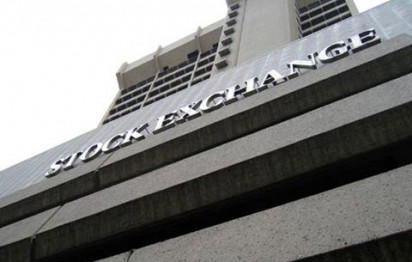
Also reflecting the impact of the recession, investors on the Nigeria Stock Exchange (NSE) lost N603.7 billion as the market capitalisation of the NSE fell billion from N9.850 trillion on December 31, 2016 to N9.246 trillion at the close of trading on 30th December, 2016.
Performance of the economy
Mr. Robert Omotunde, senior analyst at Afrinvest Securities Limited, explained that the stock market is a barometer for measuring performance of the economy. “So, what you see at the floor of the stock exchange is a reflection of the state of the economy. If the economy is not doing well, the only thing that can revamp the stock market is if the economy does well, what will necessarily need to be done is to see the turnaround in economic activities”, he said.
Also, the Doyen of the capital market, Mr. Rasheed Yusuff stated that recession is affecting every sector of the economy not just the capital market. He said activities in the stock market are low, and there are now reduced persons trading in the capital market which has led to reduction in the volume of business.
“The basic thing is for the government policies to be directed towards local production and that will lead to the expansion of the economy and it will manifest in the purchase of capital market instruments. And so, the whole thing is tied to the same economic problem; if the economy is revived and the companies are doing well, then there will be incentive for people to come back to the market and use their savings to buy shares”, he said.
Disclaimer
Comments expressed here do not reflect the opinions of Vanguard newspapers or any employee thereof.