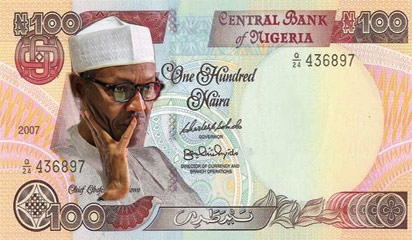
Naira
IN October 2016 when the Federal Ministry of Petroleum Resources launched its new roadmap for the Oil and Gas Sector tagged, “The 7 Big Wins”, the industry appeared set for new development trajectory.
Actions have started with the signing, some weeks ago, of the necessary agreements between the Ministry, the Nigerian National Petroleum Corporation (NNPC) and the International Oil Companies (IOCs) for Nigerian government’s exit from the Joint Venture Cash Call (JVCC obligations.

Naira
In his 2017 budget presentation, President Muhammadu Buhari indicated that this first leg on the new roadmap has commenced with deleting of the JVCC from the budget template.
The first fruit from this now in the basket is an annual saving of about USD8.5 billion which represented JVCC obligations in oil production activities, as provided in 2016 budget, pro-rated at USD712.46 million per month.
Hitherto, government had demonstrated lack of commitment and or capacity to deliver on this obligation, thus leading to a backlog of about USD8.5 billion over the years, with USD2.5 billion accumulated in 2016 alone. It is obvious that with the no-respite-yet situation in the federation accounts, 2017 could only have escalated the backlog.
Therefore, the reform had become imperative to stave off the adverse consequences of the rising backlog, one of which was the eclipse of fresh investments in oil exploration and production in Nigeria.
But beyond the need to save Nigeria from the dearth of investments in the upstream oil and gas industry, the JVCC exit was designed to free resources for government’s developmental roles in the sector while also getting it more focused on policy and regulatory issues effectively.
We are optimistic that the laudable objectives of this initiative would be achieved even as the quick-wins begin to manifest, such as getting the IOCs to apply their own funds to production activities, including development of new oil wells.
This should come in addition to the re-investment of the saved resources into supportive infrastructure in the oil sector.
We, however, draw attention to some grey areas that need more transparency and diligence. We expect government to ensure that the IOCs bring in foreign capital. They should not crowd out local investors, industry stakeholders and other sectors of the economy in access to funds available in the local money market, including foreign exchange market.
We would also want to see pledges and commitments of the IOCs to higher production targets in tandem with the 2.8 million to 3.0 million barrels per day projected under ‘The Big 7 Wins’ template.
There is a need for the establishment of a transparent cost accounting and audit system in view of the fact that the cost of operation is deducted upfront from total revenue in favour of the IOCs.
Disclaimer
Comments expressed here do not reflect the opinions of Vanguard newspapers or any employee thereof.