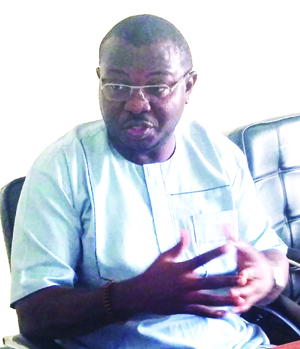
Oladipo Williams
By Jonah Nwokpoku
Oladipo Williams is the Executive Vice President and co-founder of Haske and Williams. Haske and Williams is a company focusing on developing the Nigeria agricultural sector. In this interview, he spoke on some of the projects that Haske & Williams are developing in North East Nigeria and how it will transform the agricultural value chain. He also spoke on other issues bothering on the growth of the agric sector in Nigeria even as he argues that the federal government must cut the debt burden of banks that lend to agric sector if the sector must get increased access to financing. Excerpts
Who is Haske and Williams?
Haske and Williams is a relatively new entrant into the Nigerian commercial agriculture space and our focus as a company is identifying, conceptualising and developing projects in Nigeria’s food and agricultural sector. We essentially as a company indentify agricultural commodities with high growth potential and we then deploy the necessary resources to be able to develop that potential into real projects that people can see and can then begin to generate the necessary benefits that we want.

Oladipo Williams
When you say you develop and conceptualise, what do you mean? Do you have any instances where you have done this?
In terms of conceptualising, one of the big things when it comes to agriculture is to identify your location. And this location identification is a very big part of what we do. So, we have a very strong ground game where we send our people into the locations where we have decided to situate our projects to essentially go down and assess the situation on ground, engage in discussion with the community, determine the technical requirements that are needed for this project and see that they are available in that area. They also look at existing market conditions in that area to ascertain the logistics requirements. These are some of the things that go into the planning and conceptualisation stage. So, it’s a whole range of things, some happen within the site and some outside of it.
Is Haske & Williams a business to business company or business to consumer Solutions Company?
I would say we are a Business to Consumer Company. However, we are a Business to Consumer Company with a very strong focus on community development. One of the things we have seen in our review of the Nigerian agricultural sector is the tendency for big business is to always have their own interest overshadow every other person’s interests, especially to the detriment of host communities and this is a very key issue for us in developing and conceptualising our projects. One of the things we are pioneering with the DEMSA integrated rice projects is that 20 per cent of the total land area to be developed for the project will be allocated to smallholder farmers within the community to enable them also benefit directly from all the improvements that this project will bring along the agricultural value chain.
Which part of Nigeria are you focusing on now and have you started implementing any of these projects?
Well, as we speak today, our largest and most advanced development is in Adamawa, Demsa local government area in North East Nigeria. This is not an area many people want to go to but this is a price you pay for having something you want to achieve that you really believe in. one of the things that is seen as a hindrance to the development of the agricultural sector in Nigeria is this lack of planning. It’s a huge problem. We are always eager to start without doing the right things. What we have done with this project over the last seven months is to embark on those critical aspects of the projects that need to ensure that we can say, we have something bankable here. So many things we have done. We have completed the social and environmental impact assessment, which is a very critical requirement to be able to develop a project of this scale. We have completed irrigation system design for the project, we have acquired the land which is required for the paddy cultivation estate and the engineering design for the rice processing complex has been completed as well. We have also formed a cooperative society. Another thing we have done which we are very proud of is the level of engagement we have had with the community. It is very impressive and that is why we have come this far. A lot of projects are stuck right now because of community related issues. So we have been able to keep constant communication with community. We have also signed a technical partnership agreement with our technical partner from France which is one of those things that will differentiate this project from a lot of other projects that are being conceived at this time.
What is your position on GMO? Does your company have any plans of introducing it along your value chain?
We are not introducing GMO. But I also think that it is important that we are open minded to innovation. We must also look at things objectively instead of just screaming when we hear something like GMO. What I will tell you again and that is very interesting is that, what we have here as local varieties of rice is not very suited for irrigated agriculture. So even if you spend billions of naira on irrigation infrastructure, you most likely will not improve yield drastically to justify that investment. So there is need for a holistic review of our entire agricultural system if we are to really realise our full potential.
Are you saying that GMOs are imperative if the country must succeed in agriculture?
I have not said that GMOs are imperative, I said that we must expand our views on it, we need to be open minded, if they offer a solution to our problem, we need to look at it. At this point in time, we have no plans to introduce GMOs at the moment, for this project. I have read the literature for GMOs and I think that with the right regulations, to ensure that the interest of the society and small holder farmers are protected, GMOs can thrive here. But we need the necessary policy and framework to regulate it, if we must use it solve our food problem.
What would you consider the greatest impediment to the implementation of your proposal in relation to the agricultural policies in Nigeria?
The number one challenge is the disposition of the commercial banks to financing agricultural projects. Agriculture is capital intensive, especially on a commercial scale. So, there needs to be more concentration by the government to reduce the level of liability that the banks have to bear in lending to the agricultural sector. A lot has been done but more still needs to be done to further improve confidence and willingness of these banks to lend more to the agricultural sector.
Disclaimer
Comments expressed here do not reflect the opinions of Vanguard newspapers or any employee thereof.