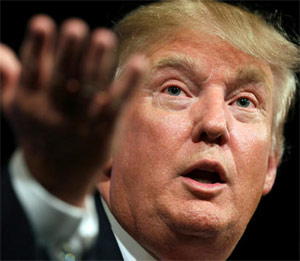
Donald Trump
Republican candidate Donald Trump left Americans in suspense on Wednesday whether he will accept the result of the November 8 election.
In the third and final presidential debate with Democratic rival Hillary Clinton, in Las Vegas, Trump said he would wait to decide whether the outcome was legitimate.
“I will tell you at the time, I will keep you in suspense,” Trump said.
Clinton responded: “Let’s be clear about what he is saying and what that means: He is denigrating, he is talking down our democracy and I for one am appalled that someone who is the nominee for one of our two major parties would take that position.”
Clinton further said Trump was fond of alleging rigging “Every time things aren’t going his way”.
In a fiery debate that centred more on policy than did earlier showdowns, Trump accused Clinton’s campaign of orchestrating a series of accusations by women who said he made unwanted sexual advances against them.
Trump said all of the stories were “totally false” and suggested Clinton was behind the charges. He called her campaign “sleazy.”
“I think they either want fame or her campaign did it, and I think it’s her campaign,” Trump said.
Clinton said the women came forward after Trump said in the last debate he had never made unwanted advances on women.
In a 2005 video, Trump was recorded bragging about groping women and kissing them against their will.
“Donald thinks belittling women makes him bigger. He goes after their dignity, their self-worth and I don’t think there is a woman anywhere who doesn’t know what that feels like,” Clinton said.
“This is a pattern. A pattern of divisiveness, of a very dark and in many ways dangerous vision of our country where he incites violence, where he applauds people who are pushing and pulling and punching at his rallies. That is not who America is,” she said.
In the run up to this last debate, expectations were that Trump would seize the chance at a nationally televised debate to reach out to the undecided voters he badly needs to keep his presidential campaign viable.
He passed on the opportunity by suggesting he might not accept the election result and by also calling Clinton a “nasty woman,”.
He also repeated hard-line conservative positions on issues such as abortion and immigration.
While that kind of rhetoric was catnip to his passionate, anti-establishment base, it is unlikely to have appealed to independent voters and women who have yet to choose a candidate.
“When you’re trailing in the polls, you don’t need a headline the next morning saying that you’re not going to accept the election results,” said Ford O’Connell, a Republican strategist who supports Trump.
With less than three weeks left in the race, Trump is behind Clinton in most battleground states and is underperforming in almost every demographic voter group compared to the Republican nominee, Mitt Romney, four years ago. Party strategists had said before the debate that he needed to use the event to draw in voters beyond his hard-core supporters.
Trump didn’t listen or perhaps didn’t care.
His debate was a continuation of his apparent strategy to ensure his most fervent supporters show up on Election Day, while betting that his attacks on Clinton’s character and truthfulness will discourage voting by already sceptical young and liberal Democrats.
But experts who study voter behaviour warned that his attacks on Clinton may backfire, saying he may instead awaken Democratic voters who have so far been uninspired by Clinton.
“The risk he faces by engaging in a scorched-earth policy is that he activates people rather than turning them off,” said Michael McDonald, who runs the U.S. Election Project at the University of Florida.
Disclaimer
Comments expressed here do not reflect the opinions of Vanguard newspapers or any employee thereof.