By Dele Sobowale
“It’s the worst possible time for us..,,How are we going to get ourselves out of this recession? We must make sure that we diversify our economy. There are too many of us to keep relying on oil..”
– Finance Minister, September 1, 2016, in THE NATION, p 1.
 The Minister had just announced officially that Nigeria was in a recession – with Gross Domestic Productivity, GDP, declining by 2.06 per cent. It was the worst in over twenty years. And, given the causes, the trend might continue for the balance of the year.
A few days to the end of the same month, she had again announced that the Federal Government had just released another N350 billion for capital expenditure – to bring the total released for the year to N700 billion – against the year’s budget of N1.8 trillion. Obviously, the capital expenditure for the rest of the year cannot be more than N1 trillion. Less than 66 per cent of the capital budget will be available this year. That will have dire consequences for the nation’s economy and welfare.
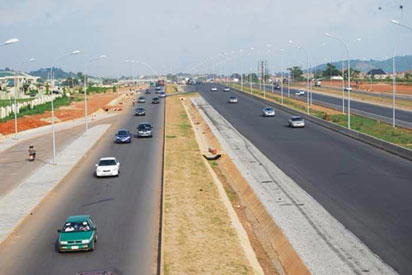
Infrastructural decay threatens to gather momentum all over and none is more pressing than roads. With limited rail service; air travel for less than one per cent of the population, bad roads affect all Nigerians more than any infrastructure. The precarious conditions of four major roads in Nigeria reflect the gravity of the situation.
The Onitsha-Enugu “Expressway” serves, not only, as the link between Anambra and Enugu states, it is also the southern leg of the Eastern route from the 9Th Mile in Enugu to Benue, Nasarawa, Plateau, Bauchi all the way to Borno state. Today, that 120 kilometre stretch of road is the beginning of over 800 kilometres of death traps. It is almost impossible to find five good kilometers of good road along that route.
Ibadan- Ife-Ilesha-Akure-Owo road used to be the preferred route to Abuja from Lagos. Not anymore; anybody taking that route should be ready to sleep on the road even if the trip starts at five in the morning.
It is quite possible that the reader has not traveled the Benin-Auchi-Okene-Lokoja road for quite a while. On Thursday, October 6, 2016, travelers on that road from 1 pm were at a standstill for hours on account of two trailers and one tanker getting stuck in the mud at Ekpoma. This is the link road between Edo, Delta, Anambra, Enugu, Imo, Abia, and most of the South South to Abuja. It is difficult to find two straight kilometers of good road along that route all the way to Lokoja.
Once upon a time, and it appears like light years ago, the Enugu-Aba-Portharcourt Expressway was a joy to drive. Even the slowest driver completed the trip in less than two hours. Today, the most reckless driver cannot finish the Aba-Port section in that time. The most obvious question is: what made the difference?
The shortest and most honest answer is: Toll gates. The first Federal Express roads to be constructed – Lagos-Shagamu-Ibadan, Shagamu-Ore-Benin-Asaba; Ibadan-Ife, Onitsha-Enugu-Portharcourt, Kano-Zaria-Kaduna-Abuja and the Lokoja road — had toll gates which were meant to generate funds for the constant repair and maintenance of those roads. Incidentally, Nigeria must be the only country in the world without toll gates on its highways.
That was one of the legacies of our lunatic reliance on crude oil (even Saudi has toll gates) and the short-sightedness of President Obasanjo who dismantled toll gates but removed history from school curriculum as well.
Only God knows how many trillions of naira in revenue the Federal and state governments would have been sharing every year if there were toll gates on our major roads. The Federal Ministry of Works, under Fashola will not receive sufficient funds in 2016 or 2017 to halt the increasing collapse of our expressways.
Perhaps no Minister charged with the responsibility for highways will ever do that. The truth is; worldwide users of expressways are supposed to pay for the use of the facilities – including functioning toilets and emergency medical services.
The existing situation is inherently unfair to the vast majority of Nigerians. Less than fifteen per cent own cars or trucks or tankers. Yet, their tax money is used to maintain roads damaged by the thousands of DANGOTE, FORTE, CONOIL, TOTAL LAFARGE, NNPC, etc, trailers and tankers. Is that fair to all concerned? Doubtful.
One reason why re-installation of toll gates should be attractive is the fact that it can attract the elusive foreign direct investment if a lot of these roads are contracted out on competitive basis under a Build-Operate-Transfer, BOT, arrangement.
Selected investors will bring their capital to construct the toll gates; operate them for agreed number of years and later transfer then to governments. All the appropriate government institutions would have to do is to ensure that the contractors operate according to the agreements signed with them.
For instance, the agreement might stipulate Nigerian participation in any project. It might even allow states and Local Governments to have share participations and limit the number of foreigners employed to provide job opportunities for Nigerians.
Above all, constant maintenance of each road will be the responsibility of the contractor. No longer will allocations be made for roads in the capital budget; and no longer will our roads remain death-traps.
One Committee of the House of Representatives was reported to be opposed to toll gates. That is no surprise. They claim that toll gates will increase the economic burden on poor people. It is a cynical statement because the worst victims of horrible roads are the poor.
They lose lives, limbs and products of their labours. They should be ignored. “A cynic knows the price of everything and the value of nothing.” (Oscar Wilde, 1854-1900).
Disclaimer
Comments expressed here do not reflect the opinions of Vanguard newspapers or any employee thereof.