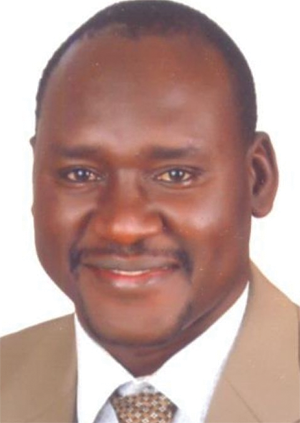
Auwal Ibrahim
The recent actions taken against some judicial officers by the Department of State Services, DSS was the most confrontational action ever taken against the bench by the executive arm of government. In what was termed a ‘sting’ operation, seven judicial officers serving in different branches of the judiciary were apprehended for alleged acts of corruption three weekends ago. Various sums of money in different currencies were confiscated and the judges taken into custody before they were released after spending various days in detention.
The action of the DSS has sparked reactions from various quarters ranging from indignation at what was alleged as the desecration of the temple of justice to rapturous approval of what some claimed as a much needed cleansing of the judiciary.
Two leading lights in civil society responded on the development:
DSS shouldn’t be an attack dog — Ajulo
Mr Kayode Ajulo is a legal practitioner and erstwhile National Secretary of the Labour Party. In this interview, he bares his mind on the raid on judges by the Department of State Service, DSS, warning that the DSS is not a secret-police and should not be allowed to become an executive attack dog. Excerpts:
What is your position on the sting operation on some judges by the DSS?

Kayode Ajulo
Good intention, bad action. That is what readily and easily comes to mind. Would it generate so much comments if ordinary citizens were so arrested? I think not. To fuss over this particular arrest is precariously tantamount to pre-supposing that some people are, to borrow from George Orwell, “more equal than some others”, or above the law or the thoroughness of its procedure. I think it is important to demystify the very officers who dispense justice in law courts not out of spite but on founded grounds of suspicion. It cements the constitutional principle that no one is above the law.
The manner with which the operation was carried out was welcomed with mixed feelings, do you see it as a good precedent?
No I don’t. The Gestapo-manner with which the operation was carried out begs a lot of questions. It muddles what is in itself a laudable effort in the anti-corruption crusade of the current central administration. The following questions are raised: were there preliminary communications between the judges / justices and the DSS? Were invitations extended and disregarded by the first party? Are the judges flight-risks? Did they really resist the officers of the DSS and forced a secondary or primary resort by the DSS?
I really do not concur with the presidential factsheet which argues that the DSS’ power and function can be so accommodated within the provisions of sections 2(3) of the National Securities Act and 315 of the Constitution of Nigeria, 1999. It is an overreach, a stretch of their legal imagination which is a perversion of the law creating and sustaining the DSS itself. The DSS is not a secret-police and should not be allowed to become an executive attack dog. What happened to the ICPC, EFCC and the Nigeria Police Force?
Some of the judges have accused some ministers of allegedly trying to bribe them, how do you see these revelations?
The timing or, is it coincidence, of their allegation is poor. It weakens the veracity of their claims to be coming out with such weighty claims only at the point where the safe cocoon of their untouchability is being ruffled. That said, President Muhammadu Buhari must be advised to investigate the allegations all the same for they are grave and of serious import to his anti-corruption war effort. We know they are hardly saints in politics anyway.
The National Judicial Council and the Nigerian Bar Association are obviously on the same page on the matter, what do you the situation would lead to?
The NJC itself would be on trial as all watch to see if their sense of righteous persecution would make them biased in handling the cases against their colleagues when brought before them. The thing is, the judiciary is not positioned to make or cause much rucus over the arrests within their ranks. The very nature of their offices makes them docile, add to that the fact that they’ve never been so ruffled in the past and are, unlike the Legislative arm, not experienced in the politics of paying tit for tat against the executive arm of government.
There are calls on the affected judges to step down their positions, do you support this step?
Well, section 36 (5) of our constitution provides that an accused is innocent until otherwise proven, as such the justices and judges must be so treated. However, the call for their stepping down it not predicated on a presumption of guilt against them but stemming from a need to preserve the very ethical and moral foundation of the judiciary which, ostensibly, is what is on trial. I think the gravity of the allegations against the Lords should permit public policy over a strict adherence to the rules, this is so as to avoid absurdities. The judiciary as an institution should not allow the ego of a few officers overwhelm the doing of what is right in the interest of the greater citizenry and the nation.
Let’s look at it this way, if the judges are stripped of active cases which are handed to other colleagues but later proven innocent, is they a loss? But what if they go on actively sitting over cases and writing judgements while battling their prosecution in court and are later found guilty, doesn’t that question the integrity and soundness of the cases handled within said period?
Rot in the judiciary necessitated DSS action — Ibrahim, Rafsanjani
Auwal Ibrahim is the executive director, Civil Society Legislative and Advocacy Centre, CISCLA, a pro-democracy group engaged in building the capacity of the legislature in the country across the various tiers of government. In this interview, he speaks on the recent action taken against some judicial officers, affirming that it was a much needed intervention into what he claims as the rot in the judiciary. Excerpts:

Auwal Ibrahim
Honestly, we need some madness like what has happened to bring about the kind of conversation into the way and manner our judiciary has turned itself to be. We all know that there is nothing like justice in Nigeria except you have money. As much as we have reservations on the way and manner the DSS has gone about it, I think it has helped to bring some national conversation and consciousness because everybody is tired of these people, but nobody had the courage to do anything. Everything has its positive and negative side but for me, I see it as a good development in that we can now begin to have conversation as to the role of the judiciary in bringing about justice delivery.
I mean look at some ridiculous judgments that they have given, particularly, perpetual injunctions that someone should not be tried.
Can you imagine the ridiculousness of it and nobody had been able to raise issues with it. So as much as we can say that the DSS has done this, but the question that needed to be asked is, has the same DSS not been attacking journalists, have they not been attacking civil society? So for me there is no way to side the judges, let everyone be on a plane ground. I am sure that there must be an issue for the DSS to have gone to the judges as they are not crazy.
Look at how the governor of Rivers State has become the advocate of a judge, and that tells you that something is fishy and this is an indication of the failure of the NJC to bring discipline to the bench.
The truth is that for every action, there is a positive and negative side to it and for this, the positive side is more because we cannot go back to where we were yesterday.
The consciousness in the minds of the citizens is very high, any judge doing hanky-panky will know that people are watching and this has given us opportunity to begin to question what judges do. It has opened a window of opportunity to begin to question because before people were scared and afraid to talk.
For me, judicial corruption is a major problem in Nigeria and we need to do some kind of madness because if you want to follow the due process that people are talking of, they will interpret and manipulate it that you cannot get anything in terms of reforms because they (are the ones who interpret the law and they are the ones who manipulate the whole thing, so you need some madness and then we can now come back and start talking of due process. So, for me, I think that the action that has happened you would see that those who initially attacked the DSS are now beginning to mellow.
You can see that even lawyers are keeping quiet now because the facts are being brought forward as everyone knows that there is justice in Nigeria. It has opened a window of opportunity to address the judicial system in Nigeria notwithstanding the negative comments it has attracted to the DSS. There will be more openness in the way and manner the judiciary conducts itself and this is a good development that will lead to sanitising the judiciary. Everybody is afraid and all the big lawyers are conniving. People have done terrible things in the past and the NBA did not come out to do anything, and for me you cannot talk of fighting corruption without touching the segment of corruption in the judiciary.
Though the DSS would be cautioned not to behave in a barbaric manner.
- Sylvester Ngwuta – Supreme court Judge
2.) Inyang Okoro – Supreme Court Judge
3.) Justice Mohammed Tsamiya – suspended Presiding Justice of the Court of Appeal, Ilorin Division
4.) Justice Kabiru Auta – Kano State High Court
5.) Justice Adeniyi Ademola – Federal High Court, Abuja.
6.) Justice I. A. Umezulike – Former Chief Judge of Enugu state
7.) Muazu Pindiga – Federal High Court, Gombe Division.
Disclaimer
Comments expressed here do not reflect the opinions of Vanguard newspapers or any employee thereof.