By Festus Ahon
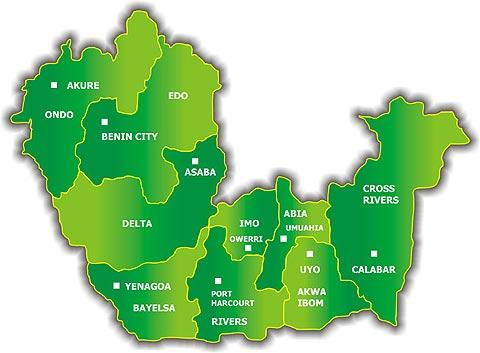
Delta state is today celebrating her 25th year anniversary. Created on the 27th of August, 1991, with its capital located in Asaba, the state had as her first Military Administrator, Group Captain Luke Chijoba Ochulor.
 The creation of the state by former Military President Ibrahim Badamosi Babangida was however greeted with mixed feelings as the various ethnic groups that made up the state were divided. While the Urhobos, Ijaws, Isokos and Itsekiris felt that they were given a state without a capital, the Ndokwas, Ikas and Aniocha/Oshimilis argued that they were given a state capital without a state.
Prior to the creation of the state, the Urhobos, Ijaws, Isokos and Itsekiris were agitating for the creation of Delta State with either Warri or Ughelli as capital while Ndokwas, Ikas and Aniocha/Oshimilis were asking for the creation of Anioma State with capital at Asaba.
The fight among the Urhobos, Ijaws, Isokos and Itsekiris on where the capital should be cited was intense to the extent that they could not resolve it. The Ndokwas on the other hand, were divided at the time on where to belong. While a section was of the view that they should join Delta State, another section insisted on having Anioma state.
Those agitating for Anioma state but were not given saw it as injustice but today, the people are better for it as the merger of Anioma and Delta State into one has brought strong unity among the diverse ethnic nationalities in the present Delta State.
The march for the unity of the state began with the election of the late Olorogun Felix Ovuodoroye Ibru as its first civilian Governor. Olorogun Ibru who hails from the Delta Central Senatorial District was overwhelmingly elected by the people from the three Senatorial Districts that made up the state.
Upon his swearing-in as governor in January 1992, Ibru appointed into government people from across ethnic and senatorial divide in the state. As the first civilian governor, Ibru laid the foundation for the development of the new state.
As an Architect, Olorogun Ibru developed the master plan for the infrastructural development of the entire state and the Asaba Capital city. His administration was however cut short by the military junta of late General Sani Abacha which overthrew the then Interim Government headed by Chief Ernest Shonekan after General Ibrahim Badamosi Babangida ‘stepped aside’.
The various military Administrators who came in after Ibru’s exit tried to build on the unity and development he (Ibru) initiated.
Chief James Onanefe Ibori who came in 1999 and governed for eight years as the second civilian governor of the state also built on the unity of the state.
His successor, Dr Emmanuel Eweta Uduaghan from Delta South also tried his best as he sustained the bridge of unity laid by his predecessors in the eight years of his administration.
Today, Governor Ifeanyi Arthur Okowa from Delta North is at the helms of affairs in the state. He served as commissioner in the administration of former Governor James Ibori and Secretary to the State Government, SSG under former Governor Emmanuel Uduaghan. Okowa who came into office on the 29th of May, 2015 with a pan-Delta agenda is determined to strengthen the bond of unity built by successive administrations.
This is manifest in his appointments and projects. Okowa’s appointments cut across all the ethnic groups and senatorial districts to the extent that no ethnic group or senatorial district is feeling cheated in the scheme of things.
Today, his projects despite the present economic situation, are scattered across the state. While initiating his own projects, Governor Ifeanyi Okowa is also striving to complete legacy projects like the Asaba International Airport, the Ughelli/Asaba road dualization among others left behind by Dr Emmanuel Uduaghan.
Governor Okowa is working round the clock to ensure the development of the state. To this end, he has attracted foreign and local investors to the State as part of effort towards building infrastructure and creating jobs for the youths.
Disclaimer
Comments expressed here do not reflect the opinions of Vanguard newspapers or any employee thereof.