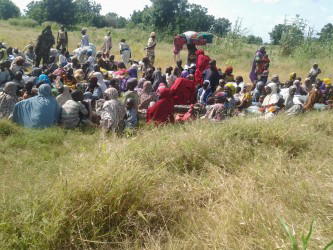
We are sad but not surprised over reports of death of inmates in the Internally Displaced Persons (IDP) camps in Borno State as a result of malnutrition.
A recent report by the Doctors Without Borders to President Muhammadu Buhari, complete with photographs depicting grossly malnourished children also warned that 24,000 IDPs needed urgent medical attention. At least 30 children reportedly die daily from malnutrition. This infuriated the President and he invited Governor Kashim Shettima of Borno State to the Presidential Villa to ascertain the reasons behind this problem in spite of “huge spending”.
The truth is that we have a loose-handed attitude to the welfare of the IDPs in our midst. Though Nigeria is a signatory to the 1969 Africa Convention on Refugees as well as other protocols that define the rights of displaced persons to protection and welfare in member countries, we hardly pay much attention to these obligations.
Nigeria has almost three million IDPs in the various camps, over two million of whom are in Borno facilities. Apart from the humanitarian efforts of international charity groups, the bulk of the burden of catering for the IDPs, especially in terms of feeding, has largely been abandoned to the Borno State Government.
The Federal Government-run National Emergency Management Agency (NEMA) has also struggled to maintain services in the camps, but of late, there have been reports of corruption by some of its officials who allegedly divert the rice and other items for the feeding of the IDP’s.
In fact, only penultimate week, some soldiers stormed the IDP food store in Borno State Government House and tried to force policemen on duty to give up some of the rice meant for the IDPs. This resulted in a shootout that left some people injured. The situation was brought under control by the state governor and the military authorities.
We call on the Federal and Borno State Governments to tackle the rising cases of corruption and ensure that food items meant for the IDPs are channelled for their upkeep. Those implicated in the corruption must be punished. Financial disbursements for the care of the IDPs must be carefully monitored or they will continue to be stolen by public officials.
We must bear in mind that the care for IDPs is not a state or even federal government affair alone. It is an international issue. That is why international humanitarian groups are here to help. We must approach the care of our IDPs with international best practices. That way, we will attract more foreign assistance and collaboration.
We have an obligation to protect the IDPs and provide for their welfare until they can safely return to their communities. These malnutrition deaths must be curbed.
Disclaimer
Comments expressed here do not reflect the opinions of Vanguard newspapers or any employee thereof.