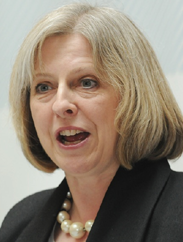
Theresa May
British democracy has been displaying its brilliant colours for those who have eyes – especially developing democracies like ours – to see. Following the Thursday, June 23, 2016 vote by the electorate to leave the European Union in the Brexit/Bremain referendum by 52% to 48% former Premier, David Cameron, offered to quit in October 2016, having led his government to a major defeat.

Theresa May
He further surprised many by offering to leave office three months ahead, thus paving the way for the emergence of Tory MP and former Home Secretary, Theresa May, as the new Premier. May’s road to the top job was made easier by her closest rival, former Energy Minister Andrea Leadsom, whose poor support base in the Conservative Party and some impolitic remarks cut short her ambition to succeed Cameron.
May immediately applied herself to her new herculean task by naming a cabinet to implement the vote of the people, though she was a campaigner for Britain to remain in Europe. She declared: “Brexit is Brexit”, thus putting a damper on hopes in some quarters that another referendum to reverse the vote could take place any time soon – or at all.
May, a strong-willed politician, after the image of the late Iron Lady, Margaret Thatcher, is faced with daunting challenges. One of them is that she must actualise the people’s vote to avoid being accused of sabotage by the “victorious” pre-exit Britons. But at the same time, she must find ways of exiting Britain on such terms as not to plunge the country into a deeper economic mess than the aftermath of Brexit is already signposting.
But by far the most challenging burden before her is how to maintain the unity of the United Kingdom. Though England and Wales voted overwhelmingly to leave Europe, Scotland and Northern Ireland also voted overwhelmingly to stay. Brexit might lead to the dismemberment of Great Britain, with Northern Ireland rejoining the Irish Republic while Scotland regains its independence which it gave up hundreds of years ago. Can Premier May keep the United Kingdom united?
If Nigeria’s democracy is to develop and become as sophisticated as that of Britain, we must learn to take the genuine wishes of the Nigerian people seriously. Cameron showed he was bigger than public office: he personally helped with the removal of his proeprty from No. 10 Downing Street. We saw him and his family quitting like champions!
Secondly, we must give chance to good leaders to emerge, not minding the circumstances of their birth, religion, tribe, region, gender or such inanities.
The overall interests of our country must always overshadow the petty fancies of individual politicians and political parties. Great Britain, our country’s former colonial master, has shown a good example.
Shall we follow?
Disclaimer
Comments expressed here do not reflect the opinions of Vanguard newspapers or any employee thereof.