By Dele Sobowale
“The liberalization policy will lead to the creation of 600,000 jobs…”
Lai Mohammed, Information Minister, NATION, May 17, 2016, p 6. In the report by Yusuf Alli, Yomi Odunuga and Vincent Ikuomola, all senior editorial staff of the paper, the Minister also pointed out that “Government is not about popularity. There are times in life you have to take a very hard decision and this decision is for the long term and benefit of everybody.”
 Fortunately or unfortunately, the three journalists were with the paper in January 1, 2012 when Jonathan’s government increased the price of fuel from N97 per litre to N141 – an increase of 45.3 per cent. Each of them should be able to recollect what he wrote in response to that announcement. Lai Mohammed, then the National Publicity Secretary for the Action Congress of Nigeria, ACN, also should go and find out what he said in 2012.
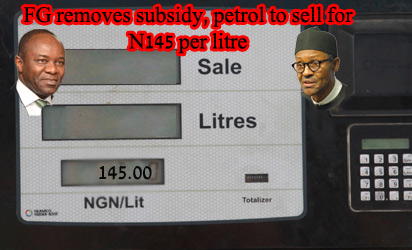
However, many Nigerians would recollect that President Jonathan used almost the same words to justify the increase – it was in the national interest and it was designed for our collective long-term benefit. But, the explanation was dismissed by the political opposition – meaning those now asking Nigerians to accept the new increase as inevitable. That new increase, from N86.50 to N145 per litre, is not only higher in real terms (N145 versus N141), it is also higher in percentage terms (67.5 percent versus 45.3 percent).
Whereas the proposed increase of 2012 was followed by mass protests, fuelled largely by the political opposition then, the same individuals who organised the Occupation of Kudirat Abiola park in Ikeja and made condemnatory speeches against Jonathan are asking Nigerians to embrace the new price and wait for better days.
Certainly, no Pastor will lead an army of occupation to Ikeja. Ambode, unlike Fashola in 2012, will not allow the people the “freedom” to occupy the site this time around. And, if they attempt to do so, and they are warded off by soldiers, the same people who argued for their right to free association will look the other way if soldiers brutalise them – because they were Jonathan’s soldiers in 2012; they are Buhari’s soldiers now. All leading members of the PDP supported Jonathan in 2012; all leading APC members are now supporting Buhari now.
As Lai Mohammed had told us, popularity had nothing to do with it. Power is the most important thing. Nigerians handed power to a new set of rulers in 2015; they should be ready to accept the consequences. One of this is N145 per litre fuel the repercussions of that decision. Many of the implications of the policy decisions are grave in the short term; that explains why Lai Mohammed premises his announcement on the long-term benefits. He has a lot of reasons to do so. As a comedian once observed, “economists talk about the long-term because they know that in the long term we are all dead anyway.”
By not putting a date on when the benefits of liberalisation and N145 per litre fuel will flow, the Federal Government of Nigeria has given us a “politicians promise” – which “like pie-crusts are made to be broken”. (Jonathan Swift, 1667-1745). If the benefits expected will require more than seven years to be delivered, obviously Buhari will not be around to claim credit or blame for them. Long term has become a face-saving device for governments which are not sure of the outcome of their policy initiatives.
“Wise skepticism is the first attribute of a good critic.” James R. Lowell, 1819-1891. (VANGUARD BOOK OF QUOTATIONS, VBQ p 222). Because Nigerians with long memory have heard similar promises about the future from previous governments, “Housing for all by 2000 by IBB; Millennium Development Goals by 2015 by OBJ, and 14,300MW of power by 2013 by GEJ, any economic analyst and public commentator must be skeptical about the new claims and promises. Bluntly stated” “We have heard such stories before and they have led us nowhere. Lai Mohammed’s claim that the government he serves is different is also not new.
Every government before now had claimed to be different and more people oriented. Each had produced more billionaires among those in the corridors of power while the people remained impoverished. The 600,000 jobs promised are like so many birds in the bush. Compared to six in hand they are nothing and may never materialise. So, since nothing concrete had been promised by the Minister, on behalf of the Federal Government in the long term, perhaps the best place to start examining the consequences of the new policy is from the immediate consequences and the short term.
The announcement of the new fuel price was made on Wednesday May 11, 2016 in the early evening news. And, some of the consequences were felt from early morning the next day. As promised by the Minister of State for Power, Dr Kachikwu, the fuel queues vanished. Price has always been a mechanism for crowd control. Announce a concert by a popular singer and peg the ticket at N1000 and you might need the Nigeria Army to control the crowd. Raise the ticket to N15,000 and hardly anybody will show up. All the filling stations from Lagos to Ibadan having fuel, and who hitherto had caused massive hold-ups were almost completely deserted. Those willing to pay the new price spent less than five minutes to get served instead of three or four hours.
Meanwhile, the driver of a bus from one of the largest fleet owners got down at the Sagamu filling station and announced that his bus was the first to leave Ojota that day – unlike the past week when it would have been the sixth. Furthermore, the second bus might be the last for the day instead of twelve to fifteen. Passengers became scarce commodities immediately.
Disclaimer
Comments expressed here do not reflect the opinions of Vanguard newspapers or any employee thereof.