By Emmanuel Elebeke
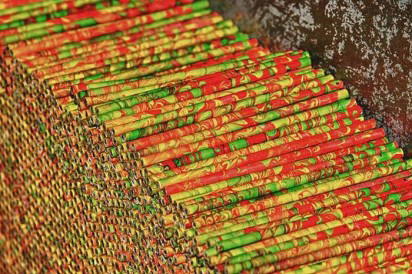
The Minister of Science and Technology, Dr. Ogbonnaya Onu, says the ministry has the capacity to generate about 3.4 million jobs in 2016 through pencil production at Project Development Institute (PRODA) in Enugu State and the cassava flour project at Federal Institute of Research (FIRO) in Oshodi, Lagos.
The Minister disclosed this on Tuesday, when the Chairman of the Board of Directors of Nigeria Economic Summit Group (NESG), Mr. Kyari Bukar, visited him.
 The Minister, said his policy thrust for 2016 will be focused on domestication of science and technology and job creation to ensure that the country change the culture of over flooding of the market with imported goods.
The minister, who expressed confidence in the ability of the ministry and its agencies in providing the needed alternative for revenue generation, said diversification of the economy through technology is no longer negotiable.
‘‘The policy trust is to ensure that we create new jobs, and our agencies have the capacity to do so. When I was in PRODA in Enugu few days ago, PRODA assured me that by just producing pencil in Nigeria, we can create 400,000 jobs and FIRO said that by just 20 per cent of use of cassava project, where cassava can be used to replace flour in bread making; as many as 3 million jobs can be created.
‘‘These will be the thrust of the ministry this year. We already have manpower to actualise this and we will ensure many Nigerians benefits from it.
‘‘We are also interested in diversifying the economy. For so many years, we have always talked about diversifying economy and it is not done. We believe that science and technology will be helpful to do that,’’ he said.
On his part, Mr. Bukar, said their mission to the Minister was to reach out to the ministry as one of the 10 policy commissions of NESG and explore possible areas of collaboration and support.
According to him, the NESG considered science and technology as one of the cardinal principles of the group that could transform the economy if well harnessed.
Disclaimer
Comments expressed here do not reflect the opinions of Vanguard newspapers or any employee thereof.