By Princewill Ekwujuru
In December 2014, after finalizing its merger talks with Consolidated Breweries, CB, PLC, which brought to 21 brands in its portfolio, Nigerian Breweries, NB Plc, launched a new product, Ace Roots, in what industry observers described as a direct competition with Guinness Ready to Drink, RTD brand, Orijin.
 The management of NB, after the merger last year launched its biggest marketing onslaught against Orijin, a product from the stable of Guinness Nigeria Plc.
The Sales Director of NB, Hubert Eze, while presenting the brand, said the launch was informed by the quest to meet the needs of consumers and reconnect them to an era when herbal drinks held sway to cure many health challenges.
He said the drink is blended with African herbs mixed with spirit. “We want to take our consumers back to the root. Sometimes, we don’t look back,” he said.
While publicly doing what he called a “comparative marketing” on competitors product, Eze said with the significant growth of the ready to drink market since 2008, that is majorly driven by Orijin, NB is coming to the market with a unique selling point. “The drinks boosts of at least 14 natural ingredients, amazing alcopop taste, and less sugar and alcohol.” He stated.
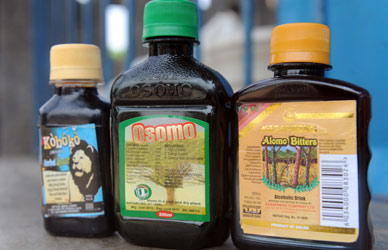
However, before the advent of Ace Roots, products like Alomo Bitters, Kerewa, Orijin Bitters, Ogidiga, Ibile, Baby Oku, Yoyo, Sappiro Lemon Ginseng, Kogbebe, Koboko, Osomo, Dadubule, Durosoke, Pasa Bitters and many others ruled the market. All these products entered the Nigerian market using ‘sex energy boost’ as selling point. After all, ‘sex sells’, it took them little time to overrun the Nigerian alcoholic beverage market with spurious claims of efficacy to cure and prevent all diseases.
Contrary to claims, these products have been found to contain high dosage of ethanol, caffeine and hemp. Instead of ‘herbal extracts’, the bitter taste of many of the products is actually from ‘muru’, a substance used in treating pile in the northern part of the country. In order to verify the claim by NB also, Vanguard conducted a market research at various drinking joints across Lagos, Ogun, Ibadan, Imo etc, the probe showed that product is fast gaining acceptance and is poised to take over the lead in the market from competing brands.
What was responsible for the quick return on investment according to Mr. Ajole Amakua, a Brand Specialist Director with June 24 Media, said the marketing strings being pulled by NB is giving the new product an edge, because the owners have the finance to run various campaigns, they are not controlled like their major competitor. “They have been able to establish the product in the minds of the consumers in this short time.”
What I also noticed is that Ace Root has eaten into a big proportion of the Orijin market. He stated. A consumer, who simply gives his name as Mike said he drinks Ace Roots because of its low sugar and affordability. For Ogazi Onami who was accosted at Royal Garden Restaurant in Iba, said he prefers Ace Root to Orijin because of its natural herbs, low sugar and its mild alcoholic content.
Mr. Emma Eruebe, a Civil Engineer, says he cools off with Ace Roots because he has to switch over as a result of low sugar and price since one has to watch his pocket and health, what I also noticed is that Nigerians are aware and know what is good for them.
Even though the visibility of both products are almost the same in the market, there is no where you go you don’t see the flyers of both product, telling you of their uniqueness, but the question is will Orijin be able to sustain its campaigns.? Aside gaining considerable edge over its closes competitor in the area of pricing, Ace Roots is very low in sugar (one cube) compared to Orijin’s about five cubes per 60 cl bottle.
Disclaimer
Comments expressed here do not reflect the opinions of Vanguard newspapers or any employee thereof.