FILE IMAGE
By Chris Ochayi
The African Centre for Leader ship Strategy and Development, ACLSD, has condemned the continued importation of Premium Motor Spirit, PMS, known as petrol, and other refined petroleum products into the country, saying that subsidy on these products is taking a huge part of government’s expenditure.

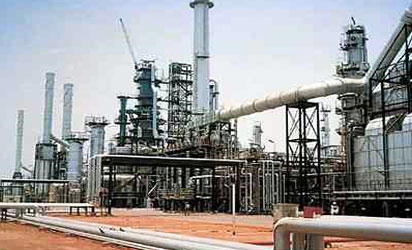
A refinery
The Programme Coordinator, ACLSD, Mr. Monday Osasah, who said this while presenting a policy research on fuel subsidy in Nigeria, in Abuja recently, said fuel subsidy got more allocation than capital expenditure about 109 percent of capital expenditure from 2008 to 2013.
The Coordinator therefore advised the incoming administration of Gen. Muhammadu Buhari to channel the proceeds accrued from the partial removal of fuel subsidy in 2012 into building new refineries to avoid unnecessary expenditure incurred from importing the products.
Osasah argued that fuel importation is an unnecessary tool used to drain the nation’s resources, adding that the Subsidy Re-investment Programme, Sure-P, has not yet made the impact it is designed to achieve. According to him, “The initial idea of the Sure-p was that local refining of petroleum products will be given a pride of place, but we have not seen that yet. Rather, we saw that all the subsidy proceeds are devoted to service consumption which we are against at the Centre.
“Because, if we continue to import petroleum products, there is no way we are going to grow this economy. And so, what we are saying is that instead of concentrating efforts in continually importing fuel, using the subsidy proceeds, we should use it to build more refineries and even encourage those who already have the licenses.”
He regretted that those who have been licensed have not given a thought to build more refineries because of the sensitivity of the product. According to him, “The dialogue around retention or full or partial removal of subsidy has been ongoing in Nigeria for many years. The existing public owned refineries are incapable of meeting local demand for refined petroleum products, hence the resort to importation of refined products.
“Imported refine products are subsidised by government thereby constituting a subsidy on consumption as against a subsidy on local refining. Various companies have been issued licenses to build refineries in the last 20 years but none has proceeded to build.
“Two extreme positions – there is no alternative to subsidy removal, and God has blessed Nigeria with petroleum endowments and we should we should enjoy it as much as possible, seem to modulate public discourse on fuel subsidy. “Over the years, the official promises that came with the partial removal of oil subsidies have not been realised thereby discrediting official policy position. But pragmatism is required to balance all contending positions.”
Osasah further noted that PMS subsidy template is import dependent and commits Nigerians and the government to pay for such items as freight, lightering, NPA, Jetty fees, storage costs, demurrage, etc. “These items in the template would not have been necessary if the products are refined at home and distributed through pipelines to cities where they would be consumed,” he said.
Disclaimer
Comments expressed here do not reflect the opinions of Vanguard newspapers or any employee thereof.