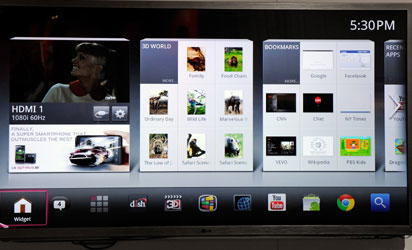
LAS VEGAS, NV – JANUARY 11: A G6 series LG Smart TV with Google TV is displayed at the LG Electronics booth at the 2012 International Consumer Electronics Show at the Las Vegas Convention Center January 11, 2012 in Las Vegas, Nevada. CES, the world’s largest annual consumer technology trade show, runs through January 13 and features more than 3,100 exhibitors showing off their latest products and services to about 140,000 attendees. AFP
DID you know that you only need red, green, and blue light to create a TV image? While Liquid Crystal Display TVs, LCDs, use color filters and light-blocking liquid crystals above a light-creating backlight and plasmas use Ultra Violet, UV, light created by igniting pockets of gas to excite red, green, and blue phosphors, Organic Light Emitting Diode, OLED, TVs work by putting electricity through certain materials that glow these specific colors. No other TV technology creates light directly like this. Make OLED pictures superior in quality.
Leading electronics manufacturers are now introducing their OLED TVs. One of such companies is LG Electronics with its OLED TV which comes in both curved and flat designs. LG has championed the technology since inception and today remains its key strategic advocate by being the only manufacturer to support its application across large-size TV display screens as well as other smaller screen uses. LG says that it is the only company to effectively offer consumers the full gamut of choice across all forms of large-screen TV technology – that includes LCD(LED backlight), OLED, 4K Ultra HD, Curved, and most recently 4K OLED, consumers have come to expect leading edge offerings from the brand.
“We are fully committed to bringing next generation technologies to the Nigerian market,” said Mr. Steve Ryu, General Manager, Home Entertainment division, LG Electronics West Africa operations. “The next-generation display technology and the advanced ultra-thin depth of 4.3mm comes with a unique curved design which represents a new era in home entertainment. It must be seen to be believed.”
Currently, yields are on average from 60% to 70% for large-screen TVs, which leads to a higher retail price. The focus on production processes is aimed at improving overall yields and reducing costs, and LG has developed a process for its curved OLED displays that makes use of encapsulated OLEDs on a flexible polyimide substrate —providing a robust and reliable backplane for the OLED that will improve overall yields as well as providing a display that can be flexible.
The promise of lower-cost manufacturing, cost parity with LCD panel production, and the development of flexible displays, is driving investment in OLED technology as a viable competitor to LCDs.
Disclaimer
Comments expressed here do not reflect the opinions of Vanguard newspapers or any employee thereof.