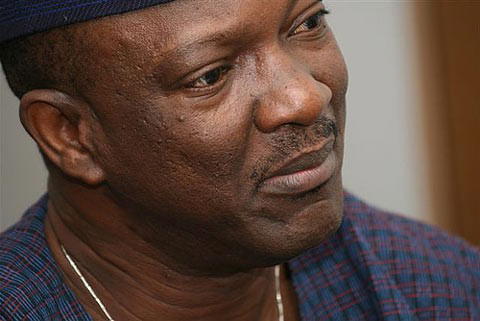
*Agbaje
The Senior Consultant/Chief Executive Officer, RTC Advisory Services Limited, Mr. Opeyemi Agbaje has stressed the need for the Federal Government to initiate policies and incentives that would encourage non-oil exports in Nigeria.
Agbaje said this while speaking at a forum titled: “Review of 2014 and Projections for 2015,” organised by the Finance Correspondents Association of Nigeria (FICAN), in Lagos on Thursday.

*Agbaje
He said: “We have achieved significant diversification in terms of local production and consumption, but we are not competitive in exports. South Africa’s exports revenue is driven by South African companies such as MTN, DSTV, South African Breweries, and a lot of other companies, it is not the sale of commodity.
“So, the challenge for the Nigerian economy is for government to create policies and incentives that will allow our private sector to become exporters. If our export revenue was earned by thousands of Nigerian companies exporting their services, we would not collapse anytime the price of oil falls.
“We also need to start refining our oil domestically and exporting it. We should be one of the biggest exporters of refined petroleum products in the world.
“There are significant opportunities in Nigeria. If you look at the structure of Nigeria’s GDP, you will see that huge opportunities abound in Nigeria.
“In terms of the structure of domestic production, we have done a good job of diversification, but the problem is that in terms of the structure of export and government revenue, we have not done enough.
“So, exports are still exclusively oil of about 90 per cent and government’s revenue comes from that sale of oil. So clearly, two things would happen, we would have to diversify exports and domestically, government would have to diversify its income which means to increase focus on tax.
“From the point of business like I said earlier, there are still sectors that hold promise for significant growth. Look at the e-commerce space, look at Konga and Jumia and the growth that is going on in that sector, look at real estate which is now eight per cent of the economy, and look at entertainment, which is the fastest growing sector in the Nigerian economy.
“Look at some success in manufacturing around food, beverages and tobacco and cement, which has significant growth rate, look at hospitality, hotels, construction, all of which are growing above 12 per cent, look at the power sector.
“The implication by the time new investments begins to happen after the investors sort out their indebtedness.
“Those people borrowed heavily to buy power assets, so they will spend the next 18 months restructuring their finances by exchanging the shorter debts they quickly borrowed to pay with longer term debts so that they can breadth. “Till they do that, they won’t be in a position to make new investments in power generation.
Disclaimer
Comments expressed here do not reflect the opinions of Vanguard newspapers or any employee thereof.