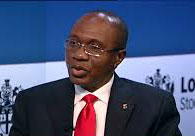
Emefiele
By Patrick Dele Cole
The banks depend on the GSM network which has been glaringly inefficient and over subscribed, and shows no appetite for progress and efficiency because of a suspicious cosy relationship between the regulators and the GSM companies. Has computerization come before its time? I am not sure; but it’s alright for the young ones and hell for older folks. But how about banking in the villages, in this push for a cashless society?
How many banking accounts exist in Nigeria, now that we are moving to a cashless society? This is, on the face of it, surely a simple question. The answer is far from simple. I have asked all my accounts officers – no one has been able to tell me. I asked each one how many branches they had – no one knew exactly. As for how many accounts in each bank, my question was met with suspicion? It became an issue about why do I want to know. I called people in CBN – no luck. The Nigeria Bureau of Statistics had no answer. The search engines of Google, Wikipedia had answers which contained many errors. World Bank had answers which I cannot quote because my own people here cannot tell me simply how many banks branches and even their own capitalization figures. Since all our banks have or hope to have branches in the United Kingdom, the best source was there! There are nearly 5,000 bank branches, total capitalization, total deposits.
Some Nigerian has been able to beat the pin number security code in the banks and there has been whole sale withdrawal of thousands from various accounts.
Spatial map of bank locations shows a concentration in the cities. With increase in computerization, even bank jobs which are now beyond anyone who is not a graduate will be reduced. If I can access my account, pay bills etc without going to my bank- what will happen to those hundreds of bank workers – over half will lose their jobs.Banking in Nigeria has progressed on the premise that all Nigerians are wired in to the internet and that its clients are computer literate or have a GSM that has internet capability.How does this work? By an application to the bank to use its internet platform you can get Internet from your GSM Supplier but have you checked the price?
Jobs lost
Abonnema, my home, has one bank UBA; no post office, nothing- no internet.
To open a new accounts- you need to show an international passport (or photo ID) or a national Identity card, even a tax clearance certification (the same conditions as in the United Kingdom). You need, also, wait for it, utility bill in your name – utility meaning a water bill, an electricity bill, etc. There is no electricity in my village, water we draw from wells. Even in Lagos, I cannot remember when I last saw a NEPA bill or any other so-called utility bill.
In UK, the effect of computerization is that 50% of bank workers have lost their jobs; of the remaining, 25% are computer analysts, programmers and investment specialists. Is Nigeria ready for the mass sacking of bank workers which will surely follow the present trend in banking where banks no longer want to provide personalized services? Is Nigeria really ready to be a cashless society?
In Nigeria nearly all bank doors are bullet proof glass with metal doors and detectors CCTV, other scientific instruments that can invade your privacy.
Over several thousand bank branches in Nigeria – all have the same doors except First Bank. Not only do they have the same doors but they have the same canned electronic music while we wait for the door to open to let us in or out; it was the music that first gave me the hint that a deal had been done; the same doors means probably that the CBN ordered the same specifications for all banks and only one Chinese company could met the specifications. Is it possible that at the Bankers Committee there was a discussion on bank security especially after the spate of bank robberies? Or that all the MDs and their purchasing departments met somewhere where these doors were introduced? Or that (God forbid), the Ministry of Finance introduced this particular type of doors to the banks or the SSS? Or the police? Why was there no variety? I do not believe that a single intrepid salesman was able to sell his unique door with its unique canned music and CCTV camera to every bank!!
Does it indeed matter that all doors are the same in the bank? But it is interesting that the decision making process could so clearly be compromised. To change the doors was both a political and security question. It matters because if someone is able to overcome the security system in one branch door, then all banks are compromised. However, bank robbers now blow up the doors!!
I just smelt a rat in the whole business. As usual if it quacks like a duck; it waddles like a duck, it looks like a duck, it is a duck!
Dormant accounts
I went to university in New Zealand, 1962 – 65, to The Free University in Amsterdam 1965 and to Cambridge 1966 -73. In all these places I opened bank accounts, I taught at the University of Pennsylvania in Philadelphia (1970 -73) where I also had a Bank account. None of these accounts are dormant. Two weeks ago, my bank, Keystone, told me that my accounts in Port Harcourt were dormant. To activate them, I have now to travel to Port Harcourt, show them utility bills for the past 12 months, bring a photo Identity card, etc.
The Nigeria banks claim that they instituted the regime of dormant accounts (a) to encourage people to use their accounts (b) know their customers (c) stop their own employees from stealing or using other peoples account for trading, etc.
Accounts left some 45years ago in Europe and in England are not dormant. Billions of Naira have been made by banks on this head of dormant accounts. For now, bank transfers are being frustrated by bank managers who are in competition with one another to increase branch deposits. I asked my Keystone branch manager at Ajose Adeogun to transfer my account to Keystone, TBS (Tafawa Balewa Square) branch. He simply refused by pretending that he wanted to see me!!
I asked the lady when last she saw a utility bill (they mean NEPA, wateror telephone land line bills); she told me she was only carrying out CBN instructions. This was a lady who was my accounts officer for the past five years in the bank. There was another gentleman who suffered the same fate and, in exasperation, asked that the bank close the account. Sorry, the lady said to him, I cannot close your account until you bring (you guessed it) utility bills, identity card, etc!! What really got this man angry was that he had naturally brought his passport. But the passport had expired a few days before – yes, you guessed it; – it was not a valid identity card because the passport had expired!! The man was so furious he asked the lady whether she was bent on frustrating him – his passport had all the details she needed to confirm details that the bank already had. You cannot close a dormant account; you cannot reactivate a dormant account without going through almost the same process as opening a new account.
Heart break stories
Does CBN or the Ministry of Finance, or the Bureau of Statistics or anyone else have a record of dormant accounts? Has anybody asked? Under what heading will this be in the audited accounts of the banks? The practice is that all such accounts are entered in a suspense account at the end of each year. But this gets very complicated if the account is old. My mother had a number of such accounts. When I applied that these accounts be transferred to me, the bank first told me to go to the branch where my mother had the accounts. On further inquiry, the branch had been closed, the system of numbering accounts had changed over five times in the last 30 years; the central office of the bank claimed that they had no record of these deposits and, in fact, refused to acknowledge that the deposits were theirs. My lawyers told me that a debtor is freed of his obligation to pay if after seven years he has received no request to meet his obligation. This is not the place to deal with the concept that the law is an ass but you can imagine how many heart break stories exist in Nigeria. Is this not a case for legislation and for the creation of a financial ombudsman? We should also have an entry in the books for dormant accounts in the banks books.
Hardline policy
More fundamental is the attitude of the bank. Who closed the branch? Whose primary duty it was to make sure that proper records are kept? If the bank has been acquired by another bank, did they not do a reconciliation? Why is the bank adopting a hardline policy when, in actual fact, they should be seen to be doing their utmost to help legitimate claimants of moneys left in trust for them by our ancestors? Where is their fiduciary obligation? From the above, it is evident that the fiduciary responsibility of the banks, of NDIC are observed more in the breach than in compliance. That these difficulties were not foreseen when the banking licences were given and or when NDIC was set up boggles the mind. The estimate of money in dormant accounts is well over 200 billion Naira.
CBN is now setting up a Personal Verification Number for each customer. What happens when the account holder and his PVN (Personal Verification Number) is dead. Or a son finds his mother’s PVN 10 years or 20 years after her demise? A wife or the man’s mistress or vice versa?
Incidentally all banks ask their customers to fill in a next of kin named and address attached to each account? Do these statements naming next of kin mean nothing? Or do they have the force of a will? In my experience only one bank bent over backwards to meet its obligation in a similar case. That was FCMB.
Outdated pounds, dollars?
A few months ago, I had some US dollar bills which I tried to pay into my domiciliary account in Lagos. The bank would not take any dollar bill dated 2003 or before. I asked why and was told this was a CBN directive.
I went to London with the same bills and the banks were happy to accept them. Who gave out such instructions and why? The same thing happened with regard to £50 notes which banks refused here in April/March last year. The banks in the UK had no problem accepting these notes. So what is really happening?
I asked a senior official at the CBN why foreign banking notes were being rejected. He told me that CBN has the right like any Central Bank to reject any currency’s notes; and that he thinks that when CBN sent these notes to the Federal Reserve Bank in the US the bank there rejected the notes. He also thinks this may be in pursuance of the US policy to chase moneys used to encourage terrorism.
Rural banking
What is the solution for rural banking? Obviously people who use to live in these villages on getting to Abuja are transfixed to the glare of the lights, like an animal transfixed by the light of an approaching car!!! The animal looks and stops and is killed. These societies are being killed by the oil industry and further deadened by silly regulations about so-called cashless society and other ancillary rules about dormant accounts. Those who make these rules come from these areas but somehow forget that they have to go back someday. How many banks are in Ogoni land, especially near the oil wells? When Bayelsa was first created, there was only one petrol station and one bank in the whole state. Today, I do not know how many banks are in Bayelsa but they are not many.
The answer of the banks will probably be that little business is done in villages, but if the economic revolution is going to come – it will be with agriculture and will necessarily involve villages.
Nothing humbles a Nigerian more than his going to his bank and he is petrified that he would be unable to get his money because of one regulation or the other. If he gets his money the smile of satisfaction is indeed something to behold.
Disclaimer
Comments expressed here do not reflect the opinions of Vanguard newspapers or any employee thereof.