By Jimoh Babatunde
Nigeria’s immense agricultural potential is a great asset for the nation in particular and Africa in general, with promises for food security when fully harnessed. But of the 84 million hectares of arable land in Nigeria, only 40 per cent is said to be presently cultivated.
Nigeria’s large pool of cheap labour is available to support agricultural intensification while also offering a huge market for agricultural produce.
The market potential for the country’s agricultural produce remains under-utilized. While there is a huge market opportunity on the international space, creating markets locally for the farmers remains a task yet to be done.
To this end, the government is unlocking the potential of agriculture to once again drive the economy through a rapid transformation of key agricultural value chains – from the farm to the table.
In 2011, President Jonathan launched the Agricultural Transformation Agenda, with the goal of adding an additional 20 million MT of food to the domestic food supply by 2015 and stimulating the creation of 3.5 million jobs along the agricultural value chains.
Achieving the set goals of the Agriculture Transformation Agenda by next year formed the bulk of the highlights of the sector in 2014.
Youth in Agriculture
Agriculture has become the new buzz in Nigeria, with vibrant, young graduates moving into the business of agriculture. President Jonathan recently launched the Youth Employment in Agriculture Programme (YEAP) to create a new generation of young commercial farmers and agriculture entrepreneurs (“Nagropreneurs”).
The YEAP is expected to develop a total of 760,000 ‘Nagropreneurs’ within five years. Today, young graduates and bankers are leaving the banks and heading for agriculture. The new millionaires of Nigeria will be in agriculture.
Staple Crops Processing Zones (SCPZ)

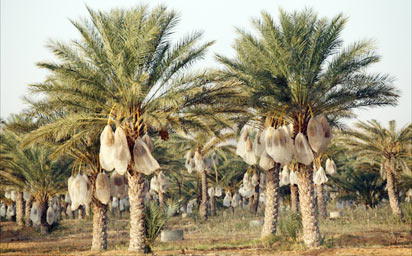
Oil Palm Seedlings
The SCPZs are new agricultural infrastructure-enabled zones that are being developed to attract agribusiness investors into rural areas. They are to address the infrastructure challenges and constraints of the agro-processing industry, drive social and economic impacts, offer a superior operating environment for downstream players as well as create a new platform for private sector investment in agriculture. The successful implementation of the SCPZs launched this year is estimated to add N660 billion to N1.4 trillion to the Nigerian economy and estimated to create 250,000 jobs.
Alape SCPZ in Kogi will focus on the production of starch and sweeteners; it is expected to produce 62,000 tonnes of starch, 5,000 tonnes of sweeteners, 720,000 tonnes of cassava root and create income impact of about 90 million dollars to the economy of Kogi.
The minister of Agriculture, Dr. Adesina said that the establishment of the 14 crop processing zones was aimed at reducing post-harvest losses by setting up crop processing industries in the rural areas.
He said the crop processing zones would help to process the raw foods produced by farmers into finished foods and other economic products that would benefit the area.
The 14 SCPZ will cover a number of crops including rice, sorghum, cassava, fish processing, horticulture and livestock; this will reverse the rural-urban migration.
The minister stressed the need to industrialize agriculture in the country, saying it was high time Nigeria stopped being an import-dependent country.
Nigeria is in partnership with the UN Industrial Development Organisation which is providing assistance in the development of the master plan of the SCPZs with six master plans for the zones in Kogi, Kano, Lagos, Anambra, Enugu and Niger states finalised.
Extension Services Department
800 motorcycles were distributed to all the Agricultural Development Projects (ADPs) in all states and Sasakawa Africa Association to support agricultural extension agents across the country.
The distribution carried out in February at the Federal Ministry of Agriculture And Rural Development Complex, Sheda, Gwagwalada-Kwali, FCT, was to kick-start the agricultural extension mobility service initiative of the federal government. These are to assist the extension agents and mobility of agricultural development programmes.
One of the goals of the Agricultural Extension Transformation Agenda is to bring to the service of farmers the best of agricultural extension approaches, building on global best practices. Nigeria’s first Federal Department of Extension was also established to provide the much needed impetus for leadership, coordination, monitoring and quality assurance to drive the transformation of extension delivery at the grassroots by the states, local governments and private agricultural advisory service providers.
Mechanisation transformation:
Under the Agricultural Transformation Agenda (ATA) of President Goodluck Jonathan, the New Mechanisation Policy, a Public-Private Partnership (PPP) involving government, financial institutions, agro-machinery vendors and manufacturers’ representative and service provider operators (SPOs), is to make available a minimum of 6,000 units of tractors and power tillers and also about 13,000 units of various harvest and post-harvest equipment to set up a minimum of 1,200 Agricultural Equipment Hiring Enterprise (AEHE) to render Mechanisation support services to our farmers.
On August 25, there was a presidential launch of the initiative, with N50 billion supports. October 28, the implementation took off with a launch at Zamfara State capital, Gusau, with the beneficiary farmers eligible to 100 per cent subsidy for the dry season of 2014/2015.
An intervention scheme to serve as a pilot to kick-start the implementation, with N3.6 billion, has been approved and released by the Federal Ministry of Agriculture and Rural development towards financing the establishment of the Agricultural Equipment Hiring Enterprise (AEHE).The funds in the first phase will make available 400 units of tractors, 500 power tillers, and various harvest and post harvest equipment to set up 80 centers, while phase II will achieve similar results.
Rice transformation:
In July, this year, President Goodluck Ebele Jonathan commissioned Olam rice mill. Olam, a global conglomerate, invested over $70 million in a 6,000 ha fully mechanised rice farm in Nasarawa State and has completed a 210,000 MT integrated rice mill that will process Nigerian paddy rice into finished milled rice. The mill, rated as the largest rice mill in Africa, looks set to be overtaken by another major investor when fully operational.
In August again, President GoodluckEbele Jonathan, presided over the signing of a Memorandum of Understanding (MOU) between the Federal Ministry of Agriculture and Rural Development and Dangote Industries Ltd for a $1 billion (N165 million) investment by Dangote for the establishment of fully integrated rice production and processing operations in Edo, Jigawa, Kebbi, Kwara, and Niger states on farmland totalling 150,000 hectares across Nigeria.
Disclaimer
Comments expressed here do not reflect the opinions of Vanguard newspapers or any employee thereof.