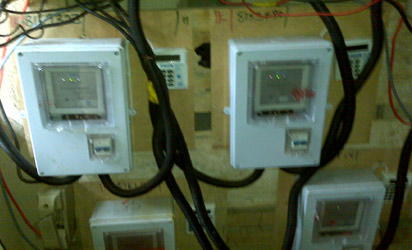
File: Prepaid meters
Prepaid electricity is a great solution for many residents. Increasingly residents are getting tired of paying excess electricity bills.

Prepaid meters
By using prepayment, customers pay for their electricity upfront, before they use it. The benefit of this is that you don’t have any surprise bills at the end of the month and can budget for your electricity accordingly.
For utilities, the greatest benefit is being paid for the electricity upfront. By improving revenue collection, utility’s are able to expand the electricity service to new consumers, upgrade their existing network and generally improve the service offered to all users.
An added benefit for both parties is that through the use of prepayment, electricity consumption is reduced, sometimes by over 20%, as users become more aware of the cost to keep non-essential appliances running.
Prepayment is not a quick, short term solution. It is a strategic and fundamental change to the business of electricity, which reaps huge returns when implemented correctly
Pre-paid electricity understands and embraces new technologies which continue to ensure that customers always enjoy the greatest convenience. An example is the ability to purchase your electricity through your cell phone or the internet.
What is a prepaid meter?
A prepaid meter works similar as a prepaid top-up phone (“pay as you go”). You load money/units on your prepaid meter; this will allow you to use electricity to value of your units loaded.
How does it work?
- A prepaid meter is installed in the consumers premises
- The consumer purchases a token (a voucher for electricity) from the utility and enters this into their meter
- The electricity supply is activated when the meter is loaded with credit
- As the consumer uses electricity, the credit in the meter decreases
- When the credit gets low, the consumer simply purchases a new token and receives more electricity
- Should the consumer not purchase a new token, the electricity supply is suspended until a new token is put into the meter
How to find my prepaid meter number
Each prepaid meter has got a unique ID, the length of this ID changes from meter supplier to supplier. The typical length is 11 or 7 digits but in rare cases it can be 4, 5, 6, 8 and 10. This number can be located on your meter typically above or beneath a barcode. This meter number must be supplied when buying prepaid electricity.
Why do energy suppliers install prepayment meters?
Prepayment energy meters are usually installed into homes to help energy consumers manage their debt and their budget more effectively.
Some landlords also like to have them installed in their rental properties, to try and cut the risk of their tenants running into debt.
How can I take a meter reading on a prepayment meter?
To get a meter reading from your prepayment meter, you will usually have to press a button on the meter (sometimes it’s blue).
This will change the display from showing the remaining credit to showing the actual reading. From there on, it’s just like taking a normal meter reading.
What are the pros and cons of prepayment meters?
When it comes to prepayment meters, the disadvantages generally outweigh the advantages.
Advantages of prepayment meters include:
- helping customers to manage their debt and energy usage;
- preventing large, unexpected bills,
Disadvantages of prepayment meters include:
- above average costs for your electricity;
- the best energy deals on the market aren’t available to prepayment meter customers;
- they can be inconvenient because you have to go out to ‘top up’ keys and smartcards; • if you can’t reach a shop to top up your meter your energy can be switched off;
- older meters need to have their prices updated manually after price rises or falls, which can take months. This means you could be left paying old rates and owing a lump sum or paying too much.
If you’ve moved to a new home which has a prepayment meter, it’s vital that you register with the energy company as the new account holder. If you don’t, you could end up paying the wrong rates as the previous occupier could be in debt to the energy supplier.
Once you’ve registered as the new owner it’s a good idea to compare prices to make sure that you’re on the cheapest possible prepayment meter.
Different types of prepayment meters
There are two main types of prepayment meters: key meters and smart card meters. A key meter uses a special electronic key with your tariff information on it. A smart card meanwhile sends your latest information through to your supplier when topped up.
Regardless of what type of prepayment meter you have you should make sure you know how to top it up. In case of an emergency, or when you’re working from home, the last thing you want is your electricity to go out.
Make a list of the nearest shops and other outlets as well as their opening times. You should also look out for holiday periods and top your card up with a bit extra before bank holidays and other holiday periods when topping up could be difficult. Most prepayment meters have an emergency credit budget you can use, like an overdraft, but it is limited.
If you lose your prepayment meter key or smart card don’t worry. You can simply contact your supplier to get a new one sent out, but in the meantime your supplier should be able to authorise a temporary card from your nearest PayPoint or PayZone. If this isn’t possible you might have to have an emergency callout which will involve a charge. When you move into a property with a prepayment meter you should contact your supplier and clarify exactly what happens if you can’t find your card or token.
Disclaimer
Comments expressed here do not reflect the opinions of Vanguard newspapers or any employee thereof.