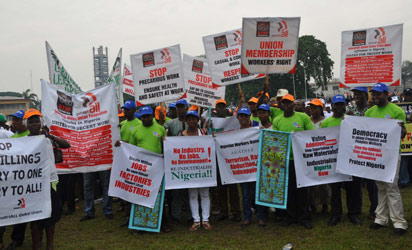
Cross section of Nigerian workers, during the 2014 Workers day commemoration, THEME: Building Enduring Peace and Unity, Panacea for Sustainable National Development, at Onikan, Stadium, Lagos Island. Photo: Bunmi Azeez
By Victor Ahiuma-Young
MARITIME Workers Union of Nigeria, MWUN, yesterday, threatened to shut the nation’s ports over plot to designate the INTELS Terminal, Onne, Free Zone Ports, Port Harcourt Rivers State, a National Terminal for the clearance of heavy lift cargoes and deep draught vessels, saying it would lead to massive loss of jobs.
At the end of its Central Working Committee, CWC, meeting to review the recent publication by the Seaport Terminal Operators Association, STOA, on the development, the union warned that if implemented, the policy would, among other consequences, cause thousands of dockworkers their jobs.
A statement by the Secretary General, Mr. Aham Ubani, read: “While we are not going to talk about the implications of this insinuations or developments to other terminal operators, because they are in a better position to talk about how it will affects them, we are much concerned about the job implications and job security of our members.
“As was pointed out by STOA, there is no doubt that if this policy is approved, it will have grave implications for job creations and job security of our members in the maritime industry.
“We have a lot of our members working with stevedoring companies in the midstream or offshore operations with vessels. We do not want to imagine or contemplate what will happen to the pool of dockworkers in these locations, who are our members, if this policy is implemented.
“We do not want to believe that this is part of a design to weaken the union because if it is, government should better prepare for the consequences because we will resist it with last drop of blood.
“The reasons for the appointment of stevedoring companies to midstream and offshore terminals, as STOA indicated, was to create jobs and address youth restiveness as parts of programme to sustain the amnesty offered insurgents during Niger Delta militancy era.”
Disclaimer
Comments expressed here do not reflect the opinions of Vanguard newspapers or any employee thereof.