By EBELE ORAKPO with Agency Report
BEING risk-averse or risk-prone is a function of the brain, researchers at the Yale School of Medicine have discovered.
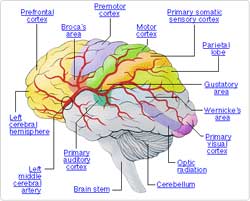
They show that “the volume of the parietal cortex in the brain could predict where people fall on the risk-taking spectrum.”
In the study which combined neuroanatomy with neuroeconomics, researchers found out that people with a larger volume in the posterior parietal cortex (PPC) are willing to take more risks, especially risks involving money.
In the study led by Ifat Levy, professor of Comparative Medicine and Neurobiology at Yale School of Medicine, the team found that those with larger volume in a particular part of the parietal cortex were willing to take more risks than those with less volume in this part of the brain.
“If these results are validated for other populations, it may be possible to make accurate estimations about the risk-taking distributions of people just from analyzing millions of existing brain scans,” said Levy.
“In the past, people thought that function was the best window into the person’s mind, but lately, it has been shown that on top of functional studies, neuroanatomy has a growing role in explaining people’s perception and behavioural traits,” said Sharon Gilaie-Dotan of the Institute of Cognitive Science at the University College London.
According to the report published in Neuroscience, the researchers sought to examine the link between brain structure and economic preferences.
Participants included young adult men and women from the northeastern U.S. and they made a series of choices between monetary lotteries that varied in their degree of risk, and the researchers conducted standard anatomical MRI brain scans. The results were first obtained in a group of 28 participants, and then confirmed in a second, independent, group of 33 participants.
“Based on our findings, we could, in principle, use millions of existing medical brains scans to assess risk attitudes in populations,” said Levy, adding:
“It could also help us explain differences in risk attitudes based in part on structural brain differences.
“We don’t know if structural changes lead to behavioural changes or vice-versa,” she said.
In a previous study, the team had shown that risk aversion increases as people age, and scientists also know that the cortex thins substantially with age. “It could be that this thinning explains the behavioural changes; we are now testing that possibility,” said Levy.
Disclaimer
Comments expressed here do not reflect the opinions of Vanguard newspapers or any employee thereof.