By Ochereome Nnanna
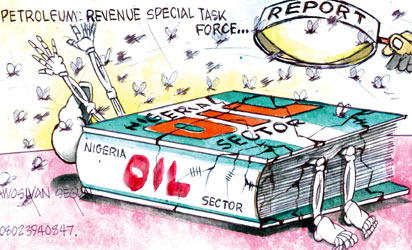
THE All Progressives Congress, APC, on Monday, August 18, 2014, published a full page advertorial in some national dailies entitled: “Why Diezani Alison-Madueke Must Resign Over The Missing $20 Billion Oil Money”. It was signed by its National Publicity Secretary, Alhaji Lai Mohammed. In it, the party listed the reasons it is determined not to leave the issue of “missing” oil money alone, and why the Minister of Petroleum Resources, Mrs Madueke, must resign.
These include that $20 billion represents monthly allocation to Enugu State for 84 years, while Kogi will spend 76 years to exhaust it based on current figures. According to them, this amount will build 20,000 kilometres of roads of world class standard, or set up 1,666 world class hospitals, or create 20,000 megawatts of electricity, or pay 160,000 teachers for 50 years; or pay 50 million poorest and most vulnerable Nigerians N5,000 every month for one year.
These figures would have brought tears to your eyes and mine if it had been proved beyond reasonable doubt that, indeed, US $20 billion was missing from our public till, either due to its not being remitted or maybe someone stole it. If anything, it has been proved beyond every reasonable shadow of doubt that no such fund is missing. Indeed, I daresay that in the long history of our frequently “missing” US$ billions oil monies, this was the only one that was properly investigated by the constitutionally-empowered body to do so: the Senate of the Federal Republic of Nigeria – and found not missing as alleged. The earlier ones were the alleged $2.8 billion “missing” under General Muhammadu Buhari’s watch as the Minister of Petroleum in the late 1970s, as well as the $12.5 billion 1991 Gulf War oil windfall of the General Ibrahim Babangida regime.
In the case of Babangida, the regime of the late General Sani Abacha set up the Dr Pius Okigbo Panel which probed the expenditure and indicted the former military president for squandermania. No one has bothered to set up a committee to probe the allegation against Buhari. Perhaps, there was really no missing money, even though the man who overthrew him, General Babangida, recently threatened to expose him over the “missing” fund unless he volunteered to come clean by himself. It is funny that a section of the Nigerian media that had stridently insisted that it was true the money got missing under Buhari, including the unexplained scandal of the 52 suitcases, has suddenly fallen mute on the matter since Buhari became one of the principal partners of the APC, an alliance of some leading politicians of the North and South West. That was the loudest noise when Buhari was running against General Olusegun Obasanjo. They are now talking about a “missing” $20 billion under the watch of President Goodluck Jonathan.
Of the three “missing billions” episodes, the current $20 billion saga is the least convincing and most barefacedly political. This is evident in the origin and conclusion of the saga. It had its beginnings in a departing Central Bank of Nigeria, CBN, Governor, Malam Sanusi Lamido Sanusi, who had fallen out of love with Jonathan’s regime and gotten cozy with prominent promoters of the APC, some of whom he controversially donated the Bank’s money to and awarded flush contracts. Sanusi wrote a letter to the President on September 25, 2013 alleging that the Nigerian National Petroleum Company, NNPC, did not remit a total of $49.8 billion to the federal coffers, being proceeds of crude oil lifted between January 2012 and July 2013. Three months later, he leaked the letter to some online media platforms, and the nation became agog with the story of the biggest “missing” oil money in Nigeria’s history.
After the Minister of Finance and Coordinating Minister for the Economy, Dr Ngozi Okonjo-Iweala, along with relevant ministries and departments were able to determine that only about $10.8 billion were yet to be remitted in an ongoing process, Sanusi ate his words but insisted that $12 billion was still missing. Later on, just before he was bundled out of his post, he changed his mind again and sky-rocketed it to $20 billion, the figure that is still being bandied by his friends in the opposition party.
Unlike in the past episodes, it was unanimously agreed by every stakeholder in the system that a comprehensive inquiry to ascertain the veracity of this claim must be carried out. And the body empowered by the Constitution to do so – the Senate of the Federal Republic of Nigeria – took up the task as from December 18, 2013. The Senate asked its Committee on Finance, led by Senator Mohammed Ahmed Makarfi to carry out the assignment. On May 28, the Makarfi Committee submitted its findings to the Senate President, confirming that there was no missing money. The Senate held several plenaries debating the issue. In July 2014, the Upper House laid the matter to rest, saying there was no missing money.
The Senate is made up of elected senators from the broad spectrum of political parties. There was no minority report with a dissenting view, or any indication that the Makarfi Committee carried out a charade or shielded anyone from culpability. If the APC or any Doubting Thomas had credible evidence to question the probe, I had expected them to come forward, even to the public arena, to table it for further engagement.
Perhaps, some people have decided that this “missing” oil money issue is too juicy a political weapon to give up just like that. It is up to members of the public who like to be hoodwinked to allow themselves to be so had. The US$49.8 “missing” oil money saga had no credible beginning, and was credibly laid to rest by the Senate, the body constitutionally empowered to do so, following exhaustive due process.
Unless we are furnished with new information, or new leads that will necessitate a reopening of the case, I believe that the truth has been told, and the lies have also be exposed for the world to see.
Disclaimer
Comments expressed here do not reflect the opinions of Vanguard newspapers or any employee thereof.