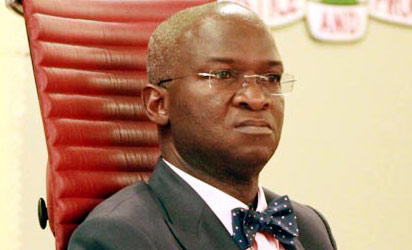
Fashola
By Abdulwahab Abdulah & Onozure Dania
LAGOS—Lagos State Governor, Babatunde Fashola, yesterday, said the agitation by judiciary workers for absolute financial autonomy for the judiciary was not feasible.
The governor in an address marking the new 2014/2015 legal year noted that the state government had never intervened in the independence of the judiciary, but maintained that it would be difficult for the government to release the wholesome money meant for the judiciary for a fiscal year as demanded by workers.
Fashola, who spoke through the Attorney General and Commissioner for Justice, Mr. Ade Ipaye against the backdrop of a fresh threat by the workers to embark on another round of strike said it was not good for the judiciary workers to lock out judges in the name of industrial action.
According to him: “The idea of judiciary autonomy is a welcome development to the system but in reality, it is not achievable due to the fact that Internally Generating Revenue, IGR, is not paid to the government in advance. Besides, complete implementation of court judgment on the matter will cause a legal firework because other officials will perceive it as preferential treatment and it will not augur well.”
He contended that because judiciary was a special arm of government attending to issues on fundamental rights of the citizens, “it will be absurd for workers to lock out judges and not allow them to attend important issues.”
Speaking on the fresh strike threat, the governor urged trade unions to always be diplomatic in fighting for their rights because whatever action they took might have negative consequence on the masses and it would not be good for democracy.
The chairman, Lagos State Pilgrims Board, Dr. Abdul Kabir Paramole who delivered the sermon for the ceremony urged judges to have the fear of Allah when discharging their duties, saying “Verily, Allah commands that you should render back the trusts to those whom they are due; and when you judge between men, you judge with justice.”
Disclaimer
Comments expressed here do not reflect the opinions of Vanguard newspapers or any employee thereof.