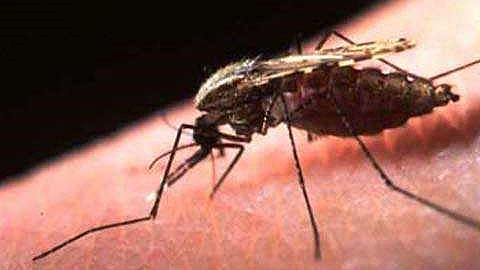
mosquito
For several centuries, Africa was tagged the “white man’s graveyard,” no thanks to malaria. Today, Africa is still engaged in combat with the Anopheles mosquito.

Don’t be fooled by appearances. The adversary may be tiny, fragile and appear seemingly defenseless, but its reputation as harbinger of the deadly malaria parasite, puts it in the class of a giant killer.
As a disease bearer, few vectors wield the same clinical precision as the mosquito. Unrelenting and adamant, it is eternally programmed to bite hapless victims at the right time and place — delivering its message of death.
The world missed an opportunity in 2010 when it failed to meet the challenge of ensuring universal coverage, achieve a milestone for malaria control, and attain the ultimate goal of the Decade to Roll Back Malaria. Although sustained control efforts have helped to reduce the global burden, malaria remains a complex and resilient enemy. It is worrisome that many malaria-endemic countries are not meeting targets for malaria control.
But there are milestones. Since 2000, deaths have dropped 51 percent for children under 5 years of age and 45 percent for overall global populations. An estimated five million lives may have been saved over the past four years even as international funding has multiplied 20 times in the last decade and a half.
Now, countries are more and more able to test, treat, and report malaria cases.
Certainly, interventions have helped reduce cases and deaths. More people at risk have access to Insecticide-Treated Nets, ITNs, and the number of ITNs distributed to national malaria control programmes has improved.
True, the race is far from over, but there is hope. Despite all the hue and cry, eight African countries are solidly on track towards achieving general reduction in malaria incidence and morbidity. Each of these countries is set to record an impressive 75 percent or more reduction rate over the next 17 months.
Already, these countries have achieved 75 percent reductions in malaria cases over the last decade and are most likely to eliminate the disease before the rest of the continent in the coming year.
If any country deserves to be the yardstick for measuring malaria elimination in Africa, it is Cape Verde. Now in the pre-elimination stage, the country, over the last decade, witnessed steady decrease in malaria infections and reported only one local infection. In 2012 and up to the first half of 2013, a milestone was recorded when for the first time, there were zero deaths caused by malaria.
Not too far behind is Eritrea, which has also witnessed phenomenal decline in the malaria burden. Between 1998 and 2012, malaria infections dropped 89 percent while related and deaths dipped 96 percent. The secret was simple anti-malaria policies built around the principle of – ITNs and Indoor Residual Spraying of DDT and other insecticides.
Also in the elimination phase are Algeria, Namibia Botswana, Swaziland, South Africa and Sao Tome & Principe. The common interventions such as mosquito treated nets and use of insecticide sprays are among reasons for their progress. Rwanda which is in the control phase of eliminating the disease is also making rapid progress. Two other countries – Ethiopia and Zambia – are also on track and expect to achieve impressive reductions by 2015.
Nigeria is amongst the most malaria endemic countries. While not yet fully on track for elimination, the nation has not been totally left behind in the elimination drive. Amidst a plethora of interventions, NightWatch, a nightly reminder campaign that inspires healthy behaviour around malaria was recently introduced in the country. Designed to give new vibrancy to the malaria fight, and ensure weapons to prevent and treat the disease are used regularly and effectively, NightWatch is a 30-second message – with a signature sound and celebrities – reminding people to sleep under their mosquito nets and take other preventative measures.
On June 30 and July 1, 2014, participants attending the 3rd Partners’ Forum of the Partnership for Maternal and Child health, PMNCH, in Johannesburg, South Africa resolved that, in the days remaining before the December 2015 deadline of the Millennium Development Goals, MDGs, and even beyond 2015; they would
“Invest in high-impact health interventions, such as immunisation; skilled attendance at birth and quality care for mothers and newborns; access to contraception; prevention, diagnosis and treatment of HIV, malaria and TB, as set out in the Global Investment Framework for Women’s and Children’s Health and the Commission on Investing in Health.”
But perhaps what is most telling is that scientists are resorting to novel and perhaps outlandish approaches to fight malaria. One of the dramatic approaches is making cows smell like humans so as to distract mosquitoes.
Humans have a distinct aroma that is unlike any other animal and it is this odour that attracts malaria carrying mosquitoes. A perfume that mimics the typical human odour is sprayed on cows to make them smell like human beings.
By developing a human smell and spraying it on cows, ISCA Technologies, the California-based pest control company that makes the perfume, hopes the smell will confuse the mosquitoes and send them to bite cows instead. The beauty is that even when bitten, treated cows will not contract malaria. Generally, combating malaria is getting better organised. And that is a small step that is making a big difference.
Disclaimer
Comments expressed here do not reflect the opinions of Vanguard newspapers or any employee thereof.