BY EBELE ORAKPO with Agency Report
It has been proved once again that nothing on earth is absolutely bad or useless.
Who would have thought that measles and Newcastle disease viruses would be useful in the fight against cancer of the brain or that Herpes simplex virus types 1 & 2 responsible for cold sores, whitlows and genital herpes, could be the perfect cure for cancer of the brain (brain tumor)?
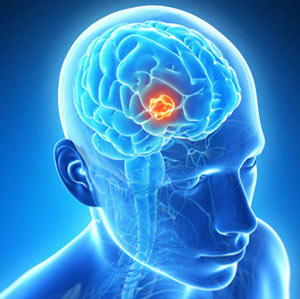
In a recent study by scientists at Massachusetts General Hospital in the US, the researchers discovered that cancer-killing or oncolytic herpes simplex virus (oHSV), has so much potential against malignant glioblastoma multiforme (GBM), the most common, most aggressive and most difficult to treat brain tumour in human adults.
Herpes simplex virus:
The report published in the Journal of the National Cancer Institute noted that oncolytic viruses have been used in many phase 1 and 2 clinical trials for brain tumours with limited success but oncolytic herpes simplex virus has been shown to be most promising “because it naturally infects dividing brain cells.”
It was, however, discovered that the therapy was not very successful in human patients because the virus could not be kept at the tumour site long enough to do the job.They are washed out by the cerebrospinal fluid that fills the cavity.
A team of researchers at Harvard Stem Cell Institute (HSCI) led by Dr Khalid Shah, Associate Professor at Harvard Medical School and head of Molecular Neurotherapy and Imaging Laboratory at Massachusetts General Hospital, came up with a solution for keeping the herpes virus at the tumour site long enough to effectively kill the tumour cells.
How it works:
An oncolytic virus preferentially infects and kills cancer cells. As it infects the cancer cells, it causes them to disintegrate and as they disintegrate, new infectious virus particles are released to attack and destroy the remaining cancer cells.
Describing the process, Shah said that trapping virus-loaded stem cells in a gel and applying them to tumours significantly improved survival in mice with glioblastoma multiforme.
The team decided to use a type of stem cell that gives rise to bone marrow tissue called mesenchymal stem cells (MSCs) because they are very attractive drug delivery vehicles as they trigger a minimal immune response and can be utilised to carry oncolytic viruses. They loaded the herpes virus into human MSCs and injected the cells into glioblastoma tumours developed in mice.
They then watched the virus as it passed from the stem cells to first layer of brain tumour cells and subsequently into all of the tumour cells using multiple imaging markers.
Translating result from lab to clinic:
The next stasge was to translate the laboratory result to the clinic.
Said Shah: “We know that 70-75 per cent of glioblastoma patients undergo surgery for tumour debulking (surgical removal of part of a malignant tumour which cannot be completely excised, so as to enhance the effectiveness of other forms of treatment), and we have previously shown that MSCs encapsulated in biocompatible gels can be used as therapeutic agents in a mouse model that mimics this debulking.
“So, we loaded MSCs with oncolytic herpes virus and encapsulated these cells in biocompatible gels and applied the gels directly onto the adjacent tissue after debulking.
“We then compared the efficacy of virus-loaded, encapsulated MSCs versus direct injection of the virus into the cavity of the debulked tumours.”
Result:
Using imaging proteins to watch in real time how the virus fight the cancer cells, they noticed that the gel kept the stem cells alive longer, which allowed the virus to replicate and kill any residual cancer cells that were not cut out during the debulking surgery. This translated into a higher survival rate for mice that received the gel-encapsulated stem cells.
“They survived because the virus doesn’t get washed out by the cerebrospinal fluid that fills the cavity,” Shah said.
“Previous studies that have injected the virus directly into the resection cavity did not follow the fate of the virus in the cavity. However, our imaging and side-by-side comparison studies showed that the naked virus rarely infects the residual tumour cells. This could give us insight into why the results from clinical trials with oncolytic viruses alone were modest.”
Engineered oncolytic herpes virus:
The researchers also noted that not all brain tumours are susceptible to the therapy so they came up with a solution.
They engineered oncolytic herpes viruses to express an additional tumour-killing agent, called TRAIL. Again, using mouse models of glioblastoma-this time created from brain tumour cells that were resistant to the herpes virus-the therapy led to increased animal survival.
“Our approach can overcome problems associated with current clinical procedures,” Shah said. “The work will have direct implications for designing clinical trials using oncolytic viruses, not only for brain tumours, but for other solid tumors.”
Further preclinical work will be needed to use the herpes-loaded stem cells for breast, lung and skin cancer tumors that metastasize to the brain. Shah predicts the approach will enter clinical trials within the next two to three years.
Disclaimer
Comments expressed here do not reflect the opinions of Vanguard newspapers or any employee thereof.