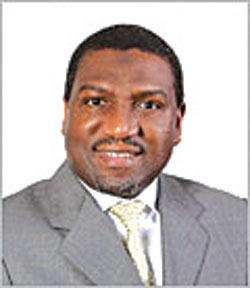
On the sidelines of the WEF in Abuja, the Vice Chairman of Dangote Group and Executive Head of the Nigeria Agribusiness Group, Alhaji Sani Dangote, spoke on the move by his company to partner with the Federal Ministry of Agriculture and Rural Development and donor agencies to produce high energy nutritious foods valued at $50 million, to check hunger and malnutrition among African children.
By Soni Daniel, Regional Editor, North
When do you think the high energy foods being planned by Dangote Group will hit the market?
There isn’t a definite date that I can give you but we are making a continuous progress because there are many steps we need to take before we can actually go into real production and go into the market.
We need to know when the Federal Ministry of Agriculture is through with the processes it is working on, such as how many farmers are enrolled for the scheme, and the initiative to put up the structure under a pricing scheme where the farmers will be assured of a certain price of selling their crops.
Because if they move from one tonne per hectare to about five tonnes per hectare and there is no market, they would leave the farms. It is not only to produce nutritious high energy food but we also need to empower farmers to be economically viable to be able to get out of poverty and take care of their lives. It is really about commercial farming. We need to get economic value for what we are doing and make the project an impactful one.
Does the Federal Government need to subsidise what you are planning to do?
No, the government does not need to subsidise what we are doing to do but to put in place a price mechanism that to take care of the instability in the volume of crops produced by farmers and the output by us in relation to the prices of imported high energy foods.
We need to work out a scheme in which everyone would be a winner in the game. The farmers must be comfortable that they are going to get better by producing the high energy crops for us and we are going to make sure that we are not only buying for those donor-agencies but also actually for the Nigerian and African market. But if we are producing a small volume, we have to factor in the possibility of instability of prices and production and it would mean that actual produce cost would be higher than an average person would buy.
If this scenario applies, it means that importation would become the better alternative. For us to achieve success, a high volume production is imperative so as to make the prices of the food readily affordable to the consumers. These are some of the key issues that must first be worked out by all the parties involved.
But it is said that Dangote has put down the sum of $50 million for the project?
Yes, it does not mean that the cash has been drawn down; it means the value of the investment we intend to do in that regard.
We are considering two companies whose machineries we are considering. We have already given them some samples of crops to work with so that we can see the results and compare with what others are doing or can do. We will do a test production of the various products and show to the Ministry and other stakeholders before we do the final product.
We need to have the local and international companies to do the comparative analyses and if we all come to the same result, then we are comfortable with everybody. But every agency that has a role to play in the project would be involved. We are continuously investing in training people on the project. It is not just talking but putting all the needed things in place to ensure the success of the project.
We need big silos to be able to manage the crops on a sustainable basis and ensure that farmers get real value for the effort. We believe the project will work for the overall interest of the people.
Disclaimer
Comments expressed here do not reflect the opinions of Vanguard newspapers or any employee thereof.