By Prince Osuagwu, Babajide Komolafe & Juliet Ebirim
By Prince Osuagwu, Babajide Komolafe & Juliet Ebirim
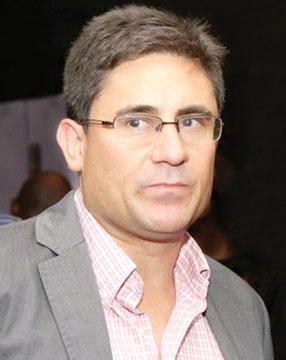
 The new acting Chief Executive Officer of Etisalat Nigeria, Mr Mathew Wilsher has been in Nigeria for the past nine months. In all of this time, Wilsher says he is studying the environment and the entire Nigerian telecom landscape. As a result he has not made much of a public outing.
However, last week, he made his first official courtesy visit and it was to none other media house than the Vanguard Newspapers.
The Hi-Tech desk team seized the opportunity to throw some salient industry questions and his answers are so entertaining. Enjoy the excerpts
You have been in Nigeria for nine months, what’s your impression of the country’s telecom industry so far ?
I think the telecommunication industry here is absolutely critical. Nigeria has so much potential, especially with an estimated 170 million people.
Nigeria actually has more people joining the work force than any other country in the world in the few years. This is a young country with huge opportunities and the youths are taking on new ways of interacting, new technologies and crave to be connected not just with the local environment, but with the international community.
I think that in the last five years, there has been tremendous explosion of mobile services, predominantly for voice, text messaging and access to the internet is also coming along.
There is still a lot for all of us to do in terms of fulfilling the needs of the country and that’s why we are here to invest in a way that makes sense to customers. That’s why we have this reputation for network quality, customer service and innovation. We want to give great experience and to get a return on that as well.
Your company was the only telecom company that escaped the NCC sanctions recently. Can you guess why others were not that successful?
I cannot tell what others are going through or why they could not make the threshold required. Running a telco is a very complex venture. There are so many pieces that have to come together to make it successful;planning and operating the technology, servicing the customers.
The way you align with the regulations is important. All of these must come together and doing them right, delivers outstanding experiences to customers.
There are many areas in which a telco can slip off. I believe what makes the difference in our network quality and the ability to meet the standards expected of us, is that the people in the company are continually committed to making sure that we plan well.
We make sure that any time a base station has to be on air, it is. Our standards are that our base stations are up 99 percent of the time, 24 hours a day and seven days a week.
Not everyone works with those standards, some people have 97 percent standards and not for 24 hours a day.
Our team is committed to keeping the network working. I’ve learnt with the results that we’ve had that if you give customers great value, they will reward you and that is the jury that we care about.
Are there bottlenecks you think should be done with to improve the sector more?
How can the power industry be more effective? Because if the power industry can be more effective, that could dramatically improve our services level and reduce costs that could be passed on to customers.
We hope the reforms are coming through in the power and energy industry because it will lead to service improvement for us all. There’s need to align all the federal and state governments in terms of rules, regulations, taxations and the ministry helping to co-ordinate all these. That helps us to operate more economically and give better value to customers.
It’s really important that people understand how challenging it is to meet and address the needs of Nigerians.
Operators like you seem to have great desire to operate in Mobile Money ecosystem but the Central Bank of Nigeria has made it clear that telcos cannot be granted license. Can you fault this declaration?
I think that electronic transfers make life easier for customers and businesses. I’m convinced that it’s going to be an important improvement in life and business. I believe that we can help that process because we have a brand that is trusted and has a nationwide reach helping the people learn how to use these services.
I understand that there is a lot of progress being made recently on reaching an alignment between different government bodies and industries on how we can co-operate together on this. We believe we can play a very constructive role on this. We’ve already done some ground work and partnership with the banks. We think that there would be changes soon that will allow us to get more involved in helping this transformation.
From inception, your company came up with customer-centric strategies like giving out freebies to subscribers and others are following suit. Are you continuing with that now your network is a bit stable? Can you also share with us the toll the strategy is taking on your profit margin?
Telecommunications is a long term industry, you don’t come into telecoms and think you’re going to make a fast one and disappear; it’s not a smooth road.
You are here for the long term and it’s serious business, which means you have to invest a lot of money and you have to build scales in order to cover all the overheads. It’s a huge network, thousands of base stations with generators and links together.
Even when you get to a certain scale and begin to make money, it is also re-invested in expanding the network. We’re just five years, so we are still in the investment phase. We need to reach the scale where we can actually make money.
One of the challenges in the industry is having a structure that allows really innovative, dynamic, competition but not one that is stalemate by disproportional allocation of the industry profits. At the moment, I think we are in a state where there is disproportional allocation of the industry profits.
Our job is to deliver outstanding experiences to customers, great value to grow and become more efficient, so that we can reach the kind of scale levels where we can continue to invest. The industry needs to mature to a point where there is some more balanced competition.
If you have enough people who are really focused on customers, there’ll be further growth in telecommunications. We are not afraid of competitors. A fifth player would have to come up with something different; they would need to have a long term view of their investment. Unless they do that, I don’t see how it would benefit anyone. Having someone do the same old thing is not right.
The reason Etisalat is successful is because we do things differently than the others. We give simple, understandable plans. We bring great innovations to Nigerians. If other people can come into the market with different ideas, we’ll welcome them. We need good competitors; we don’t want the old fashioned competition.
Disclaimer
Comments expressed here do not reflect the opinions of Vanguard newspapers or any employee thereof.