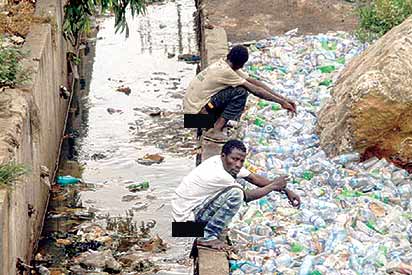
*Once upon a time: Open defecation in Bauchi
Nigeria has so far received $23 million in four years from Global Environmental Facility (GEF) to implement climate change, biodiversity and land degradation projects.
Mrs. Halima Mohammed, GEF’s Desk Officer in the Federal Ministry of Environment, disclosed this at a two-day National Steering Committee meeting in Abuja.
She said the allocation was under the 5th replenishment circle, covering July 1, 2010 to June 30, 2014. According to her, the allocation is under the System for Transparent Allocation of Resources (STAR), which allows GEF to allocate funds to countries to implement projects in specific focal areas.
Mohammed said Nigeria had implemented all its projects under the fifth cycle with the exception of two awaiting approval from the GEF council. She listed ongoing GEF projects in the country to include Conservation and Sustainable Management of Niger Delta Biodiversity; Sustainable Urban Transportation; and Setting up Mini- Grids based on Photo Voltaic (PV), Hydro and Biomass Sources. Others are Promoting Energy Efficiency in Public and Residential Sectors; Less Burnt for a Clean Earth; Minimisation of Dioxin Emission from Open Burning Sources, and Small Grant Programme for Civil Society Organisations.
She said that GEF had three funding windows, namely the full size, the medium size and the small grants. According to her, small grants component of GEF is a grant below $50,000 dollars, medium size is between $500,000 and $2 million dollars, while the full size is from $2 million dollars and above.
Mohammed, who is an Assistant Director in the Ministry of Environment, said Nigeria could benefit more from GEF by building the capacity of its staff. In addition, she suggested that project proponents should forward well-articulated concept to the GEF Operational Focal Point for Endorsement.
“The project proponent, in collaboration with the operational focal point, should ensure that prompt comments on the proposals are made by relevant offices of the GEF focal areas. The comments should be reverted to the project proponent for incorporation and further development. Project proponents should also explore the opportunity offered through the implementing Agencies,” she added.
The implementing agencies, she said, are UNDP, World Bank, FAO, UNIDO, ADB, UNEP and IFAD, among others.
Disclaimer
Comments expressed here do not reflect the opinions of Vanguard newspapers or any employee thereof.