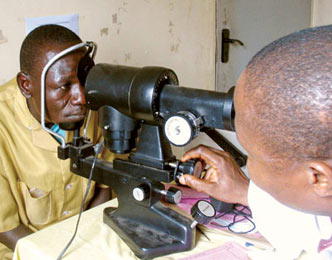
*A driver under going an eye test
BY CHIOMA OBINNA
Do you know that most eye injuries occur in the home? T he eyes are the most cherished of our senses. Yet we potentially expose them to danger simply by not protecting them.
Although, studies have shown that over 40 percent of reported eye injuries were caused by activities at home such as routine repairs, yardwork, cleaning, and cooking.
Experts say by simply going outside, oOver time, the sun’s rays can seriously damage the eyes and surrounding skin, sometimes leading to vision loss and conditions from cataracts and macular degeneration to eye and eyelid cancers. However, simple daily protective strategies will help keep our eyes and the sensitive skin around them healthy.
The best way to prevent injury is by wearing eye protection. Wearing some type of eye protection is often the first line of defense in avoiding eye injuries. Safety glasses and other sports glasses come in a variety of styles and sizes, so make sure to find the right type of protection before beginning any project.
Certain types of light from the sun can wreak havoc on the eyes. Ultraviolet A and Ultraviolet B light: Ultraviolet A (UVA) and ultraviolet B (UVB), powerful, invisible rays with wavelengths shorter than visible light, are the most dangerous parts of sunlight. They can cause cataracts, eyelid cancers and other skin cancers,1,2 and are believed to play a part in macular degeneration, a major cause of vision loss for people over age 60.3 In addition, UV rays can prematurely wrinkle and age the skin around the eyes.
Who is at risk: The fairer your skin, the greater your age, and the lighter your eyes, the higher your long-term risk, especially if your work or recreation involves prolonged sunlight exposure. Light eyes are at increased risk for skin cancer and certain eye diseases because they contain less of the protective pigment melanin.
But all of us are susceptible to these cancers or other conditions caused by the sun. We need to protect ourselves daily, because the damage keeps adding up.
To protect your eyes from the sun, wear lenses that absorb/block UV offer strong defense against eye and eyelid damage. It’s best to wear sunglasses year-round in the sun.
Guidelines when you are faced with an eye injury
The first rule of thumb when you have any eye injury is to avoid touching, rubbing, or putting any kind of pressure on your eye. Even if the injury seems mild, there may be internal damage to the eye. Experts say visiting your eye doctor as soon as you can in any case can prevent further damage.
For Black eye or other swellings: Use a cold compress, but try to avoid applying pressure. If pain or swelling continues, contact your doctor immediately.
Chemicals: Use eyewash or water to flush the eye out. Avoid rubbing your eye and see the doctor as soon as you can.
Foreign objects: Avoid rubbing your eye. For small debris, like sand, use eyewash to flush the eye out. For larger debris, lift the upper eyelid over the lashes of your lower lid and blink several times and allow tears to flush out the particle. If the particle remains, keep your eye closed and see your doctor immediately.
Punctures: Don’t rinse with water, don’t remove the object, and don’t rub your eye. Avoid
Disclaimer
Comments expressed here do not reflect the opinions of Vanguard newspapers or any employee thereof.