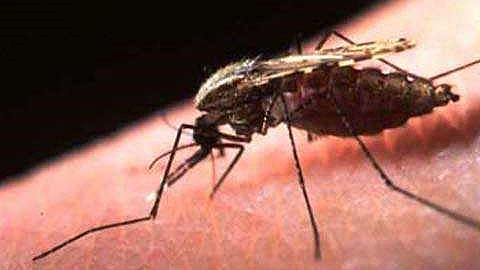
mosquito
12,850 homes protected so far
By Olasunkanmi Akoni
Malaria disease is recorded to be responsible for 63 percent of all clinic attendances in Nigeria as a whole and it affects mainly children under the age of five years and pregnant women. Malaria is responsible for 25 percent of infant mortality and 30 percent of all childhood deaths, 11 percent of all maternal deaths and 70.5 percent of morbidity in pregnant women.

File photo
Determined to reduce the rate of the dreaded malaria scourge amongst its residents, Lagos State Government recently, launched a pragmatic campaign through Indoor Residual Spraying, IRS against combating the spread of malaria disease via the carriers, mosquitoes.
Therefore, no fewer than 51,800 rooms in 12,850 households have so far been sprayed during the on-going IRS, exercise in six Local Government Areas and 13 Local Council Development Areas, LGAs and LCDAs, in the state as part of the environmental control strategy of the state government’s Malaria Control Programme,
The exercise, an integrated vector management programme which is aimed at combating malaria, started a month ago and is billed to end within the next eight days.
Prior to the commencement of the 40 day spraying exercise, various pre-implementation activities were planned and implemented with view to ensuring maximum cooperation, acceptance and effectiveness of the exercise.
IRS is the application of long lasting chemical insecticides on the walls and ceilings of all houses and domestic animal shelters in a given area, in order to kill adult vector mosquitoes that land and rest on surfaces of walls and ceilings.
The aim is to curtail malaria transmission by reducing the life span of vector mosquitoes and reduce the density of indoor resting and indoor feeding anopheles mosquitoes which are the major means of vector transmission in Nigeria.
The exercise which commenced on Saturday, March 15, 2014 in six LGAs of Ojo, Ikorodu, Badagry, Amuwo-Odofin, Kosofe, Ibeju Lekki and their corresponding LCDAs is being run concurrently.
The key implementation activity of the exercise, involves community mobilization by the LGA social mobilization teams to inform residents about the spray days and schedule while some critical implementation and post implementation activities rest on insecticides susceptibility tests and monitoring as well as quality assurance strategy.
Commissioner for Health, Dr. Jide Idris during his on-site inspection of the exercise in Kosofe LGA and Agboyi-Ketu LCDA, added that the pre-implementation activities also include, geographical information system mapping exercise of structures and households to be covered in the proposed IRS sites with a view to estimating the types of spray able structures, rooms, households and total population; procurement of
adequate quantities of chemicals, pumps or sprayers, spare kits and personal protective equipment for the exercise. According to Idris, “The spraymen and supervisors who are community persons recommended by the LGAs and LCDAs have been trained. This comprised a-three day training for supervisors and a 10 day version for the spraymen. These spraymen have been exposed to the theory and practice of IRS exercise including safe handling of chemicals or insecticides and spraying equipment and maintenance of same.
“Quality assurance of equipment, insecticides and materials including personal protective wears are conducted to ascertain that they comply with international best practices. In addition, maximum residual limits (MRLs) of pesticides in food product intended for human and animal consumption are established and strictly enforced”.
Idris noted that the insecticide susceptibility tests and monitoring were conducted at the end of each round of the exercise by a group of scientists stressing that samples are taken from sprayed rooms and sent for laboratory analysis to assess the potency of the insecticides.
“In addition, continuous monthly evaluation of the residual efficacy of the insecticides used and monitoring of the mosquito behaviour are conducted. The monitoring exercise will be carried out during the actual spraying exercise and for six months afterwards”, the commissioner said.
Idris posited that the roles of the households is equally significant to the success of the IRS campaign urging residents to receive and cooperate with the spray teams when they visit by ensuring that they keep to the rules of housekeeping and preparation before and after spraying.
What residents should do
“They should ensure that all food items are properly covered. In addition, households are expected to stay outside during the spraying and significantly, to observe the two hour waiting period after the spraying before members can re-enter the house. Critically, walls and ceilings of sprayed houses are not to be painted within six months of spraying to prevent deactivation of the insecticides”, the Commissioner stated.
He noted that government was also taking the issue of public enlightenment seriously in the fight against malaria especially in the areas of sanitation stressing also that proactive steps had been taken in the areas of urban renewals, water, drainage system and environmental upgrade as ways of combating the scourge of malaria. A stitch in time saves nine”
Disclaimer
Comments expressed here do not reflect the opinions of Vanguard newspapers or any employee thereof.