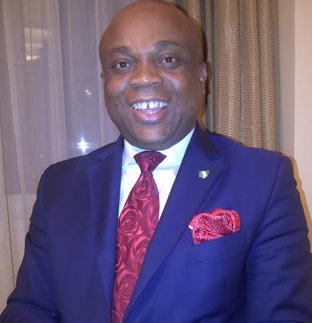
Christian Udechukwu
Mr. Christian Udechukwu, a London-based Nigerian is a delegate to the ongoing National Conference representing Nigerians in the Diaspora. In this interview, he, among other things told Vanguard that Nigerians in Diaspora need a voting right.
By Levinus Nwabughiogu
On the cravings of Nigerians in Diaspora at the conference
What Nigerians abroad crave for are a nation that protects and cares for them as citizens living abroad, that stands up for them against foreign countries or agents of other countries that want to impede their progress.
They want a nation that offers them great opportunities to be the best they can be and contribute the best they can contribute to sustain the future and development of Nigeria.
They want a nation that is fully functional, that defines their role in each development that enables them to access opportunity to contribute in those roles and they seek to have opportunity to actually vote and perhaps, through that external vote which comes from abroad, which is not subjected to a lot of suspicions that surround local election to use that as a way to force politicians to think about their agenda for Nigeria because the patronages and so on that have become entrenched in Nigeria are not evident abroad.
So a politician who is coming to US or London or anywhere else to campaign will think seriously about what he is offering the people.
Where a group of Nigerians may have become used to not asking questions, the ones that are living abroad that are used to citizens asking politicians questions and holding them to account will have a different approach. They will ask questions.
They expect politicians who make commitments to fulfill them and deliver on them. And if the don’t, then they will actively work to make sure that those politicians don’t get re-elected.
So, It is for this reason that a lot of Nigerians abroad are canvassing for Diaspora voting because this is their homeland. Regardless of those who live abroad become Americans or UK citizens, they still see Nigeria as their homeland and they want to be able to see that Nigeria has a functional first rate political system. That is what we are craving for.
On Nigerians in the Diaspora perception of Nigeria
The perceptions of Nigerians abroad are that we are extra ordinary clever people. We are a people endowed with high level of intelligence and extreme capacity for creativity and this is an energy which Nigerians who have channeled it positively have become global icons.
There is a whole lot of work going on now by both the state and private individuals to try and help channel those energies and that is of course through dealing with issues of unemployment and so on because when jobs are created, those creative mind become preoccupied but when jobs are not there, it might become an excuse. The other thing is that Nigerians abroad are so perceived as extremely hard working. Therefore, it is not surprising that Nigerians abroad remit $21 billion annually into the Nigerian economy.
As Nigerians living abroad, we show the greatest of confidence in Nigeria by sending that money home every year. With that, when foreigners, the world Bank, IMF and all those who keep tab at remittance flows, see that Nigerians are remitting $21 billion every year into the economy, they are a bit more careful about what they say because if we have the confidence to invest in our homeland, then there is very little effort that we need to make to ensure that foreigners come in because we are doing it ourselves.
However, we should make sure that our business environment is friendly because that is the only way we can get foreigners to come.
On issues raised by the President in his speech
The speech captured some of the foundational issues that challenge the speedy development of Nigeria. Some of the issues that are challenging Nigeria essentially are fairness, justice, equity, access to resources, revenue sharing formula and compelling us to look inwards into how the federating units or the states in Nigeria can look inwards to ask themselves what natural resources, human and materials, that exist in those states that they can develop so that there’s more coming into the purse which is then to be shared. I suppose that the current formula where people are looking at constantly having greater access to a diminishing resource, oil and gas is not good.
Disclaimer
Comments expressed here do not reflect the opinions of Vanguard newspapers or any employee thereof.