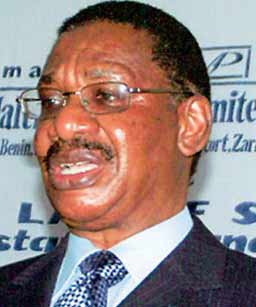
Itse Sagay
By Bartholomew Madukwe
A constitutional lawyer and activist, Professor Itse Sagay SAN, has described the sack of Justice Gladys Olotu of the Abuja Federal High Court and Justice U. A. Inyang of the Federal Capital Territory High Court, as a healthy revival for the judiciary.
The National Judicial Council, NJC, under leadership of the Chief Justice of Nigeria (CJN) Justice Mariam Mukhtar, last week found the two high court justices guilty of judicial misconduct and okayed their compulsory retirement from office.
In a telephone interview with Vanguard Law and Human Rights in Lagos, Prof Sagay noted that with such move, the CJN would succeed in bringing an end to corruption in the judiciary at the end of her term of office.
“It is a very healthy revival for the judiciary. Hopefully, by the time the CJN finishes her term of office, the whole corrupt judges would have been cleared and we will have a healthier judiciary. It is clearly a consistent implementation of the new CJN determination to root out corruption and indolence from the judiciary,” Prof Sagay said.
The constitutional lawyer explained that the sack of the two justices clearly implies corruption, saying “though it (NJC) did not say so, but by the time you go through the announcement of the things that happened, including the press report about two bank accounts running into billions, it was clear that it has to do with corruption, not just indolence.”
Judicial procedure
Prof Sagay pointed out that the issue also leading to the sack has to do with indolence because Justice Olotu breached the laid down judicial procedure by delivering a judgment in a case eighteen months after the final address by all the counsel in the suit.
“The second thing also has to do with indolence because the judgments that were given seem to anticipate other actions that were to filed later on, so it was clear that there was something under-hand that was going on. So that one involves corruption, but the other three involves indolence, giving a long judgment within a period of time,” Prof Sagay added.
Disclaimer
Comments expressed here do not reflect the opinions of Vanguard newspapers or any employee thereof.