By Morenike Taire
It is no longer news that Nigerian fashion has gone on the international domain, with various platforms to showcase the same including fashion shows, in store deals and of course on line platforms.
The Iyaeko.com image sharing social platform is the brain child of computer scientist Adetola Oredope, who having carved a niche for himself in the industry, saw the need to create a platform that celebrates Fashion and Style in the most inspiring way possible across the globe. Iya Eko was made available to the public on the 20th of December 2013 and 1 week after, had recorded a hit of over 8,000 views from over 1000 unique users – a success Adetola, who holds a PhD in Computer and Electronic Systems is proud to celebrate considering the fact that it was an initial test of the concept.
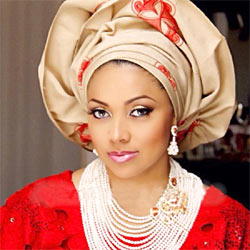
The Iya Eko website prides itself on having the largest collection of culturally related fashion trends with over 16,000 images generated so far. The pictures are currently based on popular and carefully selected tags on Instagram; making it easy for users to sign in and share their pictures. The platform allows fashion enthusiasts to extract various trending fashion designs and styles that are culturally inspired. The platform can boast of having the largest collection of the ‘Knot wrapper’ – a fast growing fashion style from Africa.

*Lola Okoye
Adetola is currently working round the clock to build the site to an enviable standard, as well as inputting customised features that would make it easy for users to stay on the site much longer, as well as avenues at which manufacturers, designers, planners and retailers can attract new clients.
Already being labelled as, E-ovation investors are already showing interest in partnering with the creator to making the website one to be reckoned with.
In this short chat with Oredope, Lipsticks finds out why on-line is the next big platform for fashion.
What’s the idea behind the website?
The website allows users to be inspired by trending cultural fashion trends and styles. Users also discover, share and collect cultural fashion images by everyday people.
What’s the big deal about Nigerian fashion?
The platform is aiming to be global but we have started with Nigerian fashion because Nigerians are very passionate about local fashion and this is demonstrated in our dressings to parties, places of religion and work. Hopefully, the platform hopes to expand to other African countries and South Asia
Where do you expect to be in 5 years?
We hope to have put a smile and inspired millions of people around the world on a daily basis based on cultural fashion. We hope millions of people visit Iya Eko before they make fashion designs. We will like to be known as a platform that brings together providers of culturally inspired styles/services, as well as those who seek the services. There would be buying and selling of cultural styles/designs/inspirations from around the world.
What are you doing differently than other sites?
Our value proposition is our technology – i.e. automation and user generated content. Similar websites require a human editor to manually select images while we provide our users with a blank canvas of user generated content, allowing them to be very creative. This means all our users are editors in their own right and can create very interesting collections to share with friends, family and the general public via the popular social media channels.
On the Iya Eko platform, we have seen people create collections for Aso Ebi Kids, Vintage Styles, Cat-Eyes Makeup, Ore-Iyawo Poses, Islamic Hijabs and so much more. This is why we have been able to collect over 20,000 images in the last 3 weeks, generated over 15,000 page views via 2000 unique visitors with each visitor spending an average of 4 minutes on our website.
Are you targeting Nigerians at home, diaspora or foreigners?
Our platform is everyone – Nigerians and Non-Nigerians. In fact we have noticed that Malaysian pictures have stated trending on our platform while we have regular visitors from places like Japan and Indonesia.
What kind of scope are we speaking of?
Our scope is to provide everyone with the tools to be creative. We are not fashion experts but we understand technology very well. This is why we will like to provide the right tools to everyone interested in fashion, whether you are a fashion expert or not.
What has been the response so far?
The response have been very brilliant so far and I really must appreciate our dedicated fans on facebook as most of them believed in the idea when it was just a concept. Our users are very impressed as they are now exposed to new fashion designers, commentators, blogs and service providers. This is because the traditional Nigeria fashion channels cannot really cater for everyone and they are limited to the choices of the editor. Now people are discovering that style doesn’t need to rely on an editor of a blog to determine the latest fashion trends, they can just come to Iya Eko and explore trends from mainstream channels and ordinary people.
Factors hindering modern use of contraceptives
By Esther Onyegbula
Despite global efforts on enabling women and girls to access contraception in different parts of the world especially in developing countries, these efforts have not yielded the much anticipated result as access to contraception has been stalled over the last two decades.
In a developing country like Nigeria, the importance of family planning cannot be over emphasized. According to Dr. Modele Osunkiyesi, director Family Health and Nutrition, Lagos State Ministry of Health, “family planning plays a central role in changing and improving the lives of women, men, families, communities and countries by significantly contributing to the decrease of maternal and infant mortality, an alternative to unsafe abortion and HIV transmission”.
According to United Nations Population Funds Africa reports, the contraceptive prevalence rate for women of reproductive age is about 63 percent, though it has slowed down since 2000, in contrast to the 1990s, when it rose substantially.
In the light of these, Nigeria faces challenges related to high growth rate of its large population, with a high total and adolescent fertility rates and low use modern contraceptive. The weak health system, women’s low social status and harmful traditional practices have not helped issues, as it continues to present significant barriers to efforts to improve women’s health.
Many factors have been attributed to low use modern contraceptive in Nigeria, one of the most common factors is the unpleasant experience most clients go through.
Speaking at the dissemination of the 2012 programme for reproductive health commodity security survey, Dr. Omolaso Omosehin, Program Specialist, Head Lagos liaison office, United Nations Population Fund (UNPF) noted that although there has been a slight improvement from 2011, we have also noticed that the long acting reversible contraceptives has not been well embraced. Also, we discovered that stock out of commodities, are present in the tertiary health facilities. Unfortunately majority of Nigerians go for services in primary healthcare facilities so lots of people are still missing the opportunities. We have also noticed that the number of facilities that should be offering these services are not offering them, because the staff are not trained or they don’t have the commodities”.
Mrs Labake Osaige 40+ with three children, age 15, 10 and 5 respectively, narrates her unpleasant experience using one of the family planning methods.
“I went for family planning at a primary healthcare facility close to my house, when I got there and told the attendant what I wanted to do, she showed me some publications and she asked me which one do I want I said I wanted the injection and she told me that there are two types of injections. The monthly one and the quarterly one, she asked which one do I prefer, I told her the one for three months. She did not explain the side effects to me in detail, she told me that I might not menstruate. But unfortunately after taking the injection I started bleeding, and it will last for 21 days. On the 20th day I went back to the clinic and told her all that has happened that was when she told me that it was part of the side effects. And I asked her why she didn’t notify me initially and she said that different persons react differently. Because I wasn’t satisfied with her response, I went to another clinic close to my place and the Matron on duty explained that the family planning attendant should have conducted a t
est for me to determine the most suitable family planning commodity for me to use. She noted that if I take another dose of the injection the bleeding will correct itself”.
“I did, after about a month the bleeding continued so I went back and complained about the new development and all the attendant could say is that I should change to another method. And I was like hell no not when the one I am using is giving me issues, you are asking me to take another one. I told her I don’t want to take let me clear the effect of the ones that I have taken already after six months it continued. In fact it ran for ten months before it finally stopped, I will have 14 days of heavy flow, and 7 days of spotting flow, it made me really uncomfortable. And each I went back to the clinic all she says is that it is the side effects. At that point I started searching the internet and I found out that it was part of the side effects. Right now I am confused on which method family planning to use, all these while I and my husband have been using withdrawal method to space our children but I still got pregnant for my last child, which was why we decided to use another method because we don’t want more
children”.
Several women like Labake have had similar experiences in the hands of unqualified and untrained family planning attendant.
As a result of these identified gaps, there have been ongoing training sessions to train nurses and midwives in the areas of family planning. “For instance we have realized that a lot of people who would love to go for the long acting reversible contraceptive cannot because they are not aware and we don’t have enough trained staff, because they are not aware they are unable to access these services. So we are working with some partners and training people to ensure that the services are more readily available. This will be done in three years and we have started this already, and Lagos State is one of those states that is enjoying the first phase of the training” Dr. Omolaso Omosehin added.
With several modern methods like the long acting reversible contraceptives now available women now have diverse option. The implants and the ultra uterine devices are both long acting reversible contraceptives. The implants are hormonal base put it inside the skin and it can be there for three to five years and can prevent pregnancy for as long as a woman wants while the ultra uterine devices are copper T that is put in the womb and these prevent pregnancies for as long as eight to twelve years as long as they are there. If for instance the client decides they want to get pregnant, immediately the device is removed they can get pregnant almost immediately.
Omolaso Omosehin explained that people are reluctant majorly because they are not aware of these modern methods. “Another reason is that in the past the long acting reversible contraceptive was strictly done by doctors now we have realized that it is practically impossible to meet the need of a client using only doctors we have in the country so we now have midwives and nurses that are trained to carry out these services. Even at that those that are providing them are not so many and there is a very elaborate plan in place to enable more people access these services”.
Disclaimer
Comments expressed here do not reflect the opinions of Vanguard newspapers or any employee thereof.