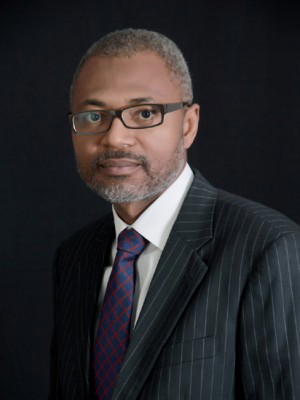
Emeka-Mba
In this interview, the new Director General of the National Broadcasting Commission, NBC, Emeka Mba, outlines his agenda, saying radio and television stations that violate the NBC Code, whether privately or government owned, will have their licenses withdrawn.
Excerpts:
You just came into NBC as Director General. What agenda are bringing on board?
The number one task of the commission at this time is the digital switch over. All over the world, because of the ITU’s regulation, digital switch over is not only important because it helps to optimize the use of the spectrum which is a scarce commodity, it also offers opportunities for the television to be redefined. It makes the television more interactive and more socially valuable.
Interestingly, the switch over is happening around the same time we are going to have the general elections and our elections as any elections anywhere in the world are driven largely by the media, especially the electronic media. So we are not unmindful of the difficulties that are going to come up in the next one year as we face the digital switch over as well ahead of the general elections.
People have argued that the NBC has not done well especially in the enforcement of the code despite the fact that the code regulating the conduct of business in the electronic broadcasting prescribes sanctions.
Let me say that over the years, it appears that the sentiment within the NBC has been to nurture the broadcast industry. As a young industry, there is nothing wrong with that. But I think at 20, the industry has reached its early adult stages; so we are beginning the concept of enforcement. No one can say now that he is not aware of the code; no one can say that broadcasting is a new thing that we are learning. It’s been there, at least commercial private broadcasting has been there for 20 years plus and so the NBC has taken a different turn.
I think what has happened in the past is that because the NBC does not communicate its sanction process, people were unaware of what was happening but, I can tell you, recently, AIT went against the code and we fined them 500,000 naira. If they continue, it will come to a point where we will have to seize their license. We also, recently, had a popular radio show, done by Love FM, the one that is almost like an ombudsman, Ahmed Isah’s show, where the anchor was a little unprofessional.
We had cause to sanction the station and demand he be taken off air and sent to broadcast school which he has just completed. But sometimes it appears because these processes are not made public, it is as if nothing is happening to people that violate the code, but that is the way the NBC has positioned itself; it is going to change.
I believe that it’s also part of what we need to do to make sure that members of the public can become an integral part of the monitoring system. The monitoring doesn’t just happen from the NBC, the monitoring also happens from members of the public. When they view something and they don’t like it or they feel it is offensive, they have a method of complaining to the NBC and then our process with dealing with that issue is made public so that they feel there’s faith in the process.
Let us go back to the television sector. You know Nigerians have the penchant for doing things at the last minute. The campaign for the switch over started a very long time ago while the policy frame work came out sometime last year, what is the level of awareness especially in the industry?
There are two levels of awareness; one is to the industry, the other one is to the general public because, at the end of the day, what is more important is the general public; people are going to watch television or listen to radio. But general awareness is slow because we haven’t had the funds to commence a sustainable media publicity campaign. The truth of the matter is that everywhere in the world that digitalization has occurred successfully, it has happened with the inputs of the entire industry, it’s not simply a position that is taken by the regulator.
The industry people bring in their money, government also brings money, there is always a special dedicated fund for digitalization; we have requested for money from government and we are hopeful that the request will be accommodated to make this transition successful.
Usually, a large chunk of the budget goes to two basic items. The first is publicity. The other one is usually to rebate the system for vulnerable members of the society in terms of having a set up box. The rest is administrative and technical.
We have made a lot of progress, we have worked out a specification for a set up box; we are working on a census of transmitter infrastructure in Nigeria. We have worked out the licensing frame work for digital operation that has already been concluded; we are just waiting for our next board to approve that process. From this month- January – you will begin to see a lot of these processes becoming more public and we will begin to have impact that will be beneficial to the industry.
Critics of NBC have argued that though there is obvious violation of the code by government owned radio and television stations, especially in the area of campaign during elections and muzzling of the opposition, are you going to do things differently as we go towards 2015?
The only thing I will do differently, if there will be any difference, is following what the code says. There’s no separate law for state owned or government owned and private owned stations. If you break the code, appropriate sanction as stipulated in the code will be meted out to you. Anyone who has any doubt as to whether I will enforce the code should break it and see what happens. We are going into a very highly charged political season.
I am not going to sit here and allow the broadcast media to be used as a vehicle to cause trouble. Any station that violates the law, we will simply take away its license.
The license doesn’t belong to the stations actually, it belongs to the people of Nigeria, it belongs to our common wealth, it’s just given to you in trust and, if you abuse that trust, it will be taken away.
The radio is a very strong medium, yet what we have on air these days , people who don’t seem to have the knowledge not to talk about the competence of delivering news are everywhere on air. is there anything NBC can do to ensure that on-air personalities are better trained so that they don’t impact negatively on our young ones?
One of the things I’ve done since coming to this position is to undertake an audit of the manpower of all radio television stations in the country. My research department is just about concluding that assignment; so I can sit here and tell you that any time anybody makes any recruitment into radio or television, I need to know the person’s background, his qualification, etc.
So we have that data and we are accessing it; so we have an idea of all the radio programs, who runs the radio stations, who owns them, who are the staff, what’s the staffing level, what are their qualifications? It is worrisome when people just get on air without requisite training or qualification or experience and they say whatever comes to their mouth. There is power but if that power is abused, you are bound to be sanctioned.
We saw what happened in Rwanda, how radio helped to promote violence and genocide; we saw what happened in Kenya after the elections and see how radio helped to promote violence. But the other thing radio can also help to do is heal. We see what community radio is doing in Sierra Leone, Liberia, other parts of Africa and South America; how radio is helping to heal wounds of violence, how it is helping to empower people on agriculture, health, election issues, voter participation, freeing people from the bondage of economic slavery. We believe that radio is extremely powerful and therefore NBC will do whatever is necessary to promote the responsible use of the air waves.
Disclaimer
Comments expressed here do not reflect the opinions of Vanguard newspapers or any employee thereof.