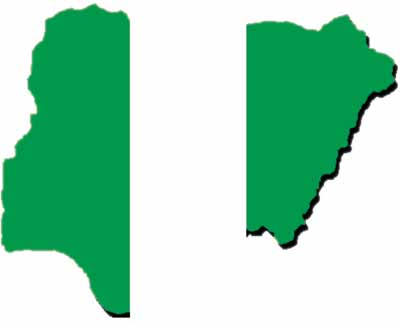
Wither Nigeria in another 50 years?
Events in the last two weeks have moved so fast and quite dramatic that only stable and experienced minds could catch up with such dynamic pace. However, the political dictionary has been enriched by strange words like ‘inconclusive‘ and ‘supplementary‘ elections and the ‘merging‘ of G7 Governors with APC. It was also the time to congratulate the President for his 56th birthday anniversary (President Jonathan was about three years old by the time of Independence in 1960).
It is considered unfortunate that the ‘merging‘ of five of G7 (rebellious PDP governors) took place before the scheduled meeting with President Jonathan, but his later meeting with the ‘faithful two‘ (Babangida and Lamido) appeared positive. Perhaps, the two governors are waiting to see what could happen if President Jonathan decides not to contest in 2015 ‘as they are believed to harbor presidential ambition‘.
It is surprising, if not confusing, that some commentators who see the merging of small but ineffective opposition parties into a single and virile party as a good step towards genuine democracy now appear jittery over the assumed rising political fortunes of All Progressives Congress (APC). That party (APC) has been under continuous strictures by biased and unfriendly columnists. The proper or a saner approach to me should be the giving to all parties a level playing ground or an open ocean to swim or sink in national political contest. What should be of primary importance is the programme to bring peace and prosperity to the country.
It is a matter of fact that the bifurcation of that great party (PDP), though regrettable, is not a surprise. It has long been expected owing to collective act of impunity, individual indiscipline, group sabotage and lack of focus on economic development and corruption. The reign of the ruling party (PDP) since the return of democracy to some, has been characterized by deepening poverty and corruption, political instability and general insecurity.
However, the pertinent question is whatever the opposition, strengthened by the influx of the five former PDP governors, would be able to provide a better alternative to the present government of President Jonathan. The answer points to a negative stance under the present deficient structure and limitations of the country. Corruption is endemic, and the government seems powerless or unable to tackle it, the cost of running the governments in all tiers is extremely high and methods of elections into offices have become not only untidy, but costly.
A more important challenge is the Boko Haram insurgence which is being seriously challenged by our security forces (Police, Army, Air force, Navy etc). It looks as if the insurgents could choose their targets accurately in an absurd war theatre. The operation itself is viewed by the opposition as President Jonathan‘s baby and the curse of his government and party. It is sad that the Boko Haram‘s reign of terror has not roused national conscience to national unity
As with the terrible challenge of Boko Haram, so also is the upsurge in criminal activities by a society which appears not to care much in tackling its many social and economic problems. The care-free attitude of the federal government is being matched by the lackadaisical approaches in many States and local government areas. It is a sickening panorama of abject poverty and undesired sufferings in a land blessed with human and material resources by nature.
Unfortunately in the midst of poverty, the priority of the main political parties is at present focused on 2015 elections. The Opposition (APC) is saying that life after Jonathan would be better and rosy; others are working towards the return of power to the North in 2015. What happens between now and 2015 which seems long enough for the illness of the country to become worse and life threatening? Everything is built on change of power in 2015 forgetting that it is always almost impossible to remove a clever incumbent.
The views of many observers are that the challenges of Nigeria are so fundamental that no party, howbeit, endowed could tackle or handle them single-handedly. There is no reason to believe that political stability question that has eluded the ruling party could be handled better by the Opposition (APC) under the prevailing circumstances of the country, heavily bias towards religion and ethnicity.
What could or should be done to avert that looming political danger in 2015? The President, Dr. Goodluck Jonathan has set up the machinery for a National Dialogue which should be supported by all Nigerians, especially the Opposition. The successful dialogue should result in a re-structured country with emphasis on peaceful and prosperous co-existence.
Perhaps, President Jonathan and his government will, as a matter of urgency, revisit the disgraceful electoral system which is giving Nigeria a bad name. He could set up a new committee or review the Uwais Committee Report. There should be a better and less costly way to choose our representatives.
I wrote before in this column that when Britain was faced with grave economic crisis in the 1930s, it resorted to a National Government to save the Pound. It appears that the Nigerian economic (poverty and unemployment), political and security crises are so complicated to be left to the present federal government alone to handle successfully.
To many analysts, the motley crowd of party faithfuls in the cabinet seems unsuitable by its composition (selection) to offer necessary measures or exact the painful sacrifices needed. It is even doubtful, if the average Nigerian as at this moment has any joyful feeling that a better and a more progressive government is on ground.
Many people are advocating that the past rulers of Nigeria (military and civilian) should prevail upon the government and the opposition to work together in order to save the country from continuous economic, political and social decadence, widespread rural poverty and urban congestion with its attendant filth and disease. It is necessary to seek a new approach in the idea of a broadly based government under President Jonathan.
Disclaimer
Comments expressed here do not reflect the opinions of Vanguard newspapers or any employee thereof.