Naira
By Babajide Komolafe
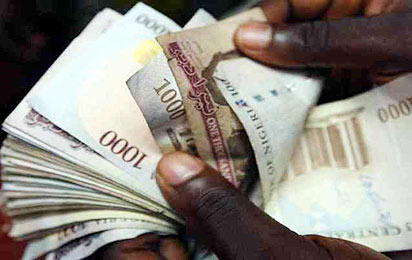
Eighteen months after the introduction of the cashless policy, cash is still used to settle 83 per cent of retail transactions across the country. Meanwhile, the Central Bank of Nigeria (CBN) has continued its enlightenment campaign on the policy with an interactive session with stakeholders in Awka, Anambra State.
Managing Director/Chief Executive, Financial Derivatives Company, Mr. Bismarck Rewane, in his monthly economic news and views bemoaned the continued dominance of cash-based transactions. “Card-based transactions remained relatively unchanged at 17 per cent. Approximately 83 per cent of transactions are cash-based. Network challenges continue to hinder wide adoption of cashless policy. Network challenges need to be addressed to further improve card-based transactions.”
On his part, Deputy Governor, Operations, CBN, Mr. Tunde Lemo made a case for the introduction of the cashless policy at the interactive session with stakeholders in Awka. He said the objective of the cashless initiative was to fast-track the modernisation of the gamut of the financial system to enable Nigeria realise her goal of becoming one of the largest economies in the world by the year 2020.
Represented by the Deputy Team Manager, Share Services Unit, Mr. Babatunde Ajiboye, he revealed that a study carried out by the CBN during the last banking sector crisis shows that many got into trouble as a result of their high cost profile and that cash management was identified as one of the major areas that led to high cost of doing business in banks.
According to him, it was also discovered that higher GDP growth rate is associated with countries that had achieved lower cash-to-GDP ratio. For example, while Indonesia had 4.5 per cent cash in circulation to the GDP, and South Africa had 2 per cent cash in circulation to the GDP, Nigeria’s position was 41 per cent cash in circulation to the GDP, which remains very high.
Ajiboye stated that the CBN and the Deposit Money Banks (DMBs), it was discovered, spent about N114.5billion in 2009 on cash management and related activities, and that it was envisaged to be over N200billion mark by the year 2012 or 2013, which goes to show that Nigeria spends so much in currency processing and management.
The essence of the cashless policy, he emphasized, was to reduce the cost of cash management and achieve a more efficient payment system in Nigeria.
According to him, in support of the extant Money laundering Act, the CBN being the custodian of the Nigerian payment system, decided to lead the crusade to migrate from the present cash-based to cashless transactions.
Disclaimer
Comments expressed here do not reflect the opinions of Vanguard newspapers or any employee thereof.