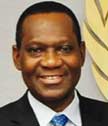
Foreign Affairs Minister, Amb.Olugbenga Ashiru
AmeduOgbole Ode, Acting Director/ Spokesperson, Ministry of Foreign Affairs in this concluding part of the discourse, argues that Nigeria has made considerable strides in its foreign relations which are worthty of commendation
SUCH high level meetings have attracted considerable investment portfolios to the country. Dr. Adebajo, in his article, failed to highlight the gains of our economic diplomacy which the Jonathan Administration has given renewed vigour in the last two years.

Foreign Affairs Minister, Amb.Olugbenga Ashiru
He was obviously aware that the hosting of the World Economic Forum in Cape Town in May 2013 was not a contest, as Cape Town had developed an impeccable infrastructure over the years. Yet, he failed to acknowledge that Nigeria will host the same World Economic Forum next year.
He must also be aware that the total in flow of investments into Nigeria last year was about USD 9 billion, as confirmed by UNCTAD, much higher than in the previous years. Both the World Bank and the IMF have equally commended Nigeria for the economic progress being made by the Jonathan Administration. This level of FDI inflow into the country has arisen from the foreign campaigns of this administration.
The Bi-National Commission with various countries continues to deepen the gains which the current Administration has made in attracting foreign investments to the country. The Bi-National Commission with Germany, signed on December 2, 2011 by the Foreign Ministers of Nigeria and Germany has resulted in the inflow of the following programmes in Power Generation, Re-forestation, Emission Control and Capacity Building for Research in Solar Power Energy for Universities.
Others include: £65 Million 30 megawatts Kiri Dam, in partnership with the Adamawa State Government; £50 Million 20 Megawatts Yola Solar Power Station; £1.5 Billion 450 Megawatts Gombe Coal to Power Station; 450 Megawatts National Independent Power Project (NIPP) Geregu Power Station, Phase II in Ajaokuta, the Pilot Solar Power Plants in the six geo-political zones for the Universities of Ibadan, Lagos, Sokoto and Bayelsa.
The Bi-National Commission (BNC) between Nigeria and the US has injected fresh confidence into the Nigerian economy to the extent that Nigeria has become a new destination for US businesses and entrepreneurs.
This has significantly increased Foreign Direct Investment from the US into Nigeria. Several projects and investments are flowing into the country to create jobs for our youths. Proctor and Gamble is constructing a factory to manufacture health materials in Agbara, Ogun State, while General Electric of US is investing over USD 1.5billion and has commenced the construction of a factory in Port-Harcourt to manufacture gas turbines to serve not only Nigeria’s but also Africa’s markets.
A foreign direct investment inflow of US$54 million is being executed with Mexico to develop agriculture plantations in Rivers State for the cultivation of pineapple, bananas and other crops, for export to the European Union market. Our relations with other emerging markets and huge economies, such as China, have also been robust.
Apart from the involvement of China in the development of infrastructure and construction, it has granted a soft loan of $500 million for the construction of a light rail in and around Abuja. A 50-bed capacity hospital, donated by China is currently under construction in Abuja.
As a testimony to Nigeria’s strategic importance in the comity of nations, President Goodluck Jonathan has undertaken several trips to many countries abroad, where he was received very warmly by his hosts and the resident Nigerian community.
The President has, in turn, played host to Heads of State and Government and delegations from all over the world, including high-level visits by the Prime Minister of Britain, the German Chancellor, Crown Prince of Saudi Arabia, the Presidents of Brazil, Indonesia, Lebanon and Poland, as well as the French Foreign Minister, the former US Secretary of State Mrs. Hillary Clinton, to mention a few of the Special Envoys and Emissaries from various countries. President Jacob Zuma of South Africa visited Abuja in April 2013, to hold consultations with President Goodluck Jonathan on issues of strategic importance to the peace, security and prosperity of Africa.
This is a clear illustration of the goodwill towards our country and the desire of other countries to engage Nigeria in recognition of her strategic place and role in world affairs.
The Nigerian Foreign Minister was recently hosted in Washington DC, precisely on April 24, 2013, by the new United States Secretary of State, Senator John Kerry, who cut short a visit to Brussels to meet with him as the first Foreign Minister from Africa to be hosted by him.
That singular gesture was to Nigeria and Senator Kerry used the opportunity of the meeting, not only to stress that Nigeria remains a strategic partner of the United States, but also to reiterate that the US will work closely with Nigeria in all areas of cooperation, be it political, economic, investment promotion, defence and security, under our bi-national cooperation.
Dr. Adebajo must be aware that the United States has only two such Agreements in Africa, Nigeria being the first and secondly with South Africa.
He may also wish to know that it was in 2011 that Canada, a major ally of the US, also signalled its intention to have a similar Bi-National Agreement with Nigeria, which was signed by both Ambassador Ashiru and his Canadian counterpart, Mr. John Baird in Ottawa in April 2012.
Since then, Canada has shown keen interest to invest in the Nigerian economy and the Nigeria – Canada Investment Forum which was held from 1 to 3 May in Toronto and organised by our High commissioner Chief Ojo Madueke was a huge success. In one year of this agreement, trade between both countries have increased tremendously.
Dr. Adebajo finally made reference to Nigeria’s bid to return in 2014, to the United Nations Security Council, the highest decision making body in the world today.
As a ‘scholar’, he must be aware that it has never happened before that Nigeria will return to this prestigious Council two years after leaving the council. Did it occur to him also that some people must have worked very hard indeed to campaign and get it right for Nigeria? He must be aware that election into the Council is a tough process with many countries competing vigorously for only one seat allocated to our sub-region.
However, the Foreign Minister has already announced Nigeria’s bid for election into the UN Security Council in the non-permanent seat category for the period 2014-2015. We have worked hard and have already received the endorsement of ECOWAS Heads of State and governments.
We expect to receive the endorsement of the AU at the next Summit in May 2013. Our election to this position in October 2013 will surely be a befitting gift to Nigeria to be seated at the UN Security Council from January 1, 2014, the year of the Centenary celebration of our existence as a corporate entity.
It is clear that beneath Dr. Adebajo’s self-conceited and disparaging remarks on Nigeria’s foreign policy engagements lies a concealed disdain for the same institution that fueled his aspirations.
Fountain of knowledge
It is very self-serving for a ‘scholar’ who is expected to be the fountain of knowledge, to deliberately present to the public a totally false account of the achievements of a government. Finally, he should realize that foreign policy has moved from the realms of theories, ideologies and mundane issues to that of reality and benefits accruable to a country and its people.
The Jonathan Administration has made foreign policy more meaningful to the ordinary Nigerians who stand to benefit, politically and economically, from the policies being implemented. Foreign policy is now being used to support the economic programme of government, especially in creating jobs for our teeming youths and create wealth in the society at large. With the above account, there is no doubt that Nigeria’s foreign policy in the last two years has been robust and very effective. In conclusion, it is hoped that this article will serve to educate a number of writers and analysts, including Mr. Eric Teniola, who have recently written on Nigeria’s foreign policy.
Disclaimer
Comments expressed here do not reflect the opinions of Vanguard newspapers or any employee thereof.