BY EBUN SESSOU
The proposed scrapping of National Examinations Council, NECO, National Poverty Eradication Programme, NAPEP, make Unified Tertiary Matriculation Examinations, UTME the only entrance examination into higher institutions had since been generating uproar.

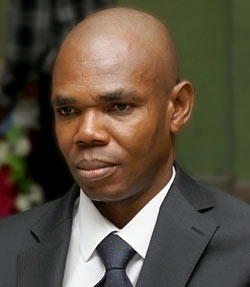
Ogudoro
The Oronsaye panel proposed that NECO and JAMB should be restructured.
That JAMB will only be an administrative body to set standards on how universities would conduct entrance examinations for admission.
What is your opinion about the proposal?
I do not think that decision is the best thing for us to do. What I think is to develop the capacity that would sustain the adminstration process that guides individual universities. But scrapping the system would mean that the University admission would only be available to the highest bidder. Our experiences have so far proven that when University Chancellors, their Deans and other authorities have so much power on who gets admitted, then they will be giving the preferential opportunity. They are likely to want to use it to make money and use the opportunity to bring in their cronies, friends and relations which is also the direction the system is moving now.
What about NECO?
NECO is a no go area. Nobody should be thinking about shutting down NECO. NECO is the only examination body at that level that is eligible. Scrapping means running the system into the mud. But, if there is any problem at all, I believe the only thing to do is to identify the challenges and find out the lasting solution. The fact is that our society is generally corrupt. But, there are still some things to be done. A structure can be put alongside NECO itself to give a credible result. But, scrapping it could be the worst decision anybody can take.
But, the Oronsaye panel said the decision was taken in order to streamline some agencies of government and reduce cost of governance?
It is due to the fact that the Chairman of the Committee had some accounting background and so the driving force is to minimise the cost of governance. But the truth of the matter is that when it comes to minimising cost of governance, it shouldn’t start from shutting down the system that enables you to empower the young people to pursue their dreams and ensure that only those who are really in line of getting awards are the ones getting awards thereby preventing the rest of the society to further their education which would make it impossible to produce human capital for the development of all the infrastructures that Nigeria needs. So, shutting down the system is not a good decision and I am sure the government is not thinking in that direction.
So, what would you recommend, if you were Oronsaye?
I probably will not touch NECO or JAMB but I would lay emphasis on a more pragmatic approach to running the affairs of those organisations. And also minimise the influence of quota system in the institutions. Those are very sensitive institutions within the education system and serve as very important platforms for whether or not Nigeria is going to be successful.
But as an educationist and a Public Relations Practitioner, how would advise on the standard of education that had dropped much that most people now seek solace in foreign education. Do you think, we are lagging behind in Nigeria?
The major problem we are having in our education system is the fact that, we do not have a very good philosophy of education that makes it clear that the essence of education is not the acquisition of certificate but it is a process that is suppsed to enable Nigeria as a country to empower the products of the system to acquire the knowledge, skill and the right value that would enable them become profitable citizens that would enable their contributions to be of a great potential in the country.
Presently, the people who are running the education system in Nigeria are not well equipped and therefore they are not conscious of the essence of the eduaction and until we are able to do that, we will not be able to come out of our bondage. The education system in Nigeria must be able to take care of the economic advancement and human development which individuals are seeking.
A right decision — Okojie
Meanwhile, the executive secretary, National Universities Commission (NUC), Professor Julius Okojie, in an interview with News Agency on Thursday supported the Federal Government’s streamlining of the National Examination Council (NECO) and the Joint Admissions and Matriculation Board (JAMB).
The Federal Government had resolved to scrap some of its agencies in line with the recommendations of the Stephen Oronsaye-led Presidential Committee on Rationalisation and Restructuring of Federal Government Parastatals, Commissions and Agencies.

Okojie
Okojie said the decision by the Federal Government was not to merge NECO with WAEC, “but to restructure.
“You can use the facilities in NECO to do the same examination under the same administrative setting.
“NECO is an alternative examination to the West African Examinations Council or Senior Secondary School Certificate Examination (SSCE) and we think it is possible to manage the two examinations under the same umbrella.
“This does not necessarily mean we are going to dismiss all the staff of NECO, no, but WAEC must be sustained for logistic reasons.
“A student has the option of writing examinations many times a year, just like one can write GCE London. So, NECO examination is supposed to be equivalent to WAEC,” the NUC boss said.
He said that WAEC was a sub-regional examination for West Africa, adding that countries in the region would not accept NECO result.
“For WAEC or SSCE, let’s see if we can do it four times a year, using the same facilities and I think government means well.”
Disclaimer
Comments expressed here do not reflect the opinions of Vanguard newspapers or any employee thereof.