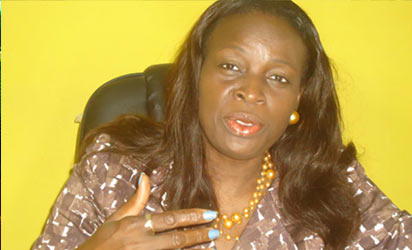
Bisi Bright
BY EBUN SESSOU
Mrs Bisi Bright is a seasoned Pharmacist and Chief Executive Officer of LiveWell Initiative, LWI. She is one of the women in Nigeria who has taken the challenge of managing people’s health. In this interview, she speaks on the challenges faced in most corporate organisations while taking healthcare to their doorsteps. Excerpts:
What informed LiveWell Initiative?
At the time, we were going to start LiveWell Initiative, there were one or two health incidences that happened around me and I felt concerned. One of them was the death of an Engineer who was a younger sister to one of my friends. She had a heart attack, she was hypertensive, she knew nothing about the use of low dose asperin in preventing heart attacks and strokes. And her family was very angry that she died. And because it wasn’t our tradition in Nigeria for people to sue for this type of issue, it fizzled out.
Another incident was when an International Organisation wanted me to register an office for them in Nigeria. But, instead of registering the company’s name, I registered my own organisation.
But, that would have amounted to deceiving the organisation and stealing an idea from them?
The idea was mine originally. The organisation’s name is “The Micro-credit Summit”, and until today, they are yet to be in Nigeria. They have a Ghana office but a representative in Nigeria. At that time, I met their president who was running the Micro finance for beggars by the roadside. I met him in the United States at World Health Congress in 2004. He wanted me to represent them and I agreed.

Bisi Bright
I had different ideas about poverty and health all along and I had designed a concept called ‘Illness,Poverty Alleviation Programme which is to take care of people who are within the poverty bracket and an episode of illness leading to death or permanent disability. So, I gave the idea to the Micro-Credit Summit people and I agreed to start an office for them in Nigeria with my idea but maintained that it would remain my intellectual property. And I will be given credit for it and if the programme succeed, there were negotiation on how I would be given grants.
But, my son objected to it and instigated me that since the idea is mine, I should register it in my name rather than it becoming a problem in future. That was how I registered it in my own name. Today, it is one of our major programmes which is called, Illness Poverty, Alleviation Programme, IPAP. Then, we thought of a name to stabilise that concept and that was how the name LiveWell Initiative, LWI emerged. The IPAP was the first programme of the LWI. There were other programmes designed to match up the IPAP.
At inception, we started with five programmes, including the Illness Poverty Alleviation Programme, the Executive Health Enlightenment Scheme because we find out that health literacy is very low in the society and it has nothing to do with educational or functional literacy and that was how we evolved the Executive Health Enlightenment Scheme to take care of the executives, while the IPAP takes care of the lower income people. We have the Drug Use and Abuse Enlightenment Scheme for school children and youths who spend their past times smoking and doing things that are reckless.
And we married it to another programme which is HIV/AID Enlightenment Programme and the fifth programme was the Malaria Eradication Programme. We had five when we launched the organisation and two projects including Advert Drug Reaction Programme and Medicine Project. All the programmes are still functional and we have added so many more. We never dropped any. We started test running the programme in the year 2006 and we applied for registration in Corporate Affairs Commission. We didn’t get response until July 2007 and it was inaugurated in September the same year.
What are the challenges, you have been facing in the course of this programme?
In life, there are challenges. Challenges sometimes strengthen and help you to grow. The major challenge we had, has to do with finances. We don’t really feel bad about it because he know that multi-million dollar projects have challenges. We have been very lucky because the programme has strived and survived. We run most of our programmes free of charge. We have training a academy launched by the CBN Governor, Sanusi Lamido Sanusi, the academy is established for sustainability of the programmes. We applied for a few grants but there was no response so, we were discouraged. I can tell you confidentially that we are a self-sustained organisation.
Who are your target audience?
Everybody in the world is a prospective client of LWI due to the scope of the programme. We have programmes for every segment of the society. The IPAP is targeted at low income people and the informal sector. This programme is taken to the markets, taxi parks, mechanic villages, the programme is free to people who have little or no access to healthcare. We also run a major healthcare centre every year.
The major challenge with the IPAP programme is that, it is a high cost programme for us. We have a major financial challenge running this programme. Every IPAP programme costs N500,000.00 including drugs. It is a rewarding programme that we have been able to impact the health of the people in markets and the poor places.
Disclaimer
Comments expressed here do not reflect the opinions of Vanguard newspapers or any employee thereof.