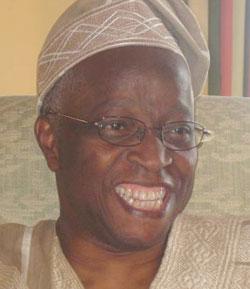
Prof Adamolekun
By AMA PEPPLE
PERMANENT Secretaries (i) Permanent Secretaries are the administrative heads of their Ministries and are responsible to the Minister for the execution of approved policy and for the efficiency of staff;
(ii)They serve as the final advisers to their Ministers;
(iii)Permanent Secretaries must ensure that the Minister is kept promptly and fully informed of developments in all subjects in the Minister’s portfolio, including ensuring that the financial implication of any matter coming before the Minister has been thoroughly examined before it is submitted to the Minister and where appropriate, the advice of law officers or of other interested Ministers is made available to the Minister;
(iv) The Permanent Secretary, aided by professional advice where necessary, is responsible for co-ordinating the work of all departments in the Ministry;
(v) The Permanent Secretary is the accounting officer and is, therefore, responsible for the preparation of estimates for the control of expenditure, bringing to account all funds allocated to the Ministry and for the proper discharge of such additional financial responsibilities as may from time to time be delegated to the Ministry.

Prof Adamolekun
Further details of the role of accounting officers are specified in the Financial Regulations as follows:
(i) Ensuring that proper budgetary and accounting systems are established and maintained to enhance internal control ,accountability and transparency;
(ii) Rendering monthly and other financial accounting returns and transcripts to the Accountant- General of the Federation as required by Financial regulations;
(iii) Ensuring the safety and maintenance of all government assets under his/her care;
(iv) Ensuring personal appearance before the Public Accounts Committee to answer audit queries to Ministry/extra-ministerial department or agency;
(v) Ensuring accurate collection and accounting for all public moneys received and expended;
(vi) Ensuring prudence in the expenditure of public funds;
(vii) Ensuring proper assessments, fees, rates and charges are made where necessary;
(viii) Ensuring internal guides, rules, regulations, procedures are adequately provided for the security and effective check on assessment ,collection and accounting for revenue;
Report and investigation
(ix) Ensuring that any losses of revenue are promptly reported and investigated;
(x) Ensuring that all revenue collected are compared with the budgeted estimates with a view to highlighting the variances, positive or otherwise and the reasons for them;
(xi) Ensuring that any revenue collected are not spent, but remitted to the appropriate authorities promptly.
Heads of Departments
They are responsible to the Minister through the Permanent Secretary for the efficiency of their Departments and for the execution of approved Government policy.
They, however, have a right to state their views to the Minister whenever they have a disagreement with the Permanent Secretary on matters of a professional or technical nature.
The above guidelines have been provided to maintain checks and balances in the way the system is run so that key functionaries of government do not take advantage of the opportunity of serving in public offices to further their self-interest at the expense of the collective good.
The additional provisions for regulating public conduct include public service rules and regulations, code of conduct for public officers, laws of the Federation, executive orders and directives, as well as public information of a general nature, usually conveyed in circulars and other forms of notices.
Identifying Possible Causes of Friction
Navigating through the complex network of relations within the governance architecture by the above-mentioned actors in the discharge of their duties without recording any possible strains in the relationships is indeed a tall order. The following areas are instructive:
(i) Observing the concept of neutrality;
(ii) Appreciating the advisory role of civil servants in policy making;
(iii) Depoliticising the appointment/recruitment to the civil services; and
(iv) Handling issues of frequent transfers and postings of civil servants as well as cabinet changes.
Concept of neutrality
One of the cherished traditions of the Civil service in the Commonwealth is its neutrality and apolitical nature. This helps to engender confidence in the institution as a unifying force especially in a country of such huge diversity as Nigeria. In this connection, Civil servants are expected to serve the duly constituted Government of the day no matter its complexion.
It is by doing so that they can win and retain the confidence of Ministers and other functionaries of Government. However, frictions may occur when Ministers attempt to drag higher public servants into the murky water of politics by coercing them to pursue narrow partisan interests which may not be in the national interest. Conflicts may arise if the public servant chooses to resist the pressure by acting professionally.
In the same vein, a civil servant may also choose to explore the privilege of access to his/her political master to seek for unmerited gains or favours such as appointment to a strategic position in the Service which is contrary to ethical behaviour in the Public Service.
Source of conflict
This may also serve as a source of conflict especially when the political master chooses to act responsibly and ethically by refusing to bow to these pressures.
Advisory role of civil servants
The popular and traditional conception is that political masters are responsible for policy formulation while civil servants are consigned to the role of implementation. However, unless civil servants are provided the opportunity to assist their political masters in the formulation of policy, the implementation of such policy may be encumbered. This is informed by the consideration that policy formulation is a complex process which requires the input, buy in and support of all critical stakeholders for it to achieve its intended outcomes.
A balanced perspective in respect of this role is provided by Richard Rose in stating that ‘policy making reflects the combined activity of both politicians and higher civil servants: both of them have their hands on the tiller of the ship of the state.
But they approach problems of governing from different perspectives – partisan or bureaucratic. … Notwithstanding their differences, they are jointly implicated in government. In democratic systems of government, elected office holders can claim the legitimate authority to give directive to government. But higher civil servants may have the technical knowledge of government programmes necessary for effective policy making ‘.
Unnecessary conflicts
Where this logic is not appreciated by the political masters and higher civil servants, including permanent secretaries, this may lead to unnecessary conflicts.
Nonetheless, it is still the responsibility of the higher civil servant to provide leadership in the implementation of public policies whether or not he or she agrees with it. It is also the responsibility of the public service to think through the entire policy making process and create the scenarios for possible alternative course of actions through evidence-based research and factual analysis.
The unfortunate trend is that in spite of several years of reforms, the civil service is still largely process-driven rather than outcomes-minded. Accordingly, it is still largely pre-occupied with administrative routines and processes thus effectively limiting its capacity to contribute optimally to the shaping of public policy.
The inability of higher civil servants, and by extension the public service, to effectively complement the political leadership in the execution of public policy is a source of irritation to Ministers who are driven by the urge to achieve results faster.
Appointments in the Civil Service
In spite of the often repeated claims that appointment into the civil service is merit-driven, available evidence clearly points to the contrary.
Disclaimer
Comments expressed here do not reflect the opinions of Vanguard newspapers or any employee thereof.