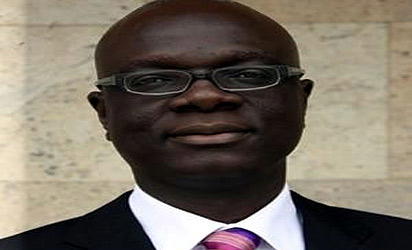
*Ade Ipaye, Lagos AG
MR. Ade Ipaye is the Lagos State Attorney-General and Commissioner for justice. In this interview, he spoke on the new Lagos State Road Traffic law, which seems to be generating controversies, saying the ultimate intention of the law is to ensure compliance. Excerpts:
THE new Lagos State road traffic law, unlike the repealed traffic law has substantially criminalized traffic offences, unlike what operate in most country. What informed this decision by the government?
That is incorrect. Criminalisation is a process whereby certain behaviours are transformed into offences. Offences are prohibited acts or omissions the doing of which attracts a penalty, maybe in form of a fine or a term of imprisonment. In all the States of Nigeria, negligent or reckless practices that constitute a danger to other road users have always been criminal offences.
The difference in the new Law is that, rather than keep only to those generalisations, it has gone further to identify, describe and prohibit particular practices under the pain of penalty. Things like smoking while driving, not using your seat belt, driving against the normal flow of traffic, disobeying traffic lights and directives or driving under the influence of alcohol. I daresay that what we are doing is already established practice in most countries of the world. Some of these have even been in our laws, even though attracting negligible penalties.

*Ade Ipaye, Lagos AG
Looking at the law, some analysts are saying it is only in this part of the world that traffic laws, especially those affecting perennial issues are being criminalized. How do you react to this?
I have already explained that. Perhaps the contention is that the law prescribes jail terms where we expect to pay a small fine and move on. If that be the case, it is abundantly justifiable. We cannot keep doing things as we used to and expect a change. Is it not madness for someone to drive on the left side of the road when our law says we should all drive on the right?
Is it not a wanton disregard for life when a commercial motorcyclist carries two adult passengers with a baby onto an expressway, none wearing a protective helmet? Take driving against traffic, it became so rampant that we started building medians or road dividers.
Still these reckless drivers break them down and climb over. Can a responsible government look on and keep pouring millions into median construction when we don’t even have enough to keep all the roads in good repair?
Considering the traffic situation Lagosians face on daily basis, especially the issue of bad roads across the state, and the view that laws are made for man not man make for law. Do you think the law will be effective as envisaged by the government?
This Road Traffic Law is indeed made for man. It is clearly the road to a better life in Lagos State. We need not leave our homes at 4 am and get back at 10pm if we all behave rationally in traffic.
Voluntary compliance
This law will serve as a guide to all and the nemesis of the few who want to persist in bad practices. I therefore think we will get voluntary compliance in the majority of cases. Where roads are bad, we shall continue to repair them. Where there is no bus service or any viable alternative, we shall continue to allow okadas and tricycles.
But for those that refuse to obey the Law, all the enforcement agencies, including the Police, LASTMA, FRSC and KAI are all primed to go. Every citizen is also a policeman for this law. For example, pictures taken on your phone and send to LASTMA will enable us bring offenders to book. I believe it won’t be long before we all start seeing the benefits.
Do you think the state judiciary will be able to cope with the volume of cases that may arise from the number of likely offenders?
The judiciary is well sensitised and ready for this assignment. With the aid of cameras and witnesses, these offences are not difficult to prove. There will be a lot of voluntary compliance and, depending on the offence committed, a lot of offenders will own up and pay a fine, so it is not every incident that will end up in court. Where they do, the judiciary will continue to do its best, as usual.
The state government has been making efforts over the years to reduce congestion of prisons. How do you think the prison facilities will take care of the influx of offenders found guilty and cannot defray penalty impose after judgment is passed on them?
The beauty of this law is its flexibility. The judicial officer has a series of sentencing options, including community service, forfeiture of the vehicle, payment of fine and order to undergo training at the Drivers’ Institute, all of which can be used instead of a jail term. So I won’t worry about prison congestion at all. Whoever cannot pay a fine can cut grass or work in a hospital for the prescribed period of time.
Some have also raised concern that the state government may be in coalition course in the implementation of the law as affects federal highways. What is your take on this?
Nothing of the sort. FRSC and the Police were at the public hearing and at the signing ceremony of the law. They made a pledge to work with us in implementing this law. The objective of this Law is also the objective of the Federal Agencies. I foresee no problem there at all.
Generally, what would you say the state government and the people will achieve at the long run by implementing the new laws?
A better life. A safer, more orderly and healthier Lagos. Cleaner air for Lagosians and less aggressive behaviour in our homes, offices and public places.
Disclaimer
Comments expressed here do not reflect the opinions of Vanguard newspapers or any employee thereof.