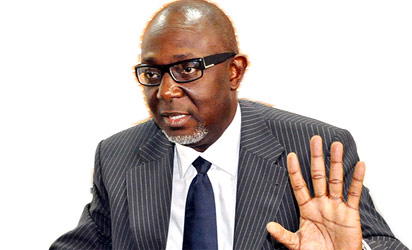
*George Kayode Noah
By FUNMI KOMOLAFE & VICTOR AHIUMA-YOUNG
THE Managing Director of Lagos State Signage and Advertising Agency, LASAA, Mr. George Kayode Noah, hosted Vanguard team of journalists in his Ikeja office during which he fielded questions on the activities of the agency.
He spoke on the relevance of LASAA and why it cannot be ignored by Lagosians.
What is the relevance of LASAA to Lagos State Government?
Mr. Kayode George Noah: “ LASAA is related to Lagos State Government in the sense that Lagos State funded LASAA’s creation and has invested heavily in what LASAA has been doing in terms of infrastructure and funding. The job we do here in LASAA is divided into two parts.
One is the revenue we generate for local councils to execute their projects and the regulatory aspect of signage and outdoor advertising in the state. The state is more concerned about the regulatory aspect of LASAA. How outdoor beautifies the environment, how it adds to the aesthetics of the cityscape.
For the local councils, the job we do for them it is about revenue generation because the state has an overview and each local council deal with its area, we need a body like LASAA and the government to have a coordinated policy in terms of signage and outdoor. So, this is the relationship. The state ensures that what we do conforms to the general overview of outdoor and signage regulation. By law, outdoor revenue is the entitlement of the local authority.
You do not have any conflict with local government concerning revenue remittances?
Since I came here, I have had several meetings with some of the local government chairmen and I have had meetings with the chairman of the chairmen and I have stressed that my job is to review what we do in terms of revenue generation and to give them as much as possible.
For example, one the first projects I embarked on when I came here was to set up census of signage and outdoor structures. We just started that project. I got approval from the State Executive Council to execute it. Part of the fund to do this thing was from the revenue that we generate.
In the short term, medium and long term needs for the benefit of the local councils, because on our book for instance, we have less than 24,000 signage structures on our data base. In comparison, you have places like Ondo State, they did a few towns and they found out that they have 240,000 signage structures.

*George Kayode Noah
So, I looked at Lagos State, this is the commercial nerve centre of Nigeria, how can we have less than 24,000 signage structure? We did a pilot study on Awolowo road Ikoyi and we discovered that about 40 percent of the signs there are not on our book.
It looks as if we have been vindicated because we have done census on about four local councils and we have 35,000. Just identifying these structures automatically means we will increase our revenue. What it means is that people are not being contacted in terms of, yes, you have this sign and there is a fear attached to it.
So, we have automatically drawn them into the signage net. There is no conflict with the local authorities because my job is to give them value for money. My job is to make sure they do not have any regret that LASAA is doing previously what they used to do. So, if in the course of this I double and triple their revenue, I will be one of their greatest fans.
What you are saying is that with your efforts, they are smiling to the bank. You are boosting their income?
The result of what I am doing will manifest after we finish our enumeration by next year. Then our data base and everything will be set up and by January next year, we will hit the ground running. By the end of next year, at the very least, they should be very happy with what we are doing.
Before you started your project, some local governments had done street naming; Mushin for instance. If go round Mushin, you would see well done signs of name of streets. Is there no conflict between what you are doing and that of Mushin for example?
The decision to do directional street signs is that of the state government in conjunction with the local councils. As I mentioned, if care is not taken, you will find different kinds of signs. If you to England for instance, if you see the way they name streets on houses. So, there is synergy.
It is because there is a decision to make sure that it is coordinated properly otherwise, you will have different kinds of things. That is why it was agreed that a body working for the local councils like LASAA should undertake this activity and so, we have a uniformed street directional signs and uniformity. So, the ones you mentioned in Mushin have all been replaced.
On the street directional signs, we have almost finished, we have about two local councils left and these are parts of Alimosho and Ojo. It is a very popular initiative and one of the things we are looking at is maintenance. We have realized that a lot of motorists damage these signs quite a lot. We want to maintain these structures because they are state assets.
Currently, you have posters around that says “Don’t mess with Lagos”, it all about posters. How sustainable is the campaign? We see officials of LASAA are seen removing posters?
The issue of posters we have to deal with from different fronts. One single strategy is not going to work. Take for example, we are going to do a press advert and we are going to name and shame some of these companies who are behind these things.
They are mainly religious and educational institutions. If you look at the posters, these institutions are culpable. We do everything, we will remove, they will put it back, we prosecute, they come back again and we put anti-posters signs there, they will go and paste posters on top of the signs. So, we have to try everything.
We have had meetings with those who print these posters in Somolu, you know that is where these things are printed. A lot of them agreed to cooperate and we just have to confront it from different aspects. Don’t mess with Lagos campaign is just to tell people that there is zero tolerance if you undertake this kind of activity and that if we catch any one, we will prosecute such a person.
Is it that posters are not allowed at all or it is for a fee?
No, posters are not allowed at all. What we are trying to do is that we realized that part of the reasons people do posters is because they want to create awareness for some of the things they are doing and they may not have the resources to undertake proper outdoor activities.
So, what we are trying to do is to designate certain areas where you can go and past posters. If you look at Lagos some seven, eight years ago, posters were a huge problem and they really messed up the environment. The message has two meanings. Don’t mess with Lagos, means don’t deface Lagos and also don’t toy with the patience of Lagos because Lagos would not take nonsense.
In this regard, do you have work any working relationship with the Ministry of environment?
The supervisory ministry for LASAA is the Ministry of Environment. So, there is an aspect of what we do that affects what they do. Outdoor and signage structures are all parts of environment and also physical planning.
Some business owners believe that LASAA charges as very high. Do you see this as disincentive for businesses especially the small and the medium scale businesses?
Part of the problems we have at LASAA was the issue of high charges. I commissioned an image audit report when I came in. I wanted to find out from stakeholders exactly what they thought; from staff, to the local council, outdoor practitioners and people who patronize outdoor practitioners and signage.
I have discovered several things. One of the results of that survey was that LASAA enforcement people behave like policemen and they do not show compassion at all, that our rates are very high and so on and so forth. So, I took them one by one.
For the rate for instance, we sat down, we looked at our rates and we have reviewed where we felt indeed that they were very high. Even before I came, my predecessor, the Honourable Commissioner for the Environment did undertake a price review. We want LASAA to be perceived as partners in progress.
We do not want to be perceived as that agency whose job it is just to come and collect. That is why for small businesses for instance, we are undertaking seminars where we bring in consultants and the consultants will tell them how to do their businesses, that there is new in their sector and so on. So that they feel we are not us just coming to collect N10,00 or N20, 000 , we are also giving something back to them. That is the way we are trying to change perception.
For our enforcement people, they have all undergone training and know there is a way you can enforce something and people will still feel that you have done your job very well and it is important. Previously, people will not just happy and some removed their signages because they felt the way they were approached needed much to be desired.
We want them to come back again, so we are appealing to them. Like I said, our enforcement people have undergone training so that wherever there need to enforce, people have to understand, they have to be polite and they still have to do their job.
Do you have a relationship with organized private sector?
We do, but not in a coordinated way. I have visited a lot of these companies and one of the things they told me was that it is unprecedented for people from LASAA to come and visit them. They said they thought LASAA was one big fortress. What I wanted to do was to establish a very good relationship with them.
I wanted to understand their needs and for us to develop products and services that meet those needs. So, I have visited most of all these blue chip companies like MTN, Airtel, Glo and so on because they are those who bring business to us. We have to work together. I have regular meetings with the OAAN (Outdoor Advertising Practitioners of Nigeria) president and wherever possible, we discuss and review things and we work together.
Before your and appointment and that of your predecessor, Mr. Tunji Bello, LASAA was in the news negatively. With the House of Assembly it became a political issue, allegations of mismanagement and all that. Have you put in place measures to correct that?
A lot happened, may be, in terms of processes and reviewing the ways we do things, what I have been doing is to consolidate on the things done by my predecessor. Things have changed for all our stakeholders. For our staff for instance, one of the things we have tried to establish is, fairness, accountability and things like that in the way we do things.
For outdoor practitioners, the same thing too, promptness in dealing with applications, review of prices whenever we need to and things like that. So, we are trying to work in every area where things went wrong. Some of them were systemic for instance, not having a robust ICT infrastructure affected the way we did our work.
In terms of management, like I have mentioned, the best way is to be open and accountable. So we work as a team and we all sit down and discuss issues and we take decisions collectively wherever possible. That is the new thinking in LASAA.
What is the state of outdoor advertising in Lagos and your relationship with OAAN?
I have a very good relationship with OAAN but the outdoor business in Nigeria is experiencing a lull. One of the reasons is that MTN used to account for almost 30 percent. They were the biggest spender of outdoor activities and for almost six months they have not done much. So, if the person who controls 30 percent is not doing anything, you can imagine how it is going to affect those who are in that business.
We are hoping that they will come back and help alleviate this depression. There are certain changes that we need to make in this industry. We want to work as partners as I said. So, we want to spearhead a lot of things. One, we are doing an outdoor master plan where defined special policy; this structure can go here and that structure can go here.
Everybody is aware of what you can do, what you can apply for. This is what exists in most progressive societies. So, we have been looking at this very critically. Once we finish that, we bring in our partners and give them the vision of what we are trying to do.
There is also the issue of change where practitioners are very reluctant to change, to new thing, new ideas. A lot of practitioners had been used to bring your pole, stick it to the ground and things like that. We want to move beyond that. Outdoor is not only putting the stick in the ground. You can do things on water, on air and so on. I am trying to encourage all these areas.
The other issue is that of having data for outdoor. Now, there is mass scramble for sites on the island and a lot of them have to do with ego. The Managing Director wants to drive and see his billboard as he is going home or going to his office. Lack of data is not helping.
We are trying to develop a situation where we have data. For instance, if you are selling consumer’s products why not go to Alimosho which has almost 50 percent of all the houses in Lagos State. We can provide you with a data to say this is a social transfiguration of the people that live here, these are the numbers.
If you put your ad in a particular street, this is the opportunity for this number of people to see it. So, we have facts like you have on radios and television today. We lack that for outdoor. These are things we are trying to do.
For signage, we are developing various products. Products for market, we are developing composite for signage where on some buildings, you have almost 50 things littered. We want to do composite thing where one big structure will take everyone which makes the environment looks very nice. The state of outdoor business has to do with what we do, the changes we make and we are trying to emphasis the use of light now, digital board, proper illumination for structures.
In general, the outdoor business is experiencing a little difficulty at the moment. If you look around you find billboards empty. Like I said, I think MTN is largely responsible for about 80 percent of that. But we have to change, practitioners have to develop new concepts, new structures and in some parts of Lagos, you see that they are places of high traffic.
How come you have empty billboards. You find out that the structures there are old fashion and advertisers are concerned about reflection of these things on their brands. So, if you go and put a rickety old structure on a road that is busy, those companies that take their brands very seriously, they are not likely to patronize the board. So, we are trying to encourage them to change their structures and bring new innovative ones and make this sector more vibrant than it is.
OAAN members have complained that they suffered untold hardship before you assumed office. Have been able to identify their grouse and show a way forward?
You must have basis for doing the things you do. That is why I did the image audit to find out what exactly each of these groups were thinking. I got to understand what their grievances were. Like if they applied for a site and they are rejected, can they appeal, if their boards are empty, do we continue to charge them rates and things like that. We sat down and we came to an agreement.
For instance, we said look, when we give you a permit for you to put structure somewhere. It is like, we are the landlord and if you go and rent a house from the landlord. If you say you are out of work, the landlord will still ask where is my money is.
But we have to work out ways and say, look if your board is empty over a period; we give you a bit of concession. We tell them that there are ways we can cooperate with each other. Some of them know how to sell boards more than others.
Disclaimer
Comments expressed here do not reflect the opinions of Vanguard newspapers or any employee thereof.