By Theodore Opara
WHEN Ferdinand Piëch arrived as Volkswagen’s chief executive in 1993, things looked dire. The carmaker was overspending, overmanned and inefficient, and had lost its reputation for quality. How things have changed: last year the VW group’s profits more than doubled, to a record €18.9 billion ($23.8 billion).
As other European volume carmakers seek to close factories and cut jobs, VW is seizing market share in Europe, booming in China and staging a comeback in America. It plans to spend €76 billion on new models and new factories by 2016. Its global workforce is more than half a million, and growing.
It took years for Mr Piëch—now chairman, but still with his hands firmly on the wheel—to tame VW’s menagerie of semi-independent brands and get to grips with its global empire of factories. He has been a ruthless hirer and firer of executives: only last month Karl-Thomas Neumann was removed as head of VW’s Chinese operations, supposedly for his disappointing performance, despite the juicy profits VW is making in China. Mr Neumann had been talked of as a possible successor to the chief executive, Martin Winterkorn.
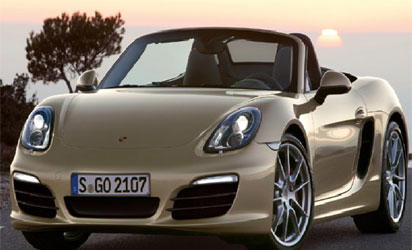
Mr Piëch is a grandson of Ferdinand Porsche, who founded VW after Hitler called in 1934 for the creation of a cheap “people’s car”, a Volkswagen. The Piëch-Porsche clan controls both VW and Porsche, a sports-car maker that is now being folded into VW after the failure of an overambitious and highly leveraged reverse takeover.
On July 4th VW agreed to buy the 50.1% of Porsche it does not yet own for €4.46 billion. VW is also buying Ducati, a maker of fancy motorbikes, and consolidating MAN and Scania, two lorrymakers, into its commercial-vehicles division. Yet still the firm remains hungry. It has long coveted Alfa Romeo, a premium-car division of Fiat; and is rumoured to be eyeing up Navistar, an American lorrymaker. Mr Winterkorn nevertheless dismisses the suggestion that the group is getting unmanageably big.
Mr Piëch’s plan was for VW to become the world’s biggest carmaker by volume by 2018. Last year, however, as Toyota struggled with the aftermath of Japan’s tsunami and GM floundered in Europe, VW reached its goal seven years early (see chart), if you do not count Subaru, Toyota’s distant affiliate, or GM’s Wuling joint venture in China, which mainly makes Chinese-branded cars.
The 8.5m vehicles VW made last year cover all corners: Volkswagen, Skoda and SEAT in the mass market; Audi in premium cars; Porsche, Bugatti and Lamborghini in sports cars; Bentley at the luxury end; plus various commercial-vehicle brands. Most (SEAT excepted) are firing on all cylinders. IHS Automotive, a forecaster, expects VW easily to beat its target of 11m sales by 2018.
Fierce competition and regulatory pressure to develop alternative-fuel cars are forcing other makers to seek cost-sharing partnerships. Toyota and BMW are teaming up on low-carbon technologies. GM’s Opel division in Europe is joining Peugeot-Citroën to make smaller cars. Daimler is edging towards a threesome with the Renault-Nissan alliance. Sergio Marchionne, the boss of Fiat and Chrysler, recently suggested merging several European makers to create “another Volkswagen”.
Volkswagen has been better than its rivals at reducing the number of common “platforms” that its cars are built on. This allows it to offer a fabulous variety of brands and styles while slashing manufacturing costs. The next stage, launched this year, is a versatile platform codenamed MQB, which will underpin the VW Golf, Audi A3, Skoda Octavia and SEAT Leon, in all their variations.
Disclaimer
Comments expressed here do not reflect the opinions of Vanguard newspapers or any employee thereof.