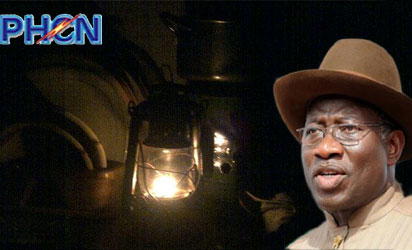
President Goodluck Jonathan
By Clara NWACHUKWU
Last year May 29, President Goodluck Jonathan made sweeping statements regarding his energy vision for power and petroleum, for the benefits of all Nigerians.
Granted, he was excited that for the very first time, he won an election in his own right as opposed to those he had to share a ticket with by faith or by exigency.
Even now, you can still hear the energy in his voice during his inaugural speech; “In the days ahead, those of us that you have elected to serve must show that we are men and women with the patriotism and passion, to match the hopes and aspirations of you, the great people of this country.
We must demonstrate the leadership, statesmanship, vision, capacity, and sacrifice, to transform our nation. We must strengthen common grounds, develop new areas of understanding and collaboration, and seek fresh ideas that will enrich our national consensus.
He continued: “The leadership we have pledged is decidedly transformative. The transformation will be achieved in all the critical sectors, by harnessing the creative energies of our people.”
A year of disillusionment
But 366 days down the line, the power in the voice and the declarations that followed have almost dropped to whispers, as he could no longer walk the talk as he promised, “We must grow the economy, create jobs, and generate enduring happiness for our people. I have great confidence in the ability of Nigerians to transform this country. The urgent task of my administration is to provide a suitable environment, for productive activities to flourish.”
But not too many economic activities have flourished thereafter. In the energy industry rather than investments, there were actually divestments, and people are losing their jobs in droves. And the “call on the good people of Nigeria, to enlist as agents of this great transformation,” fell on disappointed and disillusioned ears.
The feelings of the people aside from the fear and trepidation that was brought about by the pervading insecurity in the land on account of the activities of the Islamic sect, Boko Haram, were almost similar to the lamentations of David during the fall of King Saul and his son, Jonathan in the hands of the Philistines (2 Samuel 1:20).
PIB stalled, divestment galore
In the petroleum sector, where Jonathan made a lot of promises, especially with regard to attracting more foreign direct investment, FDI, through the passage of the Petroleum Industry Bill, PIB, everything went into reverse gear.
The PIB was not passed before May 29, as promised by the Minster of Petroleum, Mrs. Diezani Alison-Madueke; members of the sixth legislative assembly were too confused about which version of the various bills in circulation they needed to treat.
Still, one year after, the PIB has only progressed to the stage of special taskforces to review and harmonise issues, but still no executive bill before the current National Assembly to debate.
Final investment decisions, FIDs on several projects in the industry have been stalled, particularly in the upstream, which generate the bulk of government’s revenues through crude oil production such as Bonga South West, which is estimated to hold about one billion barrels oil reserves as well as liquefied natural gas, LNG projects including Brass LNG, OK LNG and the NLNG trains 7 & 8 and a host of many others.
During the period under review, Shell put up four of its onshore oil blocks; Oil Mining Leases, OMLs 30, 34, 40, and 42 for sale, under the pretext that it was a portfolio management strategy. The BG Group also followed and pulled out of Brass LNG, and most recently, ConocoPhillips, which has been in Nigeria for 46years also closed shop.
In all of these, only the indigenous operators, taking advantage of the Nigerian Content Act signed into law by President Jonathan, were breaking new grounds by acquiring most of the assets divested by the International Oil Companies, IOCs
Battling corruption
A year ago, Jonathan identified corruption as the bane of the economy, saying, “The bane of corruption shall be met by the overwhelming force of our collective determination, to rid our nation of this scourge.”
However, within one year of this vow, Nigeria witnessed its biggest corruption scandal in the downstream petroleum sector through subsidy payments – over $16.5billion or N2.6trillion was allegedly paid as fuel subsidy in 2011 alone. Of this amount, more than $6.8billion remain unaccounted for and nobody has been prosecuted till date.
Darkness pervade the land
As it is with petroleum, so it is with power. At the a town hall meeting on power held in Lagos last week, stakeholders insisted that those who carted away $10billion dollars sunk into the power sector must be brought to book, but the president merely retorted that Nigeria’s problems did not start with him.
Aside from declaring on May 29, 2011 that “To drive our overall economic vision, the power sector reform is at the heart of our industrialisation strategy,” during which he listed power among the six major fights including health, education, job creation, and transportation to be tackled by this administration. “I will continue to fight for electricity to be available to all our citizens,” Mr. Jonathan promised. But today, Nigerians have lesser access to electricity than when this promise was made.
Several more billions of dollars have been spent since the $10billion, yet the economy and the people don’t have improved access to electricity. Just like in power where Nigerians are supposed to enjoy the economies of scale of being in the top eight oil and gas producer in the world, Nigerians are actually paying very much higher to import 35 million litres, which the traditional four refineries with combined installed capacity of 445,000 barrels per day cannot provide for them.
To cap it all, as from June 1, electricity tariff will rise by 11 per cent, and according to calculations, it costs each Nigerian about N44/Litre to generate one kilowatt of electricity, and yet, Mr. President spoke about “looking to the future with hope.” But where is the hope.
In the last few days to today, the Democracy Day, there has been a flurry of executive activities to convince Nigerians of a brighter future based on projects that have been earmarked as opposed to eye marked.
Disclaimer
Comments expressed here do not reflect the opinions of Vanguard newspapers or any employee thereof.