By Babajide Komolafe & Franklin Alli
The Minister of Trade and Investment, Olusegun Aganga, recently disclosed plans by his Ministry to improve the country’s global competitiveness ranking from its current position of 137 to 34th by 2015. He said the Ministry is working to ensure that Nigeria occupies the top-five position in Africa in this regard, and increase manufacturing contribution to GDP to eight per cent from the current 4.5 by the same year. Excerpt:
What steps are you taking to achieve your targets?
There is no reason why we can’t achieve our goals; when we started, we worked together with the Organised Private Sector (OPS) and we came up with a number of recommendations which we are implementing now. We also have a team working, precisely, on the World Bank’s recommendations on the ‘Ease of Doing Business and Competitiveness’ and we have Inter-Ministerial Committee who are also working on the ‘Ease of Doing Business and Competitiveness.’
In 2010, we invited the Competitiveness Office of the World Economic Forum and we told them to go through our recommendations and tell us what other countries that were in similar positions did to achieve economic transformation. So, I think if those three groups did what they are supposed to do, there is no reason why we should not achieve the goals we have set for ourselves.
For instance, when I talked about increasing Nigeria’s global competitiveness ranking by 103 positions over the next four years, this will catapult Nigeria from its current 137thposition to number 34, in global competitiveness by 2015. We also intend to occupy the top five position in Africa by that year; improving Nigeria’s ranking in the Ease of Doing Business by 103 positions and enabling trade ranking by 75 positions, increasing manufacturing contribution to GDFP from 4.5 percent to 8 percent, among other measurable targets.
We have already inaugurated the Doing Business and Competitiveness Committee and the Investor-Care Committee as the first step in a series of well laid out plans. We are also working with the World Bank‘s Competitiveness Office and we have agreed on specific steps to take. The World Bank is part of the team working with us on the Ease of Doing Business. Also, we are looking at areas we have 100 per cent comparative and competitive advantage.
In your speech, you emphasised so much on FDI, what about domestic investment?
We are interested in Foreign Direct Investment, FDI, and we are also interested in Local Direct Investment, LDI, because, if we don’t work and make sure that people that have already invested actually operate well and generate returns, the chances of attracting FDI will be hampered. So, it is important to look after those that have already invested in the economy through appropriate policies and incentives.
Some o f the local investments on ground is the Dangote. You have already seen what the Group has invested across different sectors, and by next week, they will be commissioning the third phase of Obajana Cement in Kogi State. Nigerian Breweries Plc has also expanded their investment in the economy. Recently they commissioned their new brewery plants in Lagos; so too is Flour Mills of Nigeria PLC; BUA Group’s $5 billion Pasta plant in Lagos, are among other examples of domestic investments.
You were recently in Brazil. What was the highlight of the trip?
Brazil, as you know is one of the BRICS (Brazil, Russia, India, China and South Africa) economies, and they are doing extremely well. Nigeria has so many things in common with Brazil in terms of natural resources, culture and language (Yoruba). Brazil is the largest country in Latin America by size, and Nigeria is the largest country in Africa by population, although they are remotely bordered across from one another by the Atlantic Ocean.
For centuries, Brazil and Nigeria have enjoyed a warmly, friendly and strong relationship on the bases of culture (since many Afro- Brazilians trace their ancestry and religious practices to Nigeria) and commercial trade. More importantly, Brazil has grown very successful companies like Petróleo Brasileiro or Petrobras, which is doing very well. So, we have a lot we can learn from Brazil. So the synergy is very strong and very key to what we can do in Nigeria.

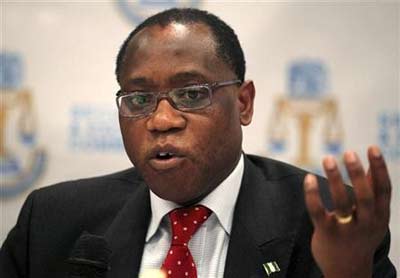
Minister of Trade & Investment, Olusegun Aganga
However, in order to facilitate trade and investment between the two countries, we need to make sure we have a logistics structure. If you are going to Brazil from Nigeria, if you look at the map, a journey that should have taken you a minimum of six hours will take you 24 hours. Why? Because you have to fly from Nigeria to Dubai for seven hours, and then you wait for eight hours to catch the next flight to Brazil, and that flight now fly over Nigeria airspace and goes to Brazil. 14 hours is wasted; so it really doesn’t make sense.
Nigerian and Brazilian government have both agreed that they must do something about it. Again, if you look at Brazil’s economic growth, industrialization is based on a well structured Skills Acquisition Development Programme and it is being run by the country’s Industrial Association. They have about 90 skills centre spread across the country and you have students who are being trained from fourteen years of age. The skills development centres are very well structured and are very effective.
In fact, each year, they create three million jobs of highly skilled workers. They also have government policy to back the establishments. That is part of the secret of their industrialization. It is not just people who went to universities and thereafter started struggling for job in the labour markets. That is what we must do in Nigeria. That is part of my industrial revolution plans- select the right sectors that have competitive and comparative advantage, bring in innovation and skills.
So, that’s the highlight of my visit to Brazil. Did I sign any bilateral agreement in Brazil? If I told you that I did, you should be worried because I had only gone there for three days. If they gave me document to sign, I have to give it to our lawyers to review it and it is only when my lawyer tells me to sign the document that I will do that. When signing document you have to be careful of the legal implications. So, I don’t sign any document without our lawyers advising me to do so.
What are you doing about companies that relocated to neighbouring countries?
I know some of them that have started coming back to Nigeria. Part of the study that I ordered my ministry to investigate was ailing industries that closed down and those that left Nigeria to other countries. We did a study on why they left, what the issues were and how we can attract them back into the country and we have worked on their recommendations.
What’s Nigeria’s relationship with China?
At the political and economic level, we are enjoying good relationship with China, but the area we are concerned is “substandard goods.” The Director General of SON, Dr. Joseph Odumodu, will be here to present a paper on “Tackling the Menace of Substandard Products in Nigeria.” He‘ll tell you that 75 percent of products circulating in the economy today are substandard.
He will also tell you that a large percentage of that figure comes from China; he will also tell you the action he has already taken to curb the menace. So, we are aware of the issue and we have already taken action. We have devised a system that is now working and the incidence of substandard goods is coming down. We have a target of bringing it down further every year for the next four years. So we are addressing the issue already.
What’s your take on the Power sector and infrastructure?
We have a Roadmap on Power sector. However, if we look at power from an industrial perspective which is very relevant to your question, there is short-term, medium-term and long –term plan we have put in place. But we will not achieve the target if we want to be honest to ourselves in the next one or two years. That is why the Minister of Power, Barth Nnaji, has made it absolutely clear that by the end of this year, he will re-direct power to nine industrial cities. That is one big news/policy we are waiting to see the implementation.
There is nothing we look at in the economy that infrastructure does not touch in one way or the other. We have trade-related infrastructure, tourism related infrastructure, export related infrastructure, etc. Recently, I visited a state in the south-south part of the country and I was told that it is cheaper to export goods from there to China than to sending it to Maiduguri; the cost of sending it to Maiduguri is higher. We will work closely with the Minister of Transport to address the challenges.
What are the measures to promote SMEs and create job?
There are a number of initiatives on that. We are also going to put them in clusters and make them have power and other infrastructures. The Bank of Industry is involved in that and is working with states government to develop their SMEs sectors. Now If want to play your game, I would say two million jobs, but that is not me. If I say things, I have to defend it. What I can tell you is, our programme is geared towards job creation.
We are monitoring it and as we do our regular press conference, we will be able to tell you how many jobs have been created. For instance, in the case of local sugar production, we have concluded work on a National Sugar Master Plan (NSMP) that would save the economy $416 million (N68.6 billion) in foreign exchange and generate over 100,000 jobs from local production of sugar by year 2015.
I am glad to inform you that with the proven potential for wealth creation and high employment generation in the sugar industry, a Nigerian Sugar Master Plan, NSMP, have been produced which provides the Roadmap for at least 100 percent local production in sugar. As of today, Nigeria produces only about two percent of the sugar it consumes.
The NSMP will ensure on an annual basis local production of 1 ,797,000 tonnes of sugar; 161.2 million litres of ethanol, 4000MW of electricity, 1.6 million tonnes of animal feeds, 37,378 permanent jobs and 79,803 seasonal jobs. Today, if anybody sits in front of you and say we have created so and so number of jobs, they are lying.
What is take on state of security in the Country:
I have observed that Nigerians at home and in the Diasporas talk more about security than foreign investors. But when you meet with foreign investors the issue of security does not always come up; none of the foreign investors I have met talked about security problem but when you meet with the Diasporas group, it is security they talk about. I am not saying that security is not an issue.
The point I am making is, Nigerians talk more about security than foreigners. Foreign investors take a long-term view not a short-term one. What they look at is if I can invest today, I will make more money in the future. And when the return is much higher than the risk, they invest. That is the reason why I don’t lay much emphasis on security when talking to investors.
On theLocal Content Law?
At the moment, it applies to the oil and gas sector. We are going to extend it to other sectors where we have competitive advantages. We are actually coming out with a local patronage Bill that will encourage patronage of quality Made –in – Nigeria products like the Local Content Bill; because the patronage of what we produce locally is abysmally low. Meanwhile, I want to ask for your contribution. In your own opinion, tell us what we can do to encourage the patronage of local products.
Disclaimer
Comments expressed here do not reflect the opinions of Vanguard newspapers or any employee thereof.